Why Your Dishwasher Smells Bad and How to Get Rid of It
Rotten-food smells, sewer smells and burning smells mean different things. Here's how to find the source and fix it.
A dishwasher that smells bad almost always has trapped food and grease in the filter, the sump, the door gasket or the drain hose. Clean the filter, wipe the gasket and lower door edge, clear the drain path, then run an empty hot cycle with a dishwasher cleaner; it takes about 30 minutes of work. A burning or electrical smell is different: stop the machine, switch off the breaker and call a technician.
What the smell is telling you
| Smell | Likely source | Fix |
|---|---|---|
| Rotting food, sour | Dirty filter, sump, gasket | Clean them; run a cleaning cycle |
| Musty, mildew | Door kept shut while damp | Clean gasket; leave door ajar between uses |
| Sewer, rotten eggs | Water backing up from sink drain or disposal | Clear the drain, check high loop or air gap |
| Chemical, perfume | Too much scented detergent or cleaner | Run a rinse; reduce dose |
| Burning plastic or electrical | Item on heating element, or electrical fault | Stop, cut power, inspect; call a tech |
What you need
- Rubber gloves, soft brush, sponge or microfiber cloth
- Dish soap and warm water
- Dishwasher cleaner, or white vinegar if your manual allows it
- Baking soda (optional)
Step-by-step: deodorize the dishwasher
- Turn off power at the breaker or unplug the machine.
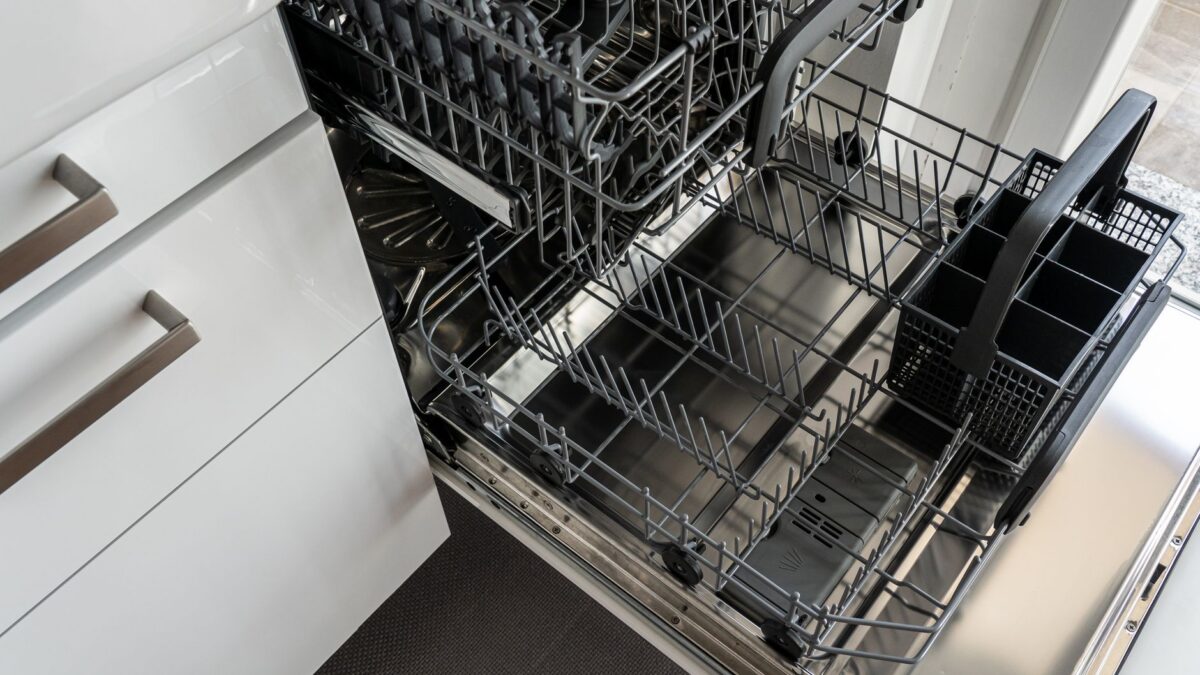
- Clean the filter and sump. Remove the bottom rack, twist out the filter, wash it in warm soapy water, and pick debris out of the sump. Details are in our guide to cleaning the bottom of a dishwasher.
- Clean the door gasket. Wipe the rubber seal all around with a soapy cloth, getting into folds. Food and grease hide in the lower corners.
- Clean the lower door edge. The strip under the door and the bottom edge of the inner door panel never get sprayed and collect grime. Scrub with a soft brush.
- Check the spray arms for trapped food, and clear the holes.
- Clear the drain path. Run the garbage disposal with cold water, and clean the air gap cap on the sink if you have one.
- Run a cleaning cycle. Restore power and run the hottest cycle, empty, with a dishwasher cleaner per the label. Whirlpool’s food odor guidance also describes an alternative: 2 cups of white vinegar in an upright glass measuring cup on the lower rack, then a normal cycle without detergent.
- Optional baking soda freshener. Some people sprinkle a cup of baking soda on the tub floor and run a short hot rinse afterward. It’s mild and inexpensive.
Never combine bleach with vinegar or any acidic cleaner: the mix releases toxic chlorine gas. Use one product at a time and rinse between them. In the US, Poison Control is 1-800-222-1222.
A sewer smell needs a drain check
If the dishwasher smells like a drain, dirty water from the sink may be getting back into the tub. The drain hose should either connect through an air gap or be routed in a high loop fastened up under the countertop, per the installation instructions and local plumbing code. A hose that has slipped down can let sink water siphon back. If you’ve just installed a garbage disposal, read how to connect a dishwasher drain hose to a disposal. A disposal that smells on its own can also send odor back through the hose; see how to get the bad smell out of a garbage disposal.
Prevent the smell coming back
- Clean the filter about once a month, more often if you load heavily soiled dishes.
- Run the dishwasher at least every few days, or rinse dirty dishes with the “rinse only” option if they’ll sit.
- Leave the door slightly ajar after a cycle so the tub dries.
- Run a cleaning cycle every month or two.
When to call a pro
Call a technician if you smell burning or electrical odors, if the breaker trips, or if a sewer smell persists after you’ve cleared the drain and checked the hose loop. Persistent standing water may mean a failing drain pump or a blocked check valve. A plumber can check whether the drain connection meets code; DIY repairs beyond cleaning may void your warranty.
Clean the spots the spray misses
Even a clean-looking dishwasher has hidden grime. With power off, check these places with a flashlight:
- Under the bottom spray arm: lift it off and wipe the hub area.
- Behind the filter housing: grease can collect where the filter seats.
- The rack rails and wheels: food bits stick in the tracks.
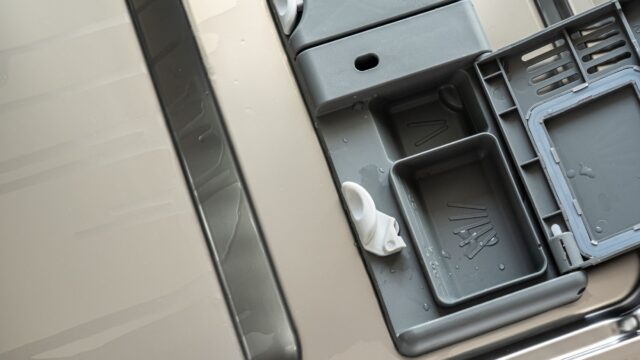
- The detergent and rinse aid dispenser area: old gel or pod residue can turn sticky and sour.
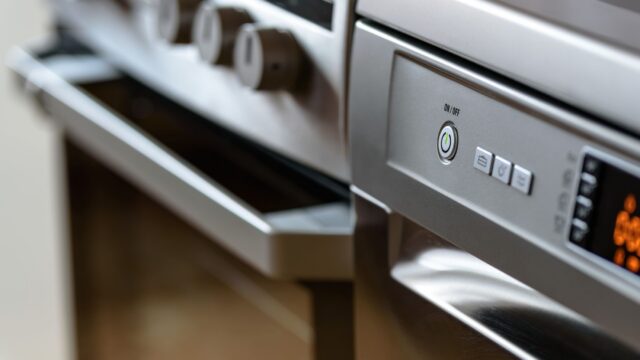
- The door vent and edges of the control panel: wipe with a damp cloth only; don’t spray water into vents or electronics.
A soft brush, warm water and a little dish soap on a cloth are enough. Rinse off any soap with a damp cloth so it doesn’t foam on the next cycle.
Bottom line
Food trapped in the filter, gasket or drain causes nearly all dishwasher odors. Clean those spots, run a hot cleaning cycle, and keep the filter clean monthly. Burning smells and persistent sewer odors are signs to call a pro.
FAQ
Why does my new dishwasher smell like plastic?
New parts can give off a faint smell for the first few cycles. Run a couple of empty hot cycles. If a burning smell persists, stop and contact the installer or manufacturer.
Is it safe to use bleach in my dishwasher?
Some manuals allow a bleach-based cleaner; others warn against it, particularly for stainless steel interiors. Check your manual, and never mix bleach with vinegar or other acids.
Why does the smell come back after a few days?
Food is probably still trapped somewhere: under the filter, in the gasket or in the drain hose. Leaving the door closed while damp also lets odors build up.