How to Remove Hard Water Stains in a Dishwasher (and Keep Them Away)
Cloudy glasses and chalky tub walls are mineral deposits, and they're usually easy to remove. Here's how, plus how to tell film from permanent etching.

Hard water stains in a dishwasher are mineral deposits, mostly calcium and magnesium, left behind when water evaporates. The quickest fix is an empty hot cycle with a citric acid-based dishwasher cleaner (or plain citric acid if your manual allows it), followed by rinse aid and the right detergent dose to keep them away. One treatment usually takes a single cycle. Use one cleaner at a time and never mix acids such as vinegar or citric acid with bleach.
Film or etching? Test first
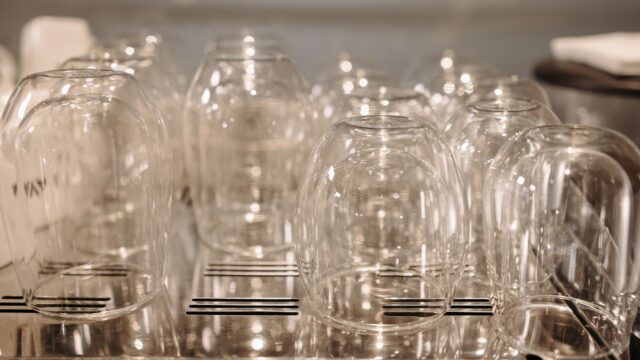
White cloudiness on glassware can be mineral film, which comes off, or etching, which is permanent damage to the glass surface. Iowa State University Extension describes a simple test: soak a cloudy glass in undiluted white vinegar for about five minutes. If the cloudiness disappears, it’s hard water film. If it stays, the glass is etched, and no cleaner will restore it.
Etching is more common with soft water, too much detergent, very hot water and pre-rinsed loads. If your glasses are etched, the fix is prevention: use less detergent and a gentler cycle for glassware.
What you need
- Citric acid-based dishwasher cleaner, food-grade citric acid powder, or white vinegar
- Rubber gloves and a soft brush or non-scratch sponge
- Microfiber cloth
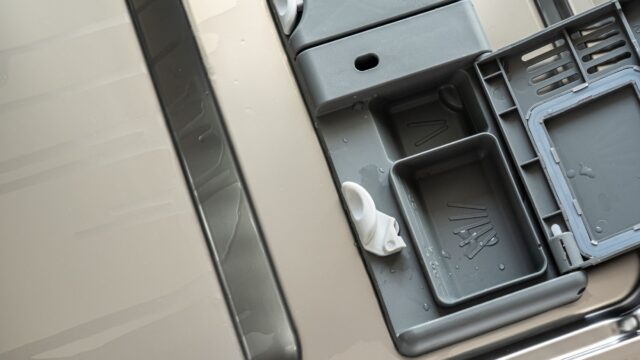
- Rinse aid
- Your model’s manual (check what cleaners it allows)
Step-by-step: descale the dishwasher
- Empty the dishwasher and remove any metal items that could be affected by acid.
- Clean the filter first, so loose scale and food don’t recirculate. See how to clean the bottom of a dishwasher.
- Add the descaler. Use a commercial dishwasher cleaner exactly as labeled. If you use plain citric acid, a common approach is to put a few tablespoons in the detergent cup or on the tub floor; follow your manual if it gives an amount.
- Run the hottest normal or heavy cycle, empty, with no detergent.
- Wipe remaining spots on the door and tub with a cloth dampened in white vinegar or a citric acid solution, then wipe with plain water.
- Check spray arm holes for scale and clear them with a toothpick.
- Repeat if buildup is heavy. For ongoing hard water, a monthly cleaning cycle helps.
If anyone is exposed to a cleaning product, call Poison Control at 1-800-222-1222 (US).
Citric acid vs. vinegar vs. commercial cleaners
| Option | Strengths | Cautions |
|---|---|---|
| Citric acid-based dishwasher cleaner | Made for the purpose; clear dosing | Follow the label; run empty |
| Plain citric acid powder | Inexpensive; effective on scale | Check the manual; rinse well |
| White vinegar (cup on top rack) | Cheap; mild descaler and deodorizer | Weaker on heavy scale; some makers caution against frequent acid use on seals |
| Bleach | Not a descaler | Never mix with vinegar or citric acid |
Prevent hard water stains
Use rinse aid
Rinse aid helps water sheet off dishes instead of drying in droplets, which reduces spots. Keep the dispenser full and raise the setting a step if spots persist.
Set the water softener (if you have one)
Some dishwashers, particularly European-designed models, have a built-in softener that uses dishwasher salt. Set the hardness level in the menu as the manual describes; your water utility’s annual water quality report or a test strip can tell you your hardness. Only use dishwasher salt in the salt reservoir, never table salt.
Choose detergent for hard water
Detergents that list hard-water performance, or powder dosed up as the package directs, can help. Our comparison of pods, powder and gel covers the trade-offs.
Start with hot water
Iowa State Extension advises keeping water entering the dishwasher between 120°F and 140°F. Run the kitchen tap hot before starting.
Treat other appliances too
If your dishwasher scales up, your kettle and coffee maker probably do as well. See how to remove limescale from an electric kettle.
When to call a pro
Heavy scale can eventually affect the heating element, inlet valve and sensors. If the dishwasher fills slowly, doesn’t heat, or shows an error after descaling, call an appliance technician. A plumber or water treatment specialist can advise on a whole-house water softener if hard water affects your fixtures and water heater too.
Where scale hides
Mineral deposits don’t just show on glasses. Check these spots too, with the power off:
- Spray arm holes: small white crusts reduce spray and leave dishes dirty.
- The heating element (on models with an exposed element): a chalky coating is common. Let it cool fully before wiping.
- The door bottom and gasket: scale can form where water drips and dries.
- The tub walls and racks: a white haze that doesn’t wipe off with a wet cloth usually dissolves with a mild acid.
Scrub gently with a non-scratch pad; don’t use steel wool or abrasive powders on the tub or racks, since scratched coatings can rust.
Bottom line
Run an empty hot cycle with a citric acid cleaner, wipe off what’s left, and keep rinse aid topped up. Test cloudy glasses with vinegar first: film comes off, etching doesn’t. Prevention is mostly about rinse aid, the right detergent dose and hot water.
FAQ
How often should I descale my dishwasher?
With hard water, many people do it monthly; with soft water, every few months is often enough. Follow the manual if it gives a schedule.
Can I use vinegar and baking soda together?
They neutralize each other, so using them at the same moment wastes both. Use one, then the other in a separate cycle if you like.
Why are my dishes spotty even with rinse aid?
Your water may be very hard, the rinse aid setting may be too low, or the water may not be hot enough. Try increasing the setting and using a hard-water detergent.