How to Clean the Bottom of a Dishwasher: Filter, Sump and Spray Arm
Most grime, smells and gritty dishes trace back to the bottom of the tub. A 20-minute clean of the filter and sump fixes a lot.
To clean the bottom of a dishwasher, remove and rinse the filter, clear food and debris from the sump underneath, wipe the tub floor and lower spray arm, then run an empty hot cycle with a dishwasher cleaner. It takes about 20 minutes plus the cycle. Turn the dishwasher off at the breaker or unplug it before you reach into the tub, and wear gloves: broken glass often ends up down there.
Why the bottom gets so dirty
Many dishwashers sold in the last decade or so use a manual filter instead of a self-cleaning grinder. These filters are quieter, but they need to be cleaned by hand. Whirlpool’s care guidance, for example, recommends cleaning the filter at least once a month, and its odor troubleshooting page points to trapped food in the filter as a leading cause of smells. When it clogs, dishes come out gritty, water may stand in the tub, and the machine starts to smell.
What you need
- Rubber gloves
- Soft brush or old toothbrush
- Dish soap and warm water
- Sponge, microfiber cloth and a few paper towels
- A toothpick or wooden skewer (for spray arm holes)
- Dishwasher cleaner, or citric acid if your manual allows it
- Your model’s manual (model number on the door edge or tub frame)
Step-by-step
- Power off. Switch off the breaker or unplug the machine.
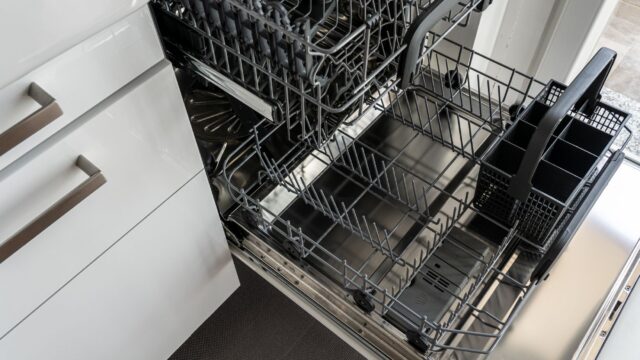
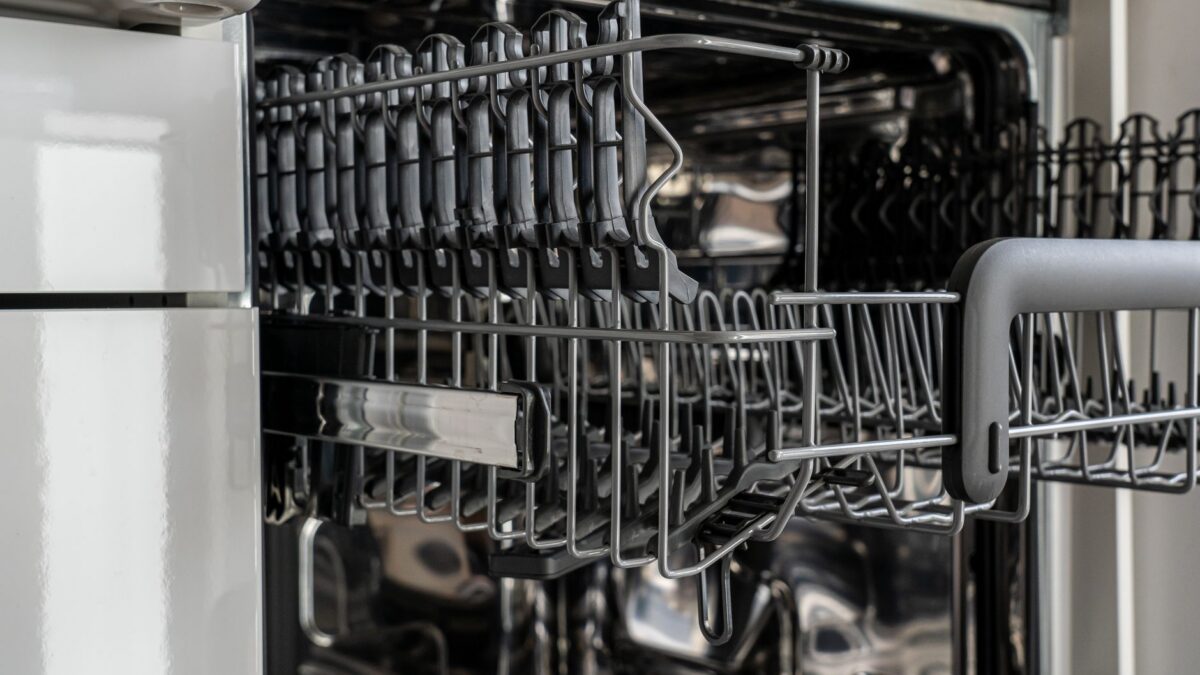
- Remove the bottom rack. Slide it all the way out and set it aside.
- Scoop out standing water if there is any. If there’s a lot, follow our guide on draining a dishwasher with standing water first.
- Take out the filter. Most cylindrical filters twist a quarter-turn counterclockwise and lift out. Many have a second, flat coarse screen that lifts out once the cylinder is removed.
- Wash the filter under warm running water. Use a soft brush and a little dish soap to work grease out of the mesh. Don’t use a wire brush or scouring pad; the fine mesh is easy to tear.
- Clear the sump. Shine a flashlight into the opening and pick out anything solid: seeds, labels, bones, glass. Wipe out the greasy film with a soapy sponge.
- Clean the lower spray arm. Many lift or unscrew off. Rinse it and poke debris out of the holes with a toothpick. Shake it; anything rattling inside should be flushed out.
- Wipe the tub floor and lower door edge. The area under the door, where the door meets the tub, collects grime the spray never reaches.
- Reassemble. Put the filter back and twist until it locks. A loose filter lets debris reach the pump.
- Run a cleaning cycle. Restore power and run an empty hot cycle with a dishwasher cleaner, following the product label.
Cleaner options compared
| Option | Good for | Cautions |
|---|---|---|
| Dish soap + brush | Filter, sump, spray arm grease | Never put dish soap in the machine itself; it makes too many suds |
| Commercial dishwasher cleaner | Grease and mineral buildup in the tub | Follow the label; run empty |
| Citric acid | Hard-water scale | Check your manual; some makers prefer their own cleaner |
| White vinegar (cup on top rack) | Light odors and film | Some manufacturers suggest it, others caution against frequent acid use on seals |
| Bleach | Rarely needed | Check the manual first; never mix with vinegar or other acids |
Never mix bleach with vinegar, ammonia or other acids; the fumes are toxic. If anyone is exposed to a cleaning chemical, call Poison Control at 1-800-222-1222 (US).
A simple monthly routine
- Weekly: glance at the filter and remove anything large.
- Monthly: remove and wash the filter, wipe the door edges and gasket, and check the spray arms spin freely.
- Every 1–3 months: run a cleaning cycle, more often if you have hard water. Our guide to removing hard water stains covers scale in detail.
- As needed: clean the air gap on the sink deck if water spits out of it.
Scrape plates into the trash before loading. You usually don’t need to pre-rinse, but bones, labels, toothpicks and seeds belong in the trash, not the filter.
When to call a pro
Routine cleaning is DIY. Call an appliance technician if you find a cracked filter housing or broken pump impeller, if water keeps pooling after the filter and drain hose are clear, or if you see water under the machine. Check the warranty before taking anything apart beyond what the manual describes; DIY repairs can void coverage.
Bottom line
The bottom of the dishwasher is where food ends up, so that’s where the cleaning pays off. Clean the filter and sump monthly, keep the spray arm holes open, and run a cleaner every few months. It prevents most smell, drainage and dirty-dish complaints.
FAQ
How do I know if my dishwasher has a manual filter?
Look at the floor of the tub, usually at the back or center. A removable cylinder or round cap with a twist-lock is a manual filter. Your manual will confirm it.
Can I put the filter in the dishwasher to clean it?
No; you need it in place to run the machine. Wash it by hand in the sink.
What if my dishwasher has no removable filter?
Some older models use a self-cleaning hard-food disposer. You can still wipe the sump area and clean the spray arms, but don’t try to pry out parts that aren’t designed to come out.
Why does my clean dishwasher still smell?
Check the door gasket, the lower door edge and the drain hose. See our guide to a dishwasher that smells bad.