Dishwasher Error Codes Explained: What the Common Codes Mean
Codes differ by brand and model, but they fall into a few families. Here's what they usually mean and which checks are safe to try yourself.
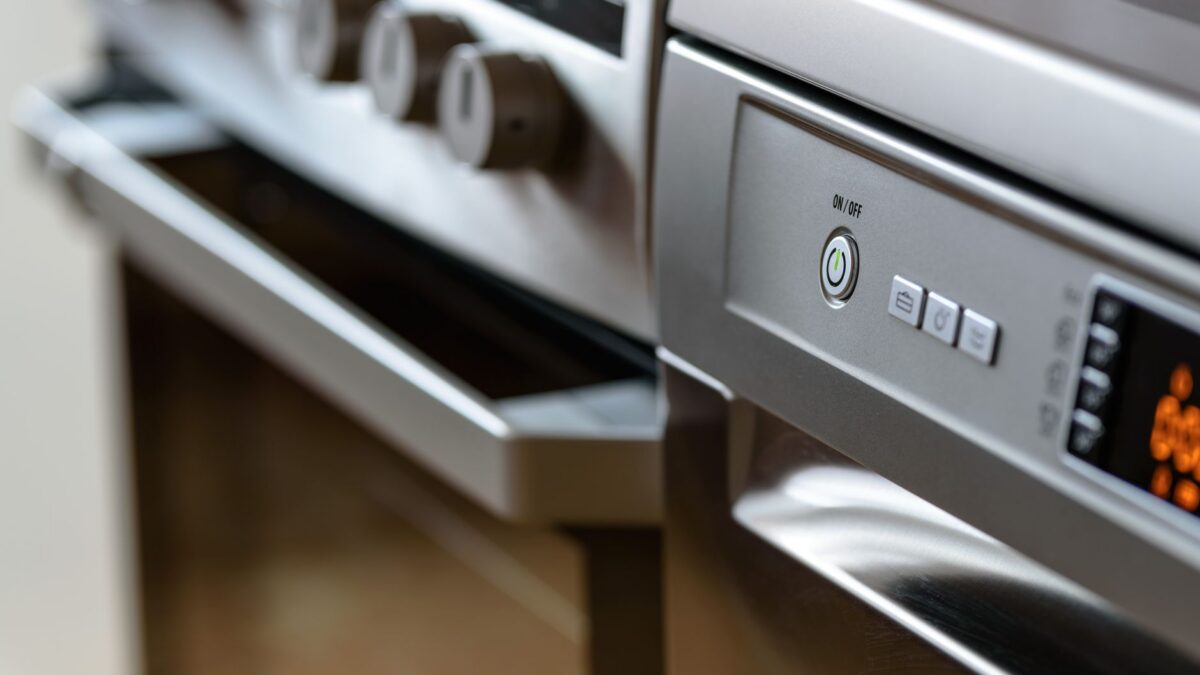
Dishwasher error codes almost always fall into a few families: water supply (not filling), drain (not emptying), leak or overflow, heating and temperature, and motor, sensor or control faults. The exact meaning depends on your brand and model, so look up the code in your manual first. The safe first steps are usually free: check the water valve, clean the filter, clear the drain, and reset the machine by switching off its power for a few minutes.
Find the right meaning for your model
Codes vary between brands, and even between models of the same brand. Find the model number on the label on the edge of the door or the tub frame, then check the use and care manual or the manufacturer’s support site. LG, for example, notes on its dishwasher error code page that codes can differ depending on the model. Many models without a numeric display signal faults by flashing lights in a pattern; the manual explains how to read it.
The main code families
| Family | What the machine detected | Safe first checks |
|---|---|---|
| Water supply / fill | Not enough water within a set time | Supply valve fully open, no kinked line, water working at the sink |
| Drain | Water didn’t pump out | Clean filter, check drain hose, air gap, disposal and knockout plug |
| Leak / water in base | Water collected in the base pan | Cut power, close water valve, look for leaks, suds |
| Overfill / excess water | Water level too high | Check drain; a stuck valve or float needs a tech |
| Heating / temperature | Water didn’t heat or sensor out of range | Reset; check hot water supply; tech for parts |
| Motor, sensor, control | Internal component fault | Reset once; tech if it returns |
| Door / lock | Door not latched | Close firmly, check for blocking items |
Examples from major brands
These examples come from manufacturer support material and widely published service information. Always confirm with the manual for your exact model.
Samsung
Samsung’s support pages describe 4C/4E as a water supply problem, 5C/5E as a drain problem, LC/LE as a leak detection alert, and OC as excess water. For leak codes, Samsung’s guidance includes closing the water supply valve, switching off the dishwasher’s breaker and contacting a qualified technician. See Samsung’s dishwasher error code guide.
LG
LG’s help library lists IE as a fill problem (the water level not reaching the right height after about 10 minutes), OE as a drain problem, FE as too much water, and LE as a wash motor problem that needs inspection by a service technician.
Bosch
On Bosch dishwashers, E15 is widely described as water detected in the base pan, which triggers the leak protection system. Drying the base without fixing the leak only clears the code temporarily, so find the source first.
Safe steps for any code
- Write down the code and look it up in the manual.
- Reset: switch off the dishwasher’s breaker (or unplug it) for a few minutes, then restore power. Some models also have a cancel/reset button sequence; check the manual.
- Check the water supply: make sure the valve under the sink is fully open and the line isn’t kinked.
- Clean the filter and clear the sump. See how to clean the bottom of a dishwasher.
- Check the drain path: hose, air gap, disposal. See how to drain a dishwasher with standing water.
- For leak codes: keep the power off, close the water valve, and look for suds from the wrong detergent, a worn door gasket or water under the unit. Our guide to a dishwasher leaking from the door can help.
When to call a pro
- The code returns after a reset and the basic checks.
- It’s a motor, heating, sensor or control code.
- There’s water under the machine or near wiring, or the breaker trips.
- The dishwasher is under warranty; DIY repairs beyond routine cleaning may void it.
Tell the technician the model number and the exact code; it helps them bring the right parts.
Before you call: what to have ready
- The full model and serial number from the label on the door edge or tub frame
- The exact code, or a short video of the flashing-light pattern
- When it appears (start of cycle, mid-wash, end) and whether it happens every time
- Anything that changed recently: new disposal, new detergent, plumbing work, a power outage
- Your purchase date and warranty paperwork
Technicians often charge a service call fee, so giving them this information up front can help them diagnose the problem in one visit. If the dishwasher is still under warranty, contact the manufacturer or the retailer’s protection plan first rather than an independent repair service.
Bottom line
Error codes are your dishwasher telling you which system is struggling. Look up the code for your model, try the free checks (reset, water valve, filter, drain), and call a technician for motor, heating or control codes, or any code that keeps returning.
FAQ
Can I clear an error code by unplugging the dishwasher?
A power reset often clears a code temporarily. If the underlying problem isn’t fixed, it will come back.
Why does my dishwasher show a code only sometimes?
Intermittent codes often come from partial clogs, low water pressure at certain times of day, or a sensor that is starting to fail.
Where can I find my dishwasher’s manual?
Most manufacturers offer manuals on their support websites. Search by your full model number from the label on the door edge or tub frame.