Dishwasher With a Broken Garbage Disposal: When It Is Safe
You can usually run a dishwasher with a dead disposal if the disposal drain is clear. Learn how the hose connects and when water backs up into the sink.
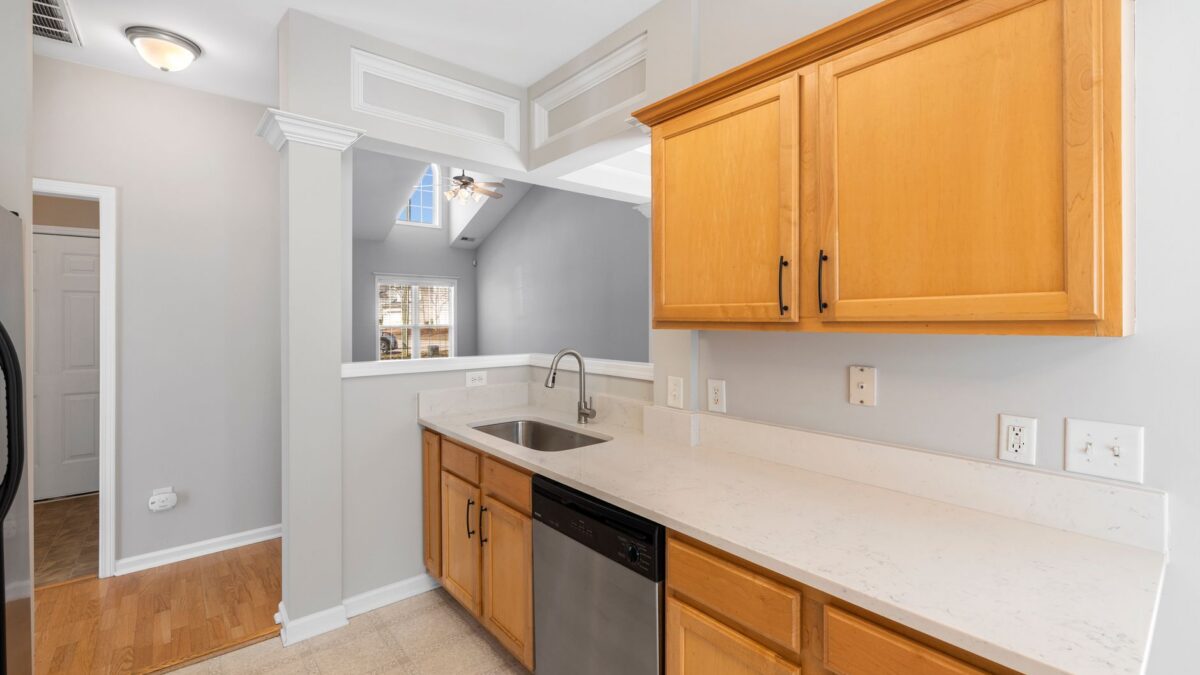
You can usually run a dishwasher when the garbage disposal is broken, as long as water can still flow through the disposal and out the sink drain. A disposal that will not spin but is not clogged passes dishwasher water fine. A disposal that is clogged or jammed full of debris can send dirty water back into the dishwasher or the sink, and then you should not run the dishwasher until the drain is clear or the disposal is removed.
How does the dishwasher drain hose connect to a disposal?
On most sinks, the dishwasher drain hose runs from the back of the dishwasher up under the counter and attaches to a small side inlet on the disposal housing. During the drain cycle, the dishwasher pump pushes used water through the hose, into the disposal chamber and out through the disposal’s own drain outlet to the sink trap. The disposal is just a pass-through for the water. The details are covered in connecting a dishwasher drain hose to a garbage disposal.
Some setups use an air gap, a small fitting on the sink deck, or a high loop, where the hose is lifted to the underside of the countertop before it goes down. Both exist to stop dirty sink water from flowing backward into the dishwasher.
When is it safe to keep running the dishwasher?
It is generally fine when the disposal has a mechanical or electrical fault but its chamber and drain are open. Typical examples are a unit that hums or does nothing when switched on, a tripped reset button, or a motor that has died. To check, run a little water in the sink and watch it drain. If it drains at a normal pace and nothing gurgles up, dishwasher water should pass the same way.
Keep in mind that a disposal that no longer grinds lets food scraps collect in the chamber. Scrape plates into the trash and avoid putting anything else down that drain until the unit is repaired or replaced.
When does the water back up?
Water backs up when something blocks the path between the dishwasher hose and the main drain. Common causes are:
- A clogged disposal chamber or a jammed flywheel packed with food waste.
- A clogged sink trap or drain line past the disposal.
- A dishwasher inlet on the disposal that is still sealed, which happens after a new disposal is installed and the knockout plug (a small plastic disc inside the inlet) was not removed.
- A drain hose that is kinked, crushed or clogged.
The signs are standing water in the dishwasher tub after a cycle, water rising in the sink basin while the dishwasher drains, or a gurgling sound from the drain. If you see any of them, stop the cycle. The steps for clearing a full tub are in draining a dishwasher with standing water.
How do you check a broken disposal safely?
Turn off the disposal switch and unplug the unit or switch off its circuit breaker before you touch anything. Never put your hand inside the chamber. Use tongs or pliers to remove visible debris from the top, and use the hex socket in the bottom of many units to turn the motor by hand and free a jam. Press the red reset button on the underside after the motor cools.
If the unit still hums, leaks or does not respond, it needs repair or replacement. Do not pour chemical drain cleaners into a disposal. If you are unsure about the wiring or the plumbing, call a licensed plumber or electrician.
What are your options if the disposal is dead?
There are two practical routes. The first is to leave the dead disposal in place as a drain pass-through while you shop for a new one. This works only when the chamber drains freely, and it should be a short-term fix.
The second is to remove the disposal and replace it with a sink drain kit, which has a tailpiece with a side port for the dishwasher hose. The process is described in removing a garbage disposal and installing a sink drain kit. If you are putting in a new disposal instead, read installing a garbage disposal when you have a dishwasher first, so the dishwasher inlet is opened correctly.
Quick answers
Can I run the dishwasher if the disposal is jammed?
Only if water still drains from the sink at a normal speed. A jam that blocks the chamber will hold dishwasher water back, so clear the jam first.
Does the dishwasher need the disposal to drain?
No. The dishwasher needs a clear drain path, which can be a disposal inlet, a sink drain tailpiece with a dishwasher port, or a standpipe. A disposal is one way to provide it.
Why does the sink fill with water when the dishwasher drains?
Dishwasher water is reaching a blocked line. The blockage is usually in the disposal, the trap or the pipe after it. Stop the dishwasher and clear the clog before running another cycle.
Why is there standing water in the dishwasher after I install a new disposal?
The knockout plug in the disposal’s dishwasher inlet is the most common cause. It has to be removed from the inlet before the hose is connected.