How to Keep Pipes From Freezing: Drip, Open Cabinets, Heat Tape
Keep pipes from freezing by dripping faucets, opening cabinet doors and holding the house at 55°F or higher. Covers heat tape and thawing frozen pipes.
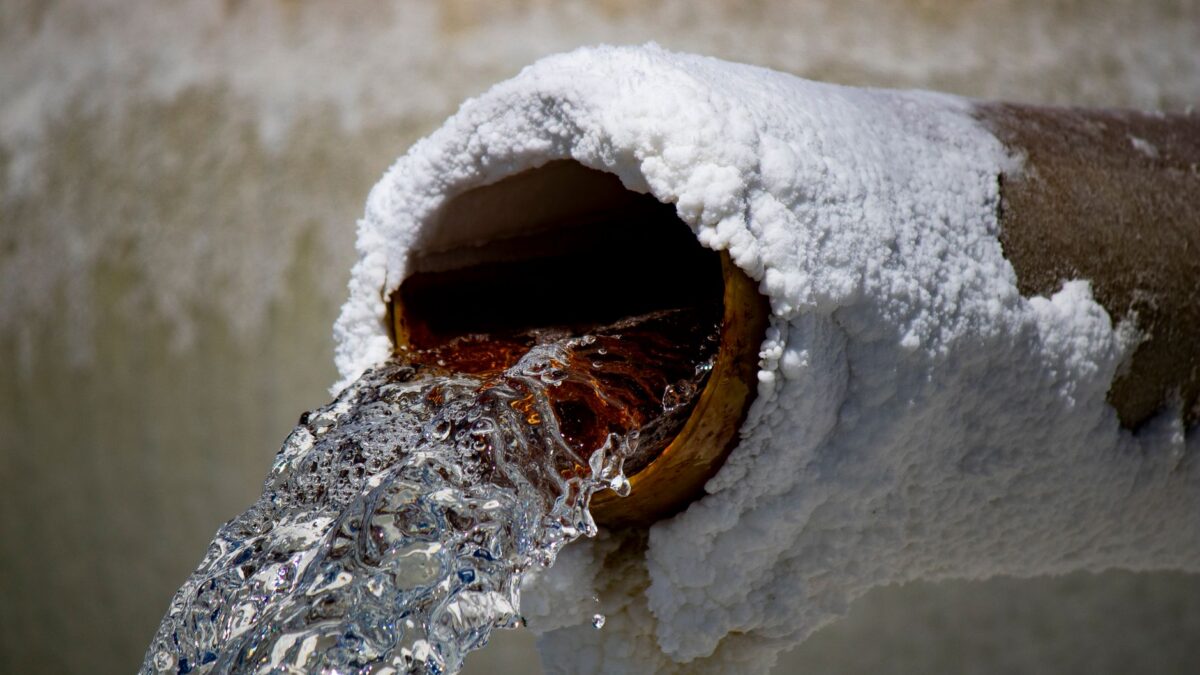
To keep pipes from freezing, let a cold-water faucet drip, open the cabinet doors under sinks on exterior walls, keep the thermostat at 55°F (13°C) or higher day and night, and insulate or heat-trace any pipe that runs through an unheated space. Pipes are most at risk when outdoor temperatures fall to about 20°F (-7°C) or lower, especially after several hours of wind. If a pipe does freeze, open the faucet, warm the pipe slowly and never use an open flame.
Which pipes freeze first?
Pipes in unheated or poorly insulated areas freeze first. That means pipes in attics, crawl spaces, garages, exterior walls and under sinks against an outside wall. Outdoor spigots, hose bibs, sprinkler lines and pool supply lines are also exposed.
Water expands as it turns to ice. The ice plug itself is only part of the problem: pressure builds in the trapped water between the plug and a closed faucet, and that is where the pipe usually splits. A split pipe may not leak until the ice melts, so a burst is often discovered during the thaw.
Should I let my faucets drip?
Yes, a slow drip from a faucet on the exposed line helps, because moving water is harder to freeze and a drip relieves pressure between any ice and the tap. Open the cold tap just enough for a steady trickle, about the width of a pencil lead. Hot lines freeze too, but if you drip only one handle on a mixing faucet, the cold side is the usual choice.
- Choose the faucet farthest from where water enters the house, so water moves through the whole run.
- Drip faucets on exterior walls first, then those on the coldest side of the house.
- Keep dripping until temperatures rise above freezing for good, not just for an afternoon.
- Expect a slightly higher water bill. It costs far less than repairing a burst pipe.
Do open cabinet doors really help?
Open cabinet doors let room-temperature air reach pipes that are otherwise sealed in a cold cavity. Sink bases on exterior walls are the usual trouble spots, in kitchens and bathrooms alike. Open the doors during a hard freeze and move out any cleaning products or other chemicals if small children or pets are in the home.
Cabinet air only helps when the room itself is warm. If a vanity sits against a poorly insulated wall, add foam pipe insulation too. Keeping cabinets tidy and clear also makes it easy to reach the shutoff valves. Wiping cabinet interiors dry after a thaw is covered in the guide to cleaning kitchen cabinets without residue.
How warm should the house be?
Hold the thermostat at 55°F (13°C) or higher, even when nobody is home. Setting it lower to save energy is a risk during a cold snap, because walls and crawl spaces cool well below the indoor reading. The attic and crawl space are colder than the living area, so pipes there need protection regardless of the thermostat.
Heat pump households should know how their system behaves in deep cold, since backup heat may carry the load. The article on a heat pump in cold weather explains low limits, defrost mode and when backup heat runs. If you are weighing systems, the comparison of heat pump vs gas furnace running cost and comfort covers the tradeoffs.
How does heat tape work, and is it safe?
Heat tape, also called heat cable, is an electric cable that wraps a pipe and warms it when temperatures drop. Choose a product listed by a recognized testing lab, made for the pipe material (metal or plastic), and ideally with a built-in thermostat so it only runs when needed. Follow the manufacturer’s instructions exactly, because misuse is a fire risk.
- Never overlap or cross the cable over itself unless the instructions allow it.
- Plug it into a grounded outlet, ideally one protected by a ground-fault circuit interrupter (GFCI).
- Do not use extension cords or power strips.
- Cover it with the insulation type the maker specifies, usually foam or fiberglass wrap, and check that the cable is not damaged each fall.
- Replace old, cracked, scorched or unlabeled cable instead of reusing it.
Heat tape keeps a pipe from freezing but does not fix a pipe that is already frozen solid unless the instructions say it can. It also stops working in a power outage, so it is not a full plan on its own.
What should I do before a freeze?
Prepare before the forecast turns cold, because a few cheap steps remove most of the risk.
- Disconnect garden hoses and, if the spigot has an interior shutoff, close it and drain the outdoor line. Fit an insulated cover over the spigot.
- Wrap exposed pipes in foam sleeves or insulation sold for pipes, and seal air leaks around where pipes enter the house with caulk or insulation.
- Find the main water shutoff valve and make sure everyone in the home can turn it.
- Close garage doors and crawl space vents during a freeze.
- If you will be away, keep the heat on at 55°F (13°C) or higher, or shut off the water and drain the system. Ask someone to check the house daily.
The Department of Energy publishes winter home-protection advice at energy.gov, and Ready.gov has cold-weather preparedness guidance.
What do I do if a pipe freezes?
If water slows to a trickle or stops, a pipe is probably frozen, so open the faucet and start warming the pipe gently. Opening the tap lets water and steam escape as the ice melts. Start at the faucet end and work back toward the frozen section.
- Use a hair dryer, a heating pad, or towels soaked in hot water.
- Never use a blowtorch, propane heater, kerosene heater, charcoal stove or any open flame. They can ignite the building or damage the pipe.
- Do not use electric heaters near standing water, and keep cords dry.
- Keep warming until full water pressure returns, then check the whole run for leaks.
If you see a crack, a bulge or water, or the frozen section is inside a wall or you cannot find it, turn off the main water supply and call a licensed plumber. A burst pipe near electrical equipment is also a reason to shut off power to that area first, if you can do it safely.
Quick answers
At what temperature do pipes freeze?
Water freezes at 32°F (0°C), but pipes inside walls and heated spaces usually survive until outdoor temperatures drop to about 20°F (-7°C) or lower. Uninsulated pipes in an attic or crawl space can freeze sooner.
Is it better to drip hot or cold water?
Cold is the usual choice for a single drip, because the cold supply line runs through the same exposed areas and the drip costs less than running hot water. On a faucet with two handles, open the cold one.
How long does a pipe take to freeze?
There is no single time. It depends on the temperature, the wind, how well the pipe is insulated and whether water is moving. A pipe in a windy, uninsulated wall can freeze within hours, while an insulated pipe in a heated room may not freeze at all.
Should I turn off the water when I leave for winter?
Yes, for a long absence. Shut off the main valve, open the faucets to drain the lines and ask a plumber how to drain the water heater, or keep the heat at 55°F (13°C) or higher and have someone check the house.