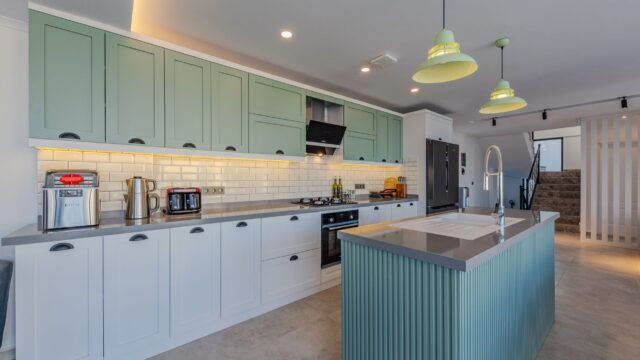
Open shelving kitchens replace some or all upper cabinets with exposed shelves, usually in wood that matches or warms up the counters, mounted on hidden floating hardware or visible metal brackets. The look works when the shelves hold everyday items in a few repeated colors, when there is still closed storage elsewhere, and when the wall behind (tile, paint or plaster) is part of the design.
The 17 photos below start with full kitchens and move to close-ups of brackets, styling and plants. Each caption sticks to what is visible in the frame and adds one specific idea you can use in your own kitchen.
1. Butcher Block Shelves Around the Range
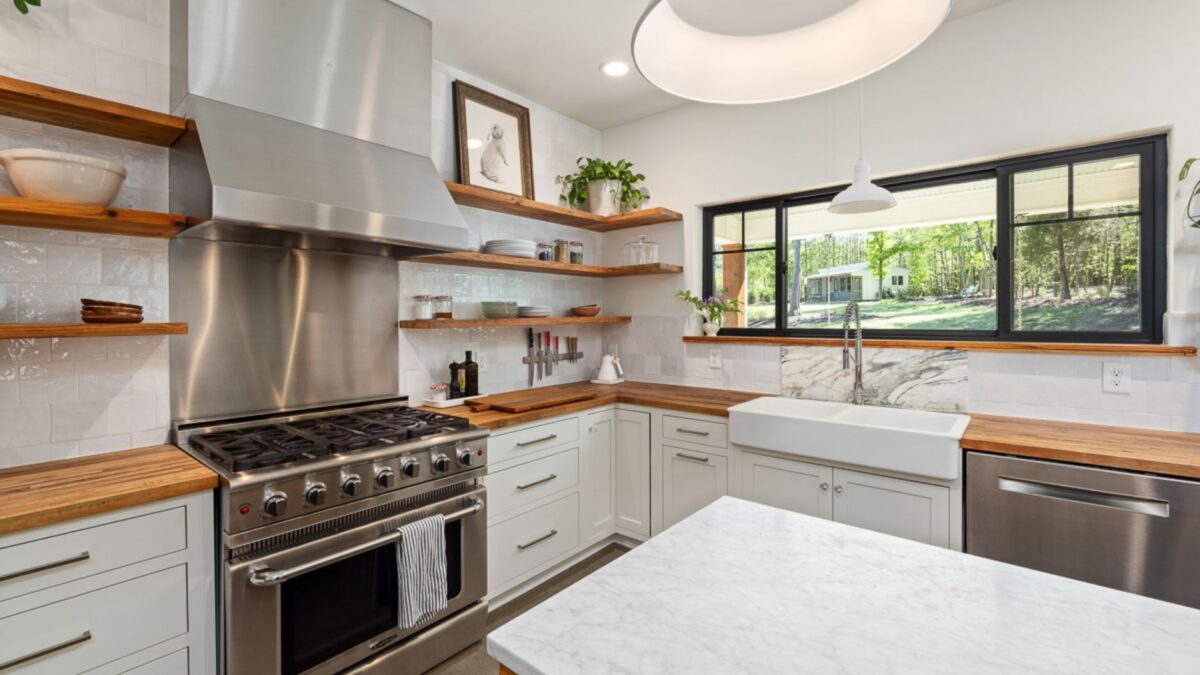
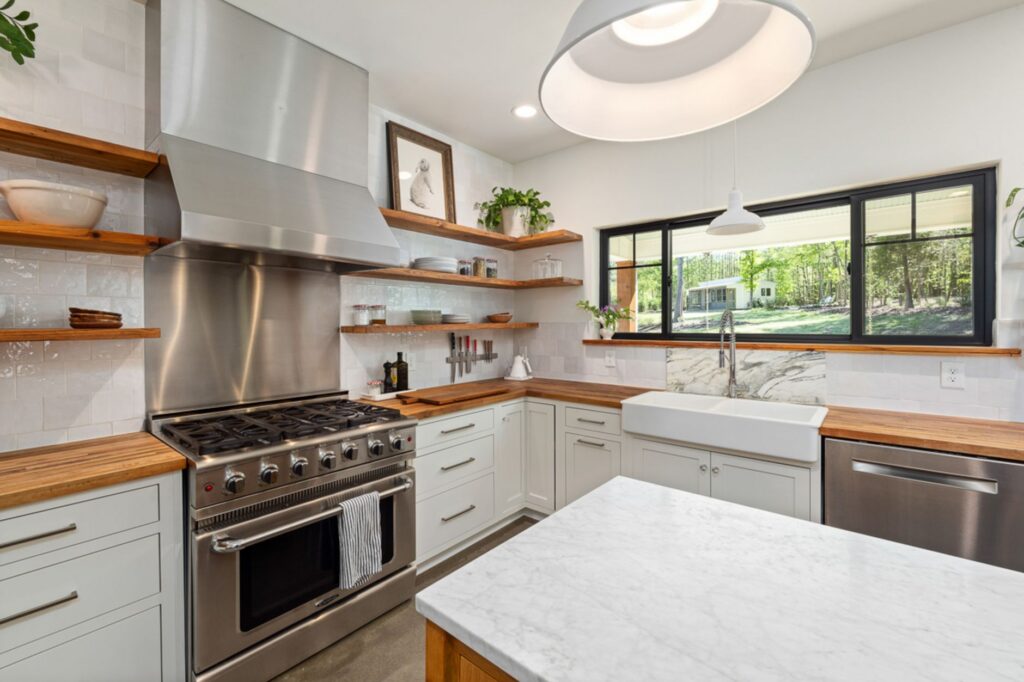
Thick wood shelves run along both walls on either side of a stainless range hood, matching the butcher block counters below. White glossy tile, pale gray cabinets, a white apron sink and a marble-look island keep the rest light. Cut shelves from the same wood as your counters so the open storage looks built in rather than added later. Photo: Curtis Adams / Pexels
2. A Full Wall of Shelves, No Uppers
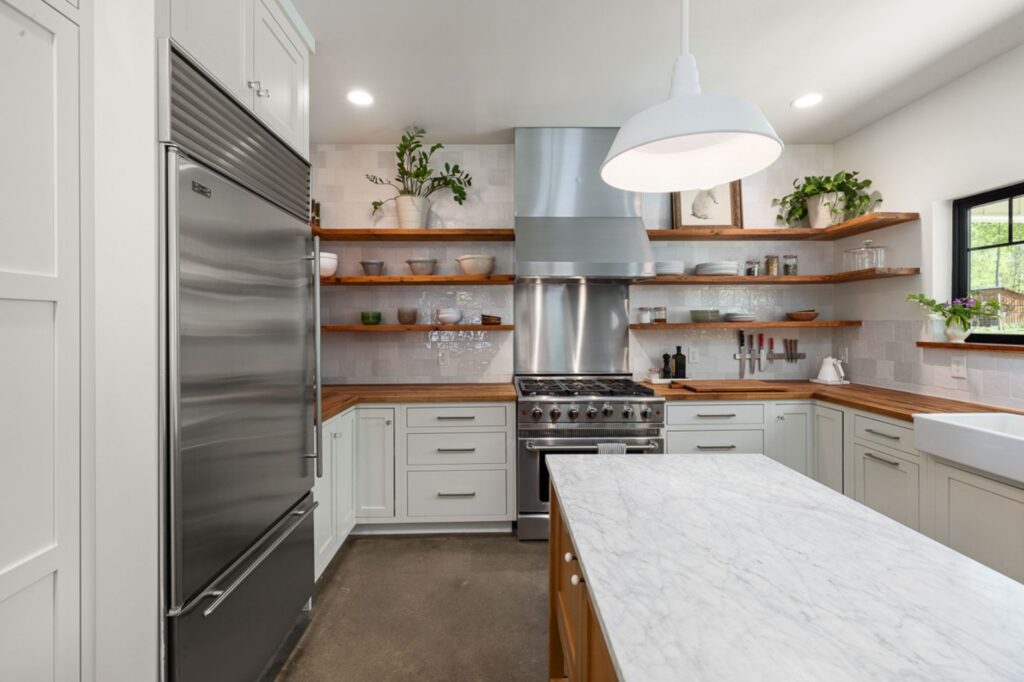
The same kitchen seen from the other side shows a tall stainless refrigerator, then a continuous run of wood shelves wrapping the back wall in place of upper cabinets. Plants, bowls and glassware are spread out with space between groups. If you drop uppers entirely, keep a tall pantry or fridge wall nearby for the bulky items. Photo: Curtis Adams / Pexels
3. Small Kitchen, Stacked Wood Shelves
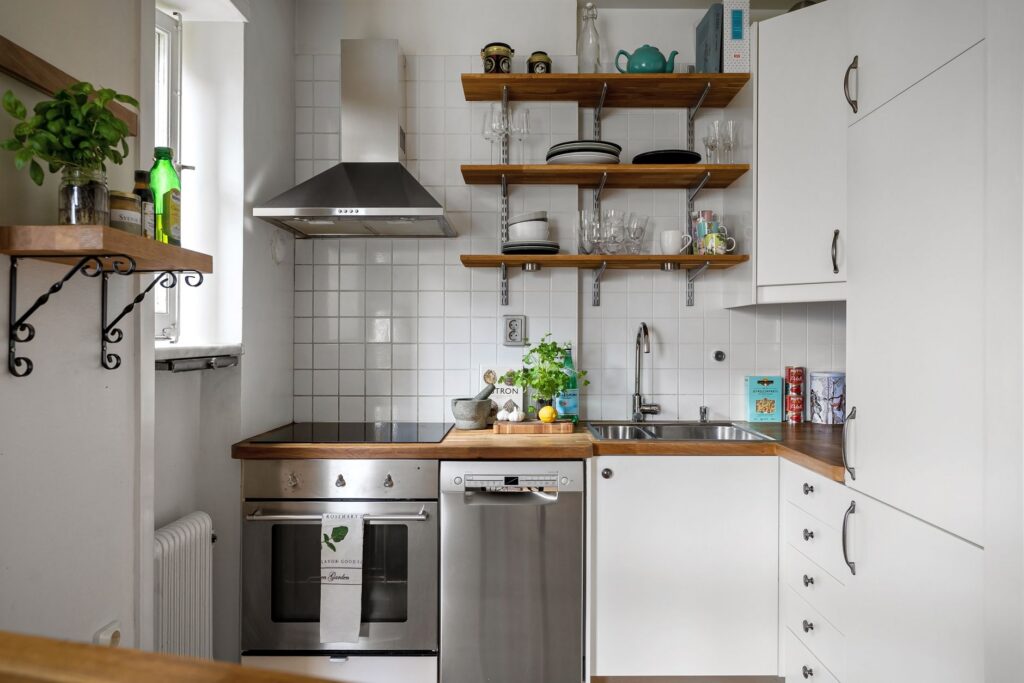
In a compact kitchen, three short wood shelves on slim metal uprights hang over the sink between a range hood and tall white cabinets. Square white tile, a wood counter and a scrolled-bracket shelf by the window complete the corner. In a tight space, a narrow stack of shelves above the sink adds storage without the bulk of a cabinet. Photo: Lisa Anna / Pexels
4. Two Chunky Shelves Beside Uppers
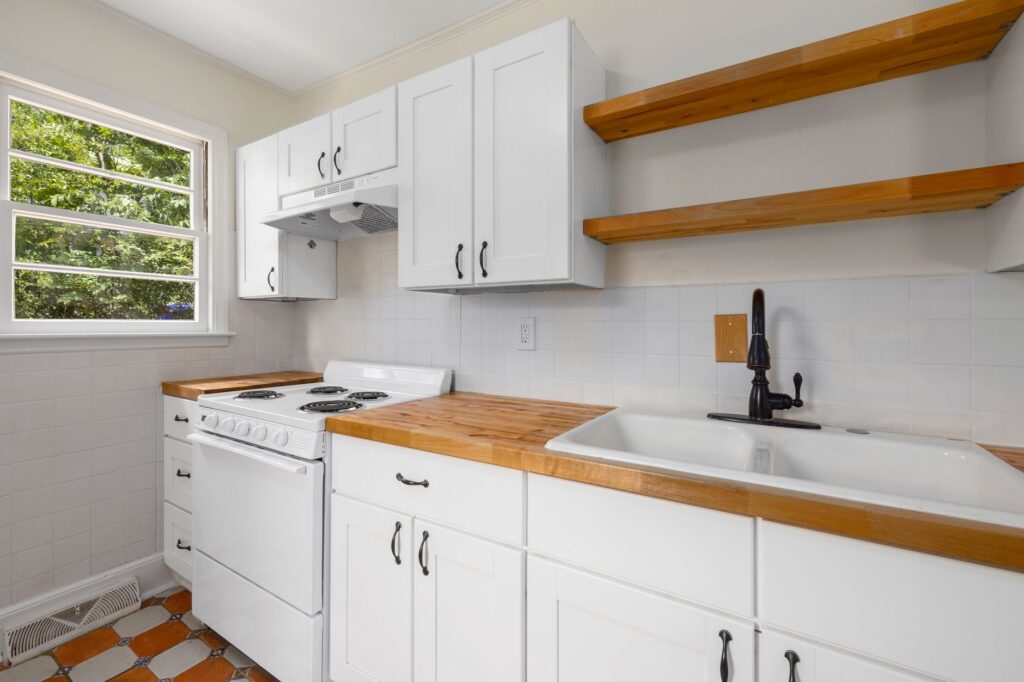
Two thick wood shelves fill the wall above a deep white sink, next to standard white upper cabinets. The butcher block counter, black faucet and white tile repeat the same warm-and-white mix. You do not have to remove every cabinet: swap just one section of uppers for two deep shelves to open up the sink wall. Photo: Curtis Adams / Pexels
5. Oak Shelves on Black Tile
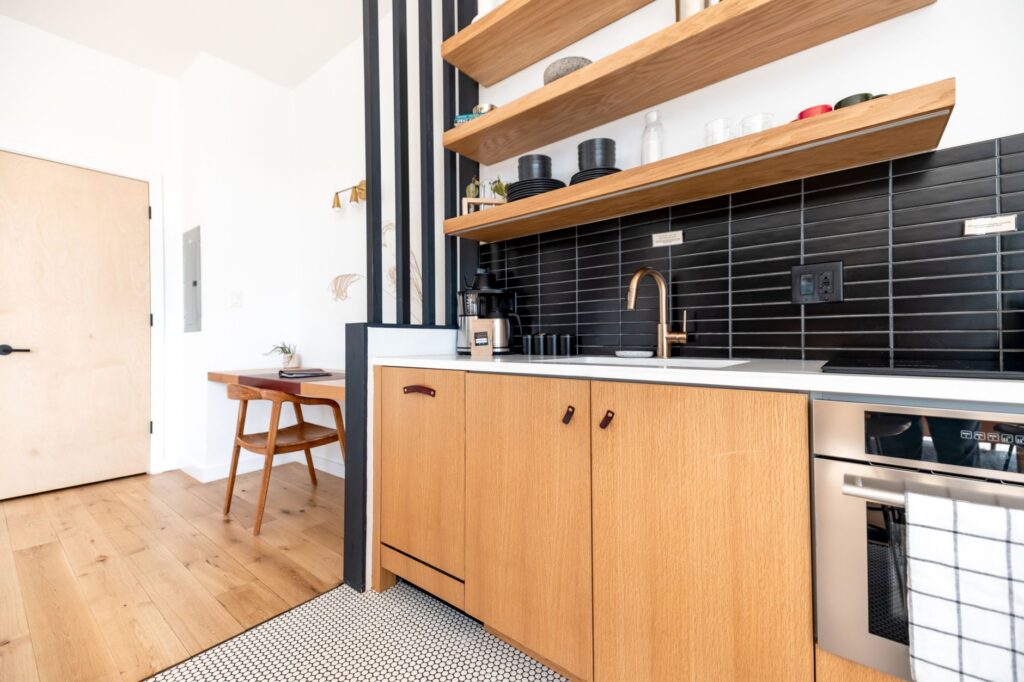
Light oak floating shelves sit against horizontal black tile, above flat-front oak base cabinets with black pulls. Vertical black slats separate the kitchen from a small desk nook. Against a dark backsplash, choose pale wood shelves so they stand out, and keep the items on them in a few muted colors. Photo: Andrea Davis / Pexels
6. Sunlit Shelves Beside a Black Hood
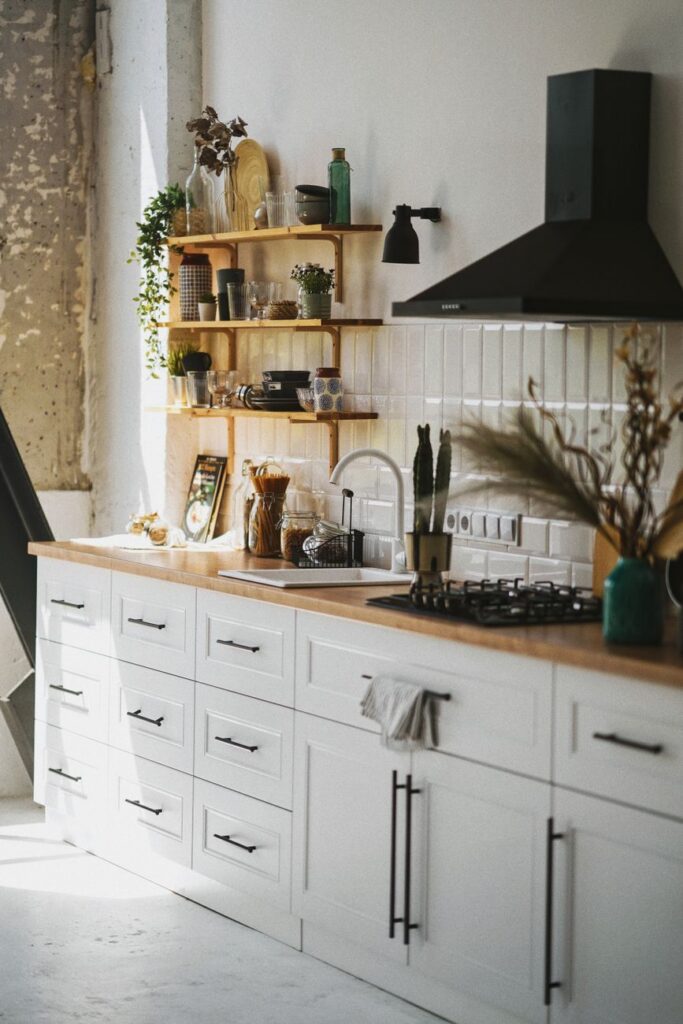
Wood shelves stacked in the corner hold jars, plants, a small mirror and kitchen tools next to a black range hood. White shaker cabinets with long black bar pulls and a wood counter run below in bright window light. Put open shelves on the wall closest to natural light, where plants and glass jars will look their best. Photo: Olena Bohovyk / Pexels
7. Walnut-Tone Shelves Above an Island
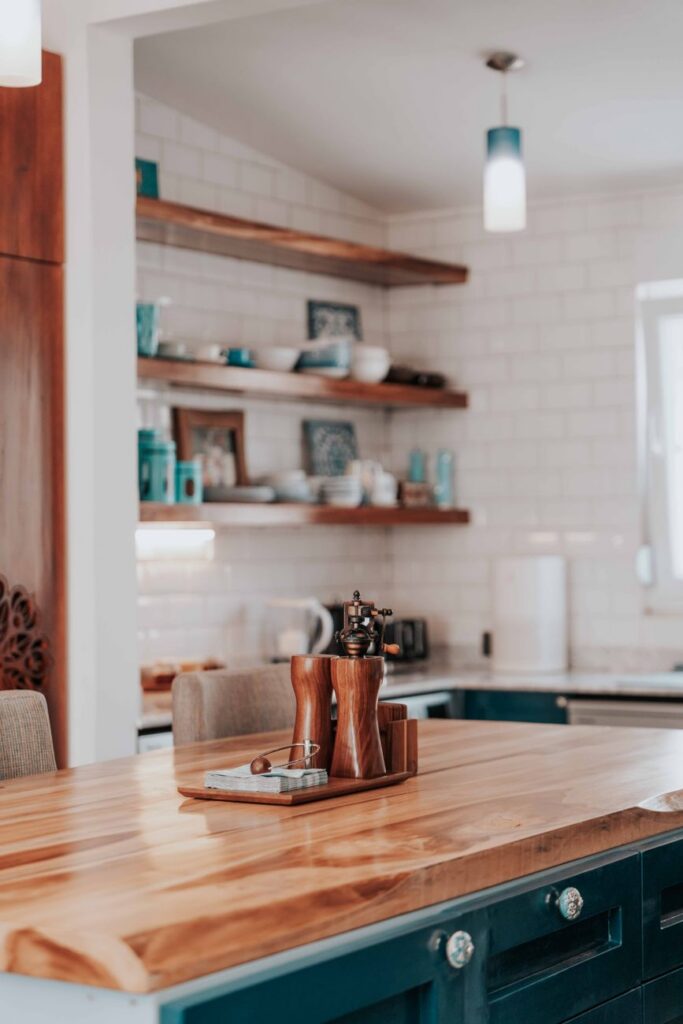
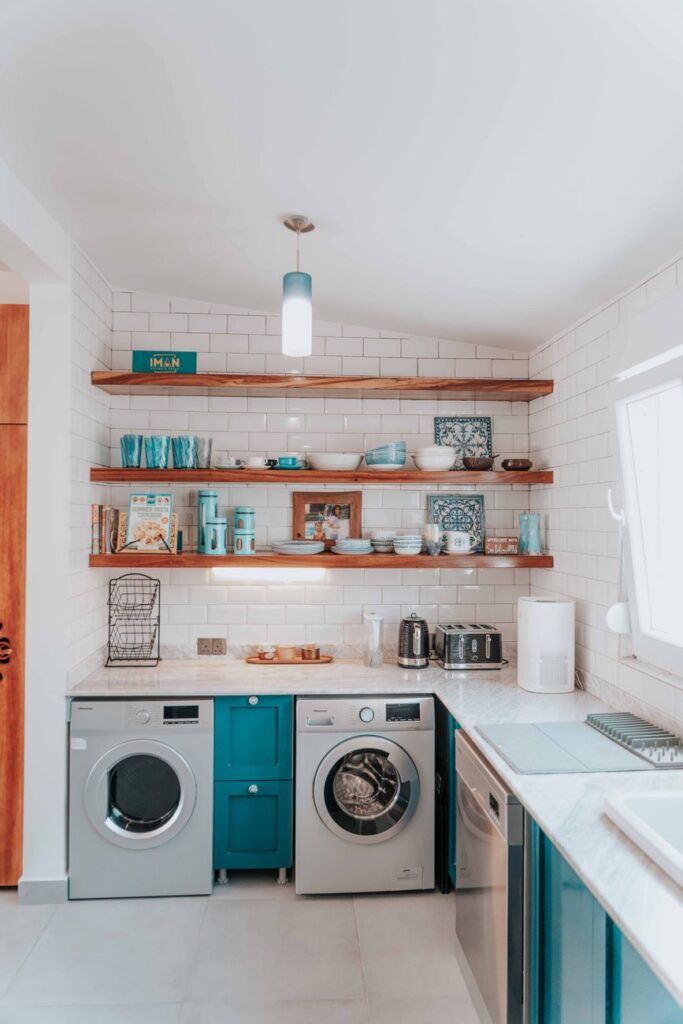
Three dark-stained wood shelves on white subway tile hold teal ceramics, small frames and white dishes. In the foreground, a wood island top sits on deep teal cabinets with brass knobs. Repeat one accent color, such as the teal here, on both the shelves and the cabinets so the displayed pieces look planned. Photo: Keegan Checks / Pexels
8. Open Shelves Over the Laundry
Three long wood shelves span a white subway tile wall above a washer, a dryer and teal lower cabinets. The shelves hold canisters, cups and bowls, with a pendant light hanging in front. Where appliances sit under the counter, long open shelves above keep everyday dishes reachable without crowding the room with cabinets. Photo: Keegan Checks / Pexels
9. Open Base Shelves and Hex Tile
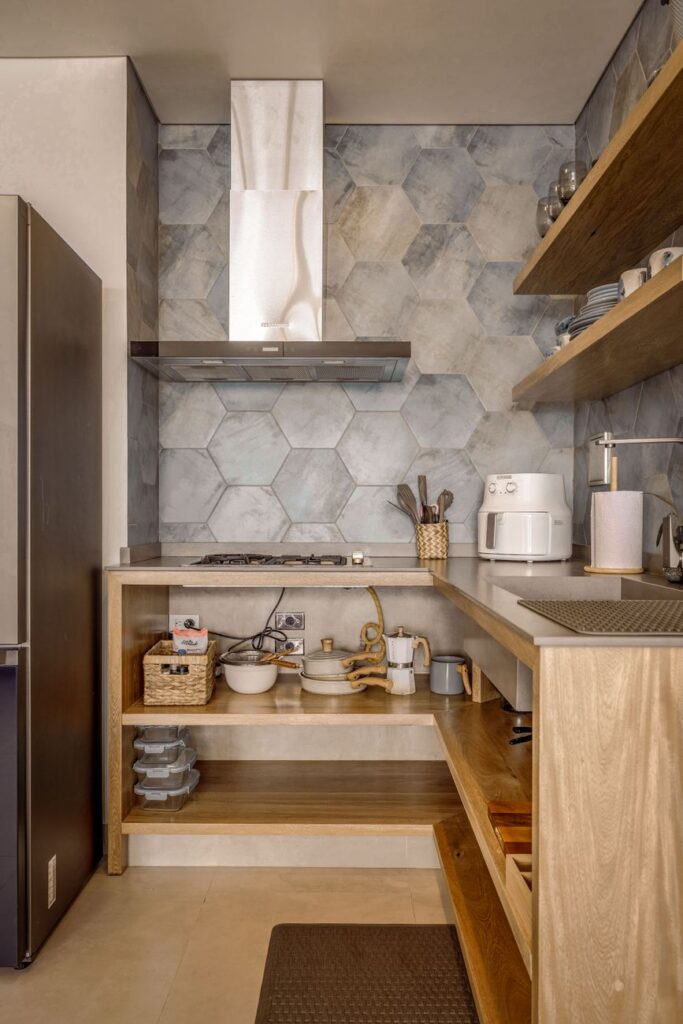
Gray hexagonal tile covers the wall behind a stainless chimney hood, while the base unit under the cooktop is open shelving in pale wood. More wood shelves run up the side wall. Open lower shelves suit pots, baskets and appliances you use daily; baskets help hide the smaller items. Photo: Juan Tapias / Pexels
10. Warm Rustic Shelves and a Round Window
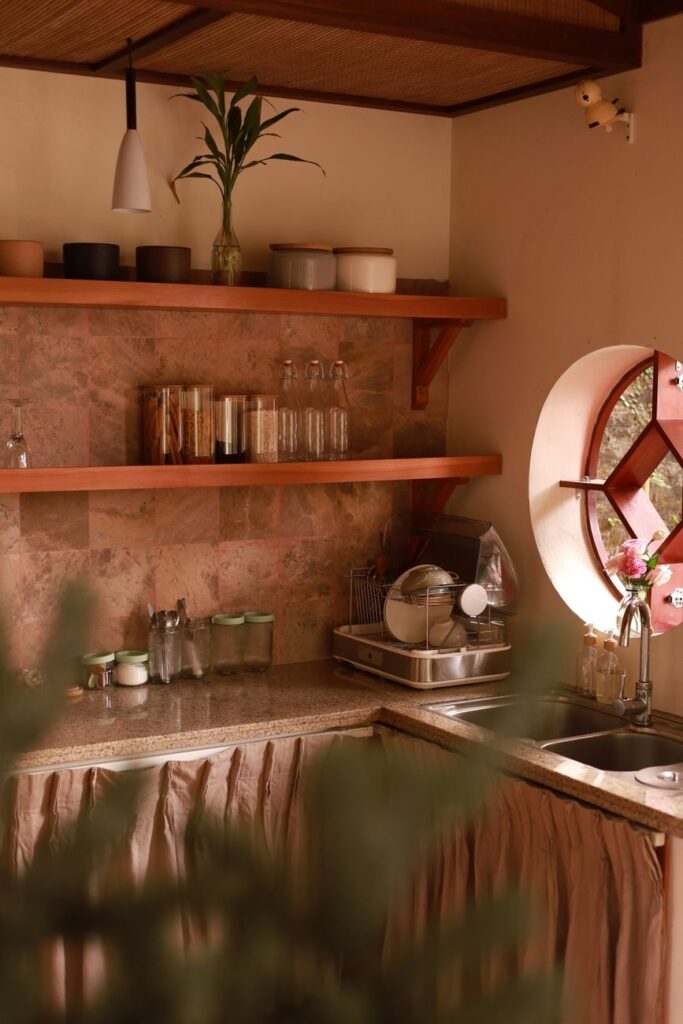
Two wood shelves on a warm terracotta-toned tile wall hold glass jars and lidded canisters. A small round window with a pink frame sits above the sink, and a fabric curtain hides the space under the counter. A gathered curtain under the sink or counter is a soft, low-cost alternative to cabinet doors. Photo: Hồng Quang Official / Pexels
11. Plate Rack and Hanging Shelves
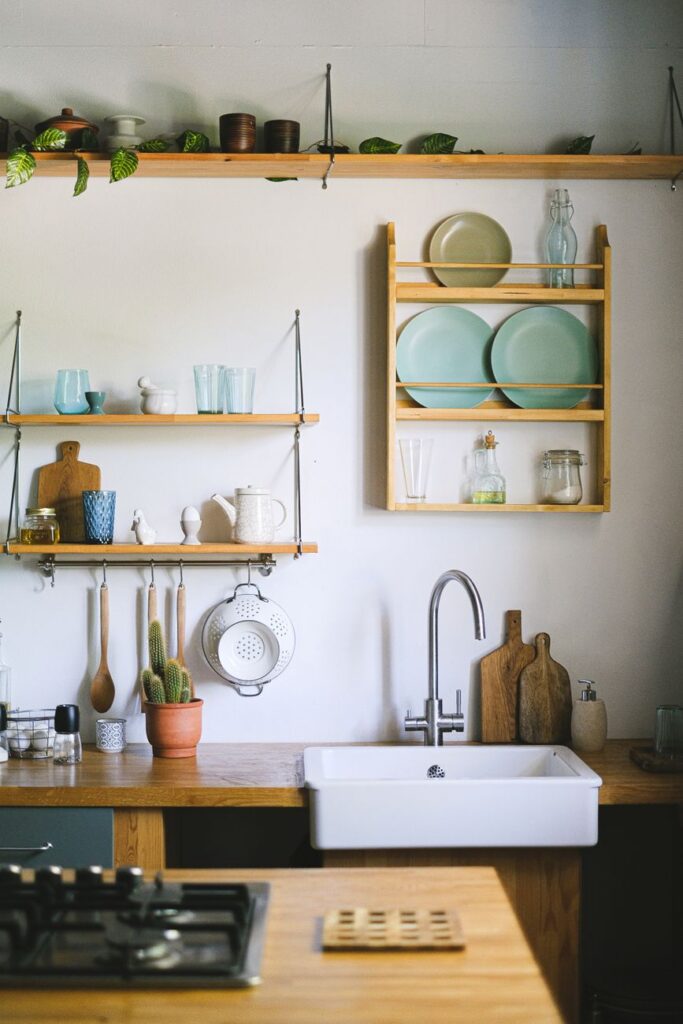
A wall-mounted wooden plate rack holds green plates next to wood shelves hung on thin metal rods. A white farmhouse sink, a wood counter and utensils on a rail sit below. Stand plates upright in a rack to show off a set you love, and keep the shelves around it for glasses and small pots. Photo: Anna Shvets / Pexels
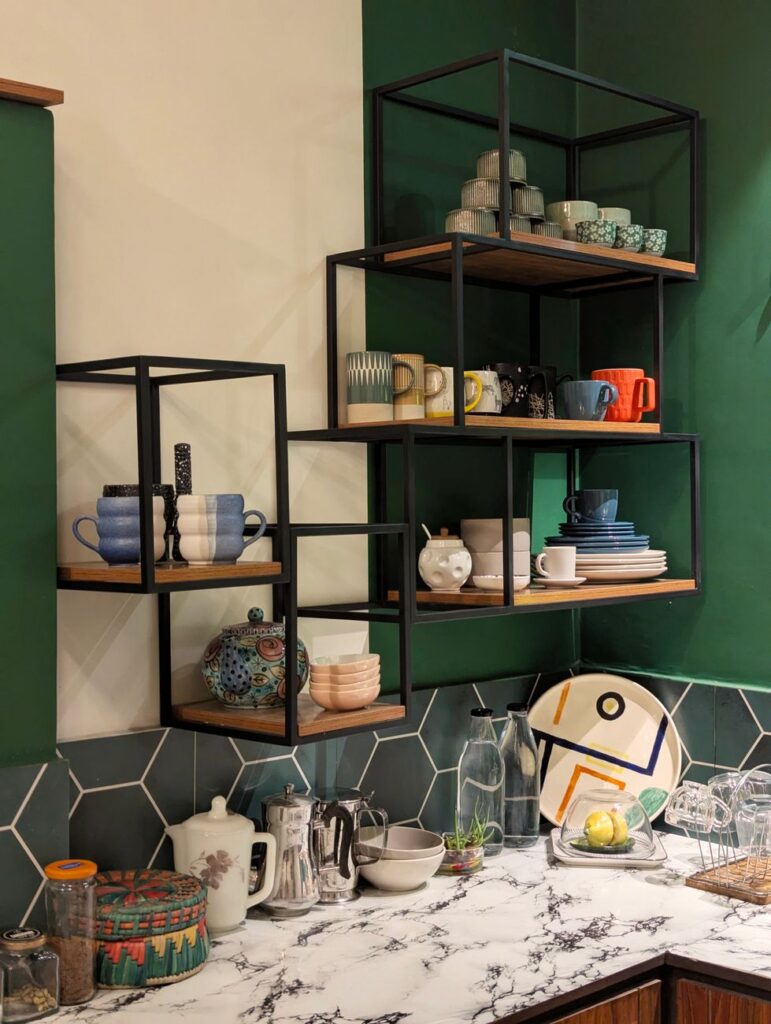
12. Black Metal Box Shelves on Green
Black metal-framed cubes with wood bases are mounted at staggered heights on a deep green wall, holding mugs, cups and small bowls. The backsplash is green hexagonal tile above a white marble-look counter. Staggered box shelves turn a mug collection into a feature and work well on a bold painted wall. Photo: Umar Kakarh / Pexels
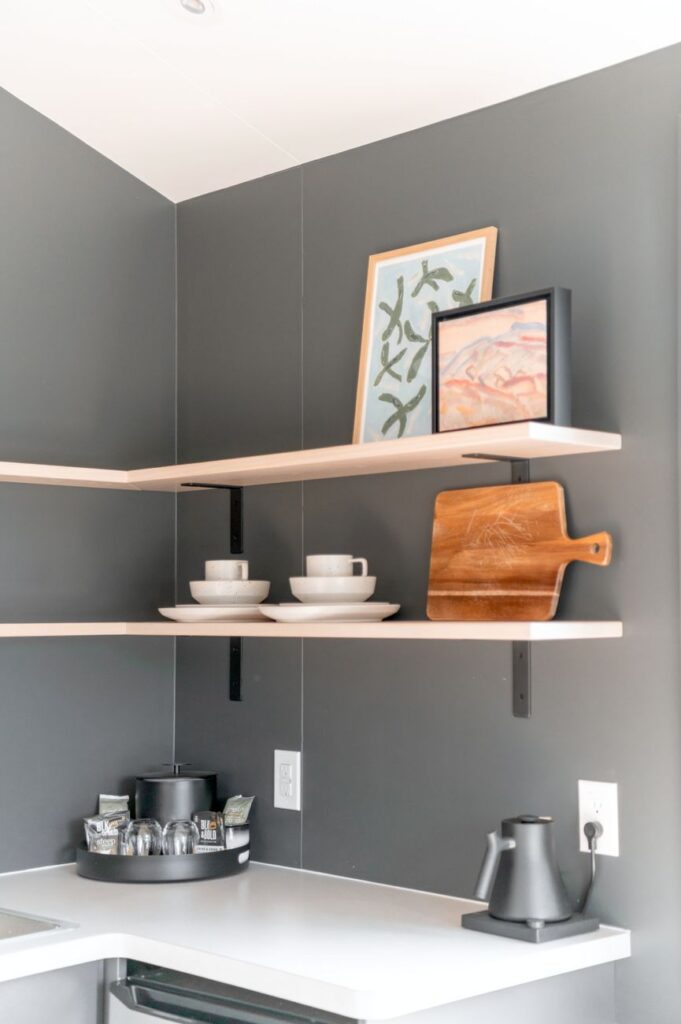
13. Corner Shelves on a Gray Wall
Two pale wood shelves on black brackets wrap a corner painted charcoal gray, holding cups, saucers, a cutting board and two framed prints. A white counter and a black kettle sit below. Wrapping shelves around a corner uses space that awkward corner cabinets often waste, and dark paint makes light wood pop. Photo: Andrea Davis / Pexels
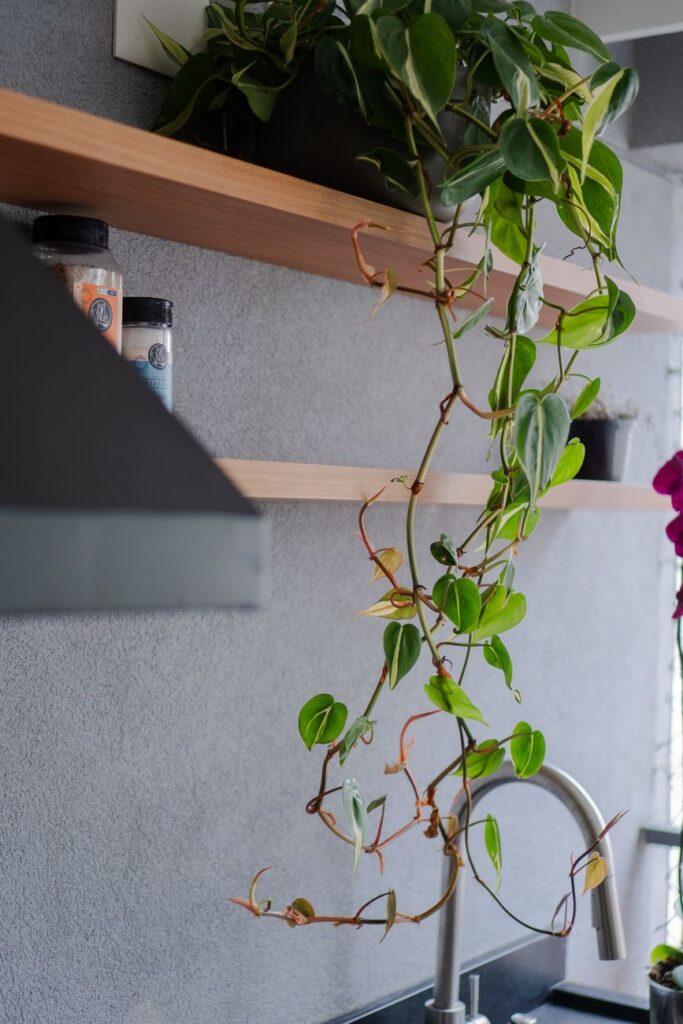
14. Let a Trailing Plant Soften the Lines
A trailing pothos-type plant spills from the top of a wood shelf down past a lower shelf and the faucet. The wall behind is a textured gray, and a few small canisters sit on the lower shelf. Place one trailing plant on the highest shelf, where it gets light and can hang freely without blocking anything you reach for. Photo: Wolf Art / Pexels
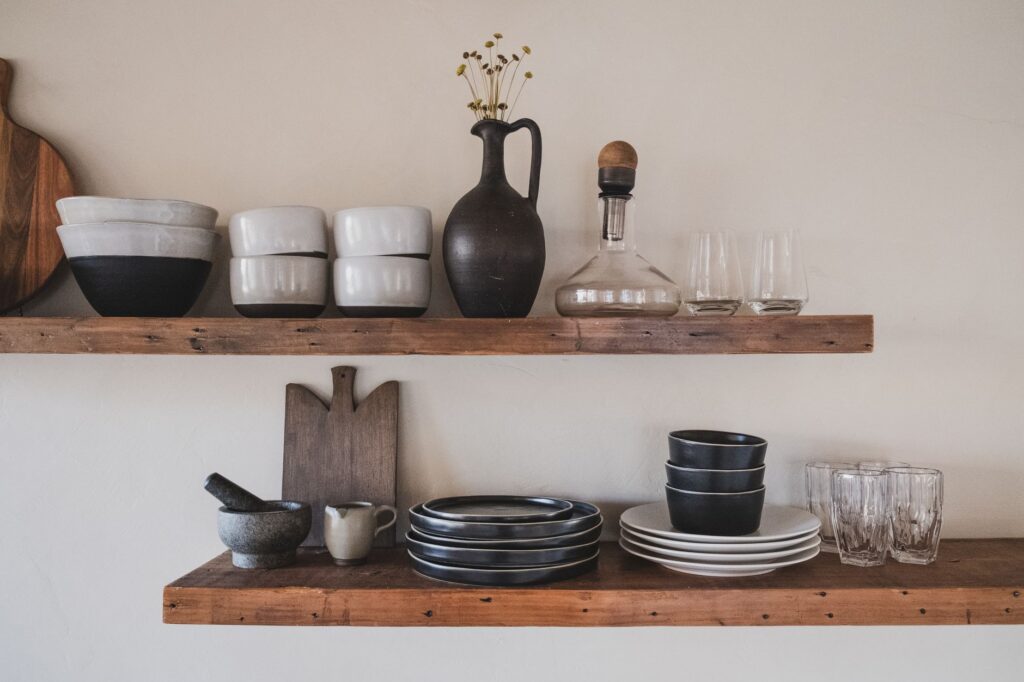
15. Reclaimed Wood, Stacked by Type
Two rough reclaimed-wood shelves hold stacks of black and white bowls, dark plates, glassware, a carafe, a black pitcher with dried flowers and a wooden cutting board. Items are grouped by type and color. Stack like with like, such as all plates in one pile and all glasses in a row, so a busy shelf still looks orderly. Photo: Tony Smith / Pexels
16. Black Strap Brackets on White Tile
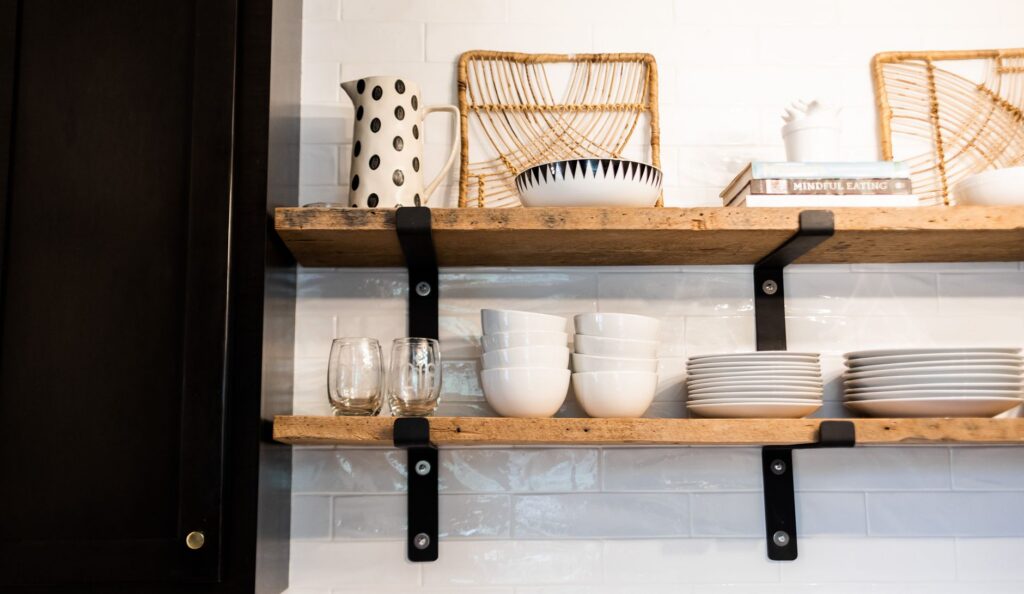
Two rough wood shelves rest on flat black metal strap brackets over glossy white subway tile. White bowls, plates and glasses fill the lower shelf, with a dotted pitcher, woven rattan pieces and books on top. Visible metal brackets add an industrial edge; match their finish to your cabinet hardware or faucet. Photo: Caleb Oquendo / Pexels
17. Curved Brackets for Mugs and Plates
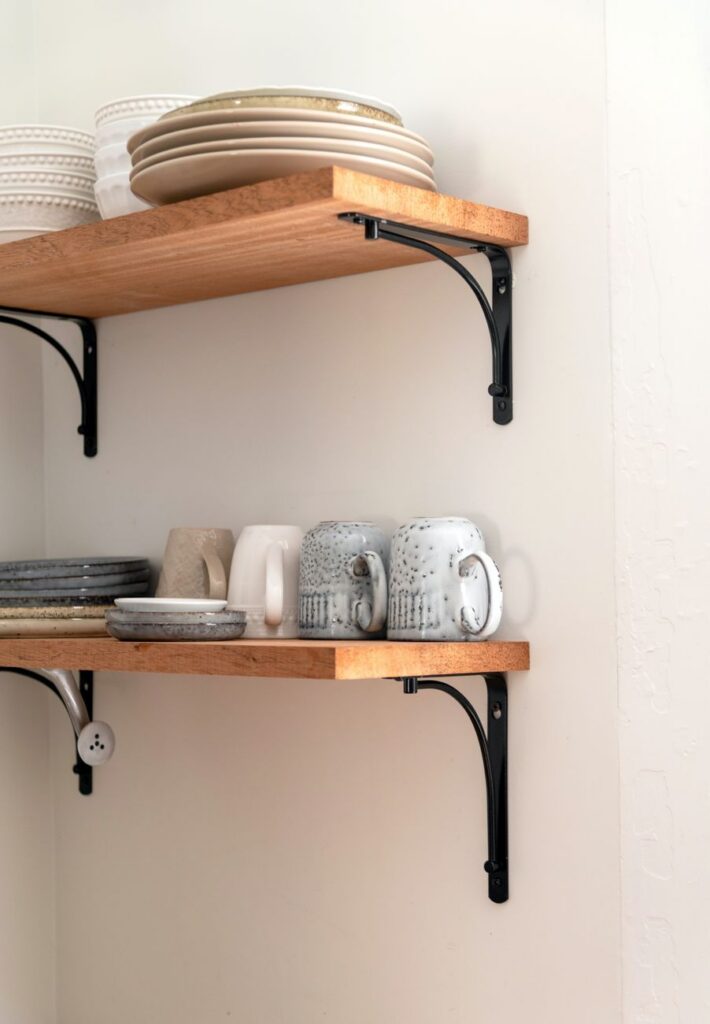
Two wood shelves sit on black curved brackets in a narrow white nook, the top one stacked with plates and the lower one lined with speckled mugs. The wall is otherwise bare. Even one or two short shelves in a nook or beside a window can hold daily mugs and plates, freeing a full cabinet. Photo: Andrea Davis / Pexels
Are open shelves practical in a kitchen?
Open shelves are practical for items you use every day, because dishes and glasses that cycle through the dishwasher rarely gather dust. They are less practical next to the range, where grease settles, and for rarely used pieces. Most kitchens in the photos above keep closed cabinets for bulk storage and use shelves for one wall or one section.
Which shelf style should you choose?
Choose the shelf style by how much weight it holds and how visible you want the hardware to be.
Element
Options
Works best when
Floating wood shelves
Thick solid or butcher block boards on hidden brackets
You want a clean line and plan for lighter loads
Bracketed shelves
Black strap brackets, curved iron brackets, scrolled supports
Shelves carry heavy stacks of plates and bowls
Rod-hung or rail shelves
Wood boards on slim metal rods or uprights
A small kitchen needs storage over the sink
Metal box shelves
Black frame cubes with wood bases, staggered
You want to display mugs or a collection on a bold wall
Open base shelves
Shelves or a curtain under the counter
Pots, baskets and daily appliances need quick access
How do you style open kitchen shelves so they don’t look cluttered?
Group items by type and limit the palette to two or three colors. Stack plates and bowls in matching piles, line glasses in a row, and leave empty space between groups. Add one plant or one piece of art per shelf run, and keep packaging, bags and mismatched containers in closed cabinets.