A Japandi living room mixes Japanese restraint with Scandinavian comfort: pale or warm natural wood, a calm neutral palette of cream, beige, gray and black, low simple furniture, and a few handmade or natural objects instead of busy decor. Texture does the work that color and pattern do in other styles, through linen, cane, jute, plaster and matte ceramics.
The 15 photos below run from full rooms to small corners and single vignettes. Each caption describes what is in the frame and gives one technique you can repeat at home, whether you are furnishing from scratch or editing a room you already have.
1. Soft Cream Seating on Concrete Tones
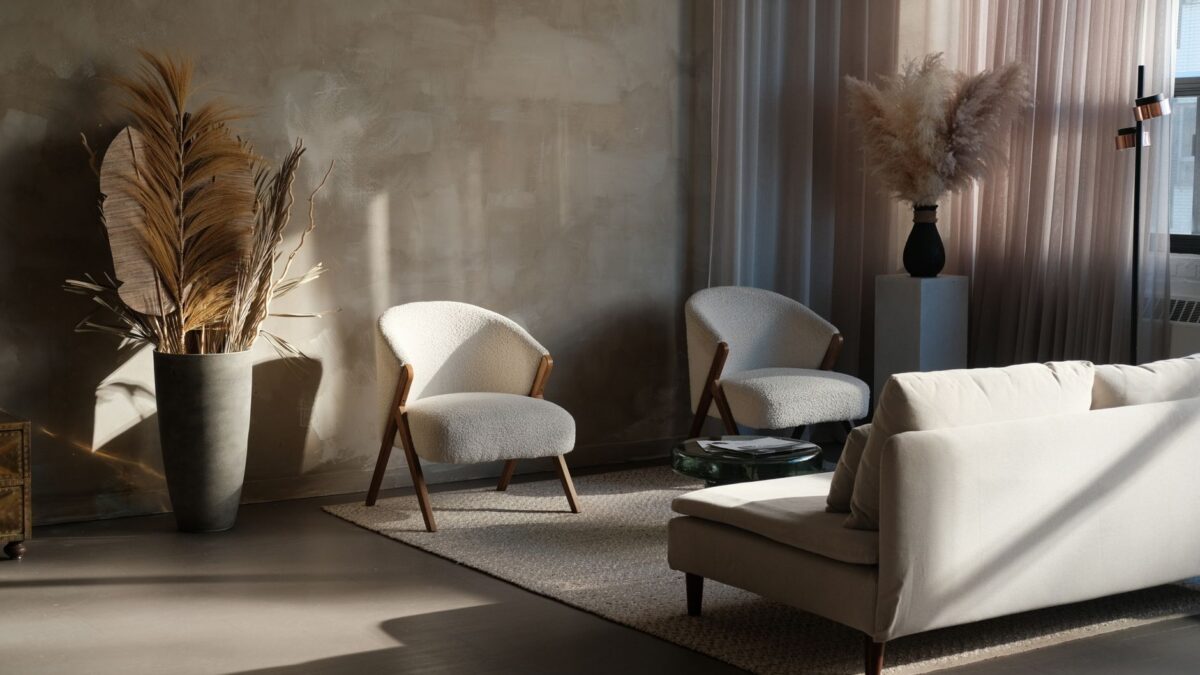
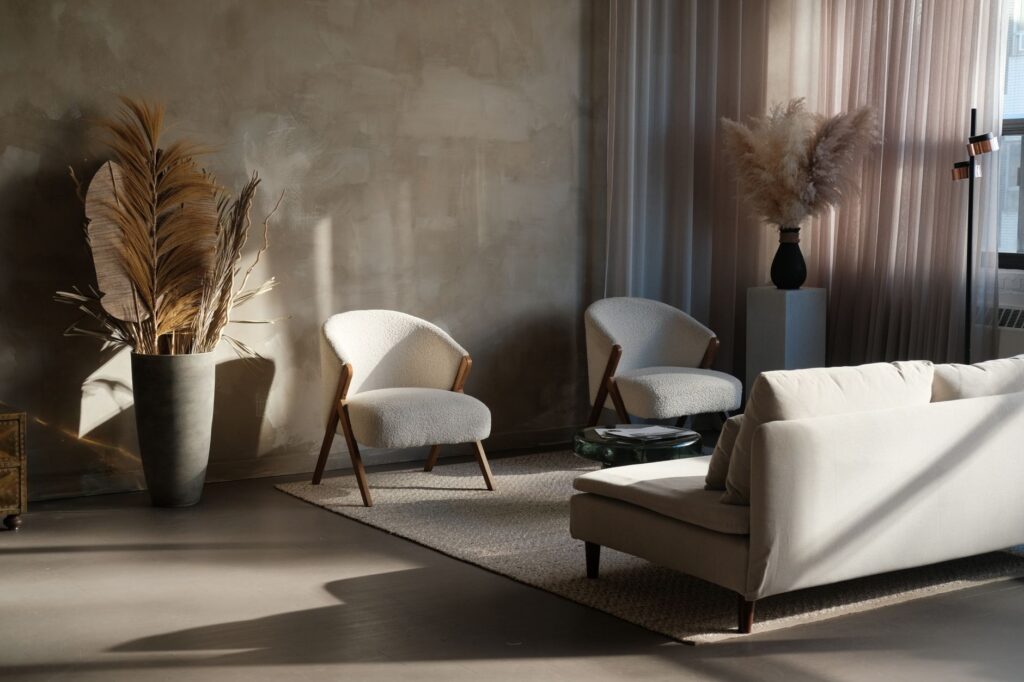
A long cream sofa, two curved boucle-style armchairs on dark wood legs and a flat-woven jute rug sit against a textured gray plaster wall. Tall dried palm and pampas arrangements in dark vases add height. To copy it, keep upholstery in one off-white shade and let a single rough wall finish supply the contrast. Photo: Pavel Morillo / Pexels
2. Cane Chairs Against Full-Height Linen
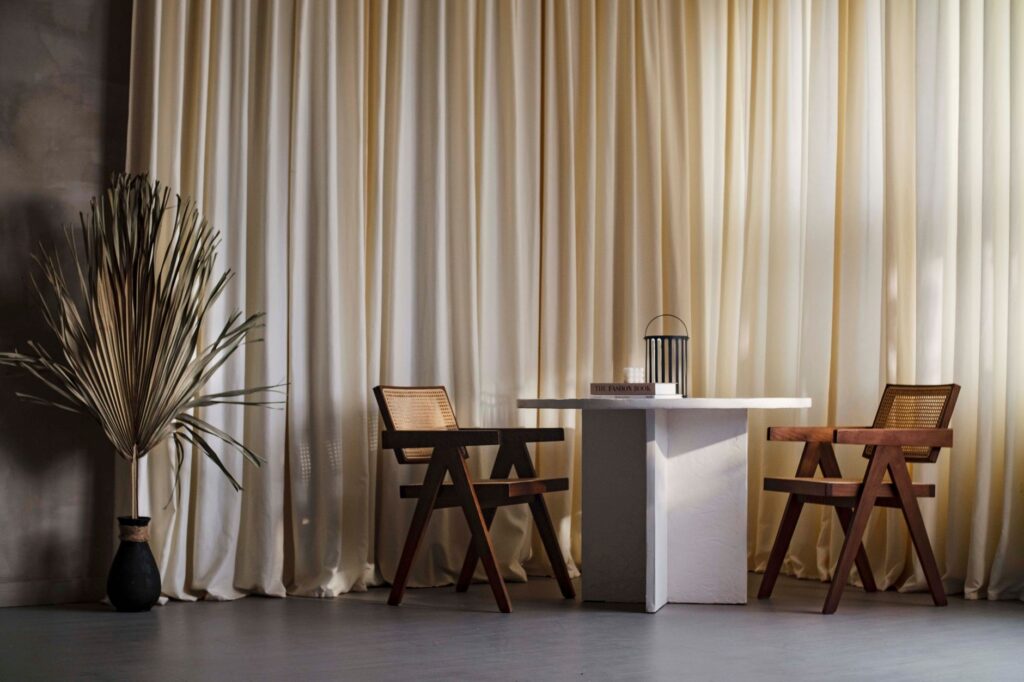
Two dark wood chairs with woven cane seats and backs flank a white pedestal table in front of floor-to-ceiling cream curtains. A dried palm in a black vase stands to one side. Hang sheer drapes from ceiling to floor across the whole wall, then keep furniture low and spare so the fabric reads as texture. Photo: Pavel Morillo / Pexels
3. Pale Pine Cabinets and a Plywood Chair
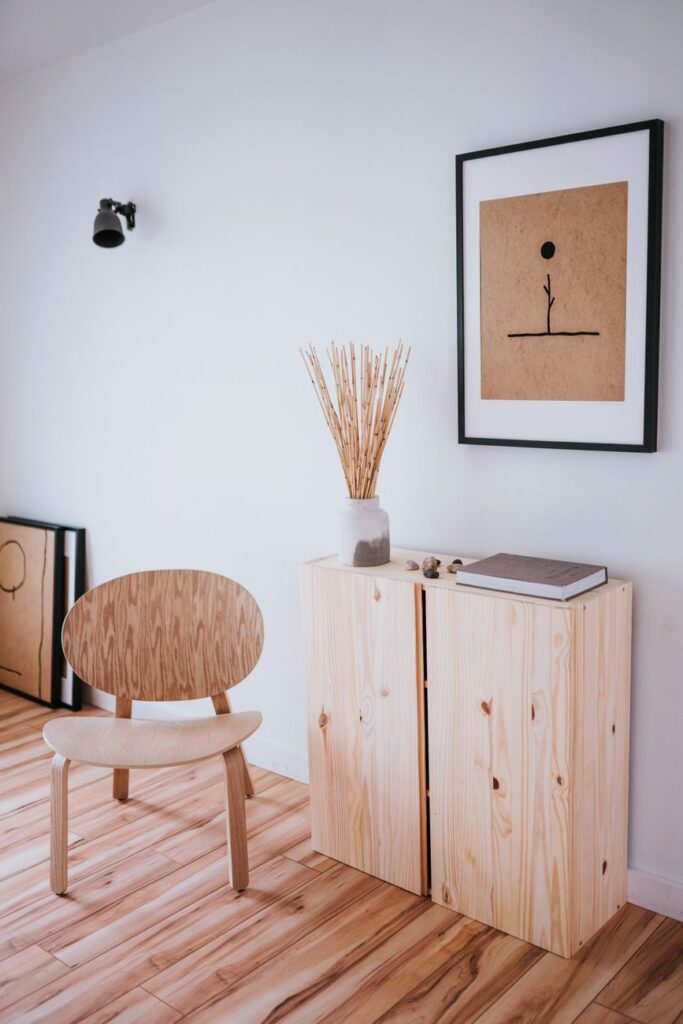
Two plain pine cabinets stand side by side under a framed kraft-paper print, next to a bent plywood lounge chair on a light wood floor. Dried grass in a white vase and a small stack of books are the only decor. Pair unfinished-looking pine storage with one sculptural chair and leave the wall above mostly empty. Photo: PNW Production / Pexels
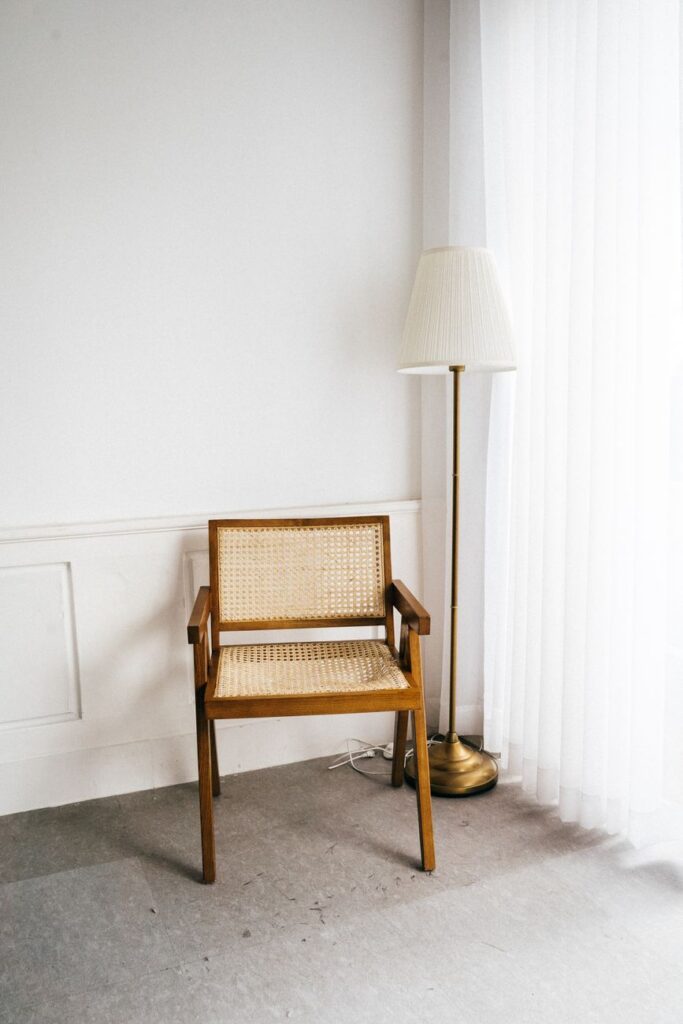
4. A Quiet Reading Corner
A wooden armchair with a cane seat and back sits in a corner beside a brass floor lamp with a pleated white shade. Sheer white curtains, white wainscot panels and a gray carpet complete the scene. Make a reading nook with just one chair and one floor lamp, and let daylight through sheer panels do the rest. Photo: Anna Tarazevich / Pexels
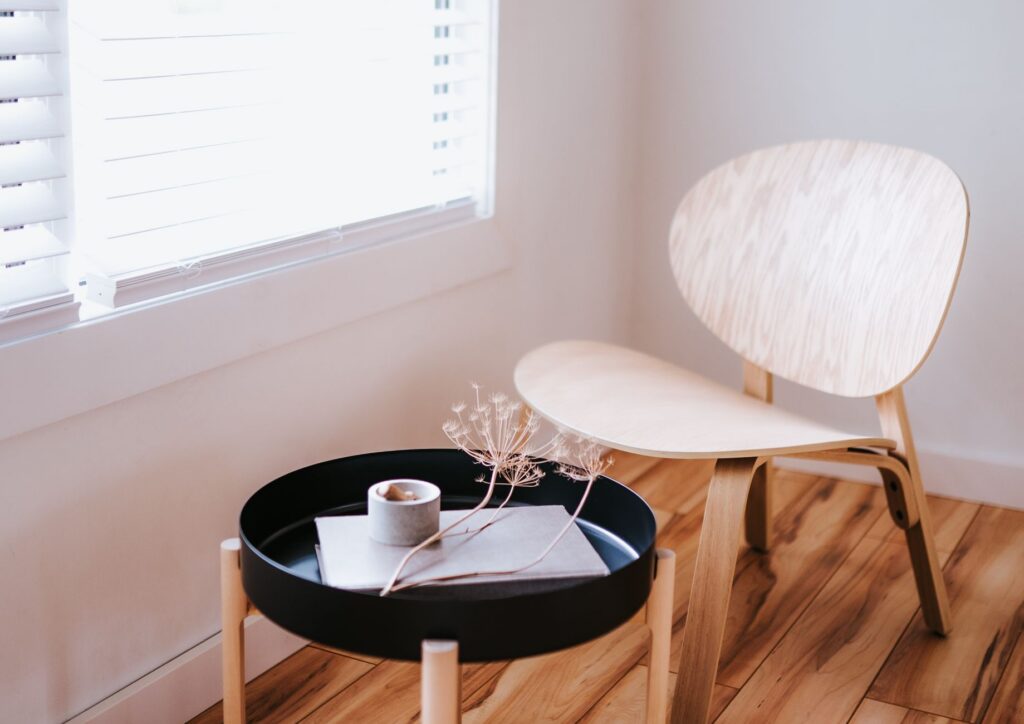
5. Plywood Lounger by the Window
A curved plywood lounge chair sits beside a black tray-top side table on light wood legs, close to a window with white blinds. On the tray are a concrete candle holder, a paper and a dried flower stem. Place the side table within arm's reach of the chair and keep only two or three objects on it. Photo: PNW Production / Pexels
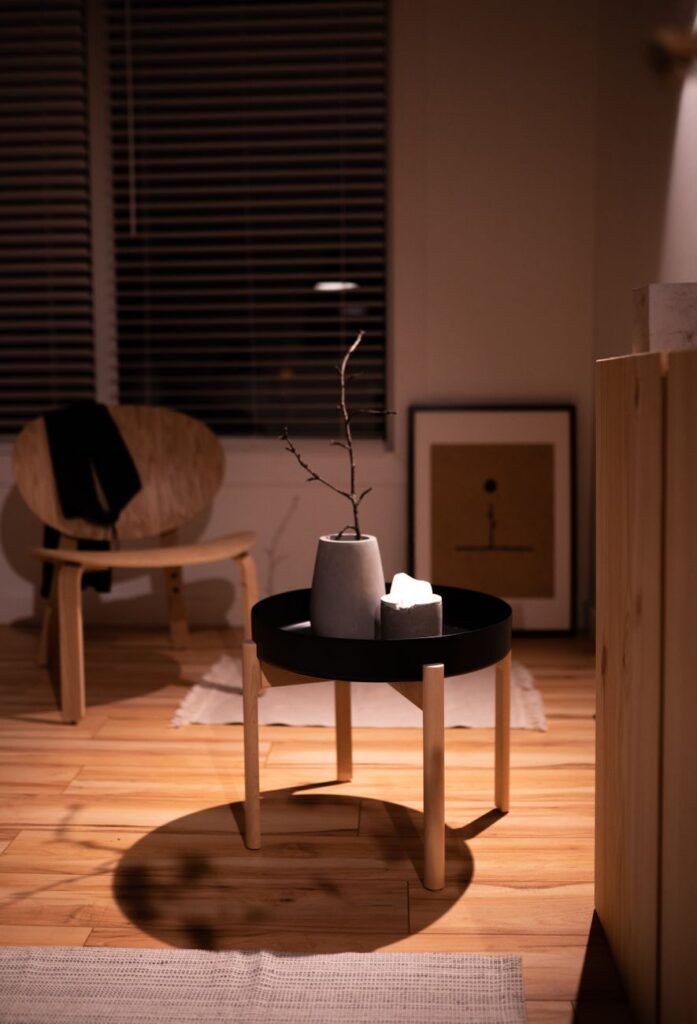
6. Low Lamplight in the Evening
A black tray table glows under a warm overhead light at night, casting a round shadow on the wood floor. A pale chair with a dark throw, slatted blinds and a framed print sit in the dim background. Swap bright ceiling lights for one warm, low pool of light aimed at a single surface after dark. Photo: PNW Production / Pexels
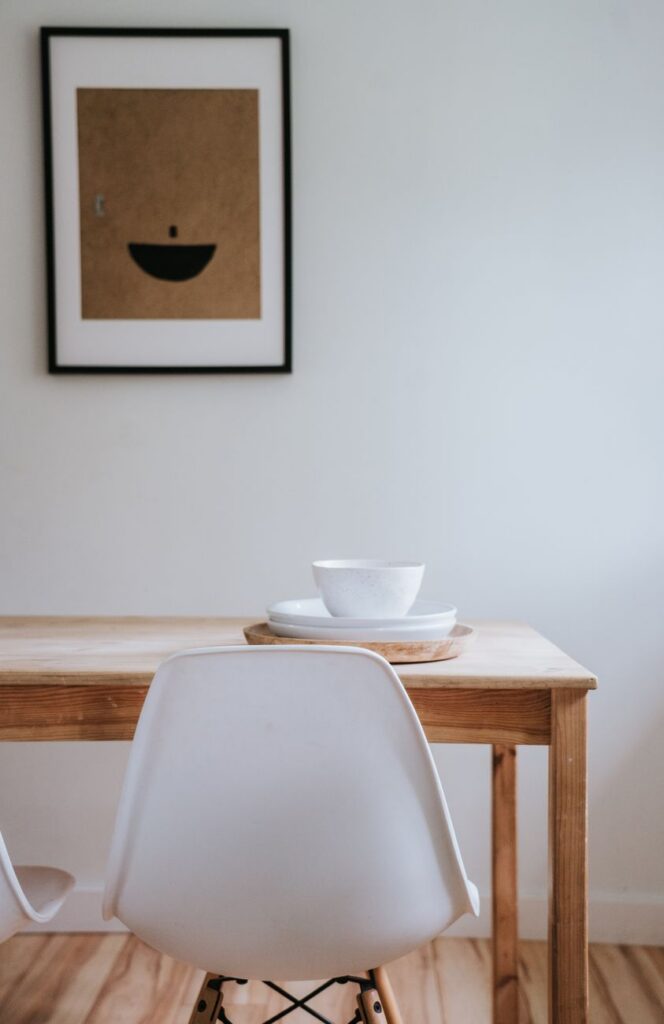
7. Simple Wood Table, White Shell Chair
A plain light wood table holds a white bowl and plate on a round wooden board, with a white molded shell chair pulled up in front. A framed print of a black bowl shape hangs above. For a small dining spot off the living area, combine a pale solid-wood table with one light, white chair and one framed print. Photo: PNW Production / Pexels
8. Bench Vignette with Tufted Cushion
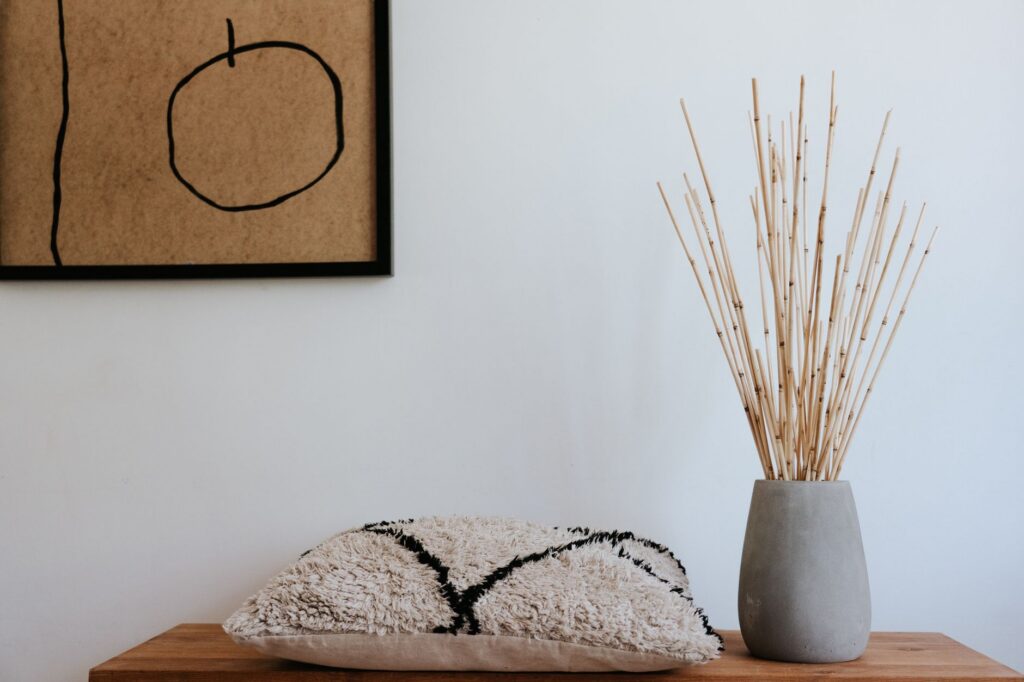
A shaggy cream cushion with black line pattern rests on a low wood bench beside a gray concrete-look vase holding bundled reed stems. A kraft-paper print with a black circle drawing hangs above. Build a vignette from three textures, such as a soft textile, a matte vase and natural fibers, all in one neutral range. Photo: PNW Production / Pexels
9. Live-Edge Stool as a Plant Stand
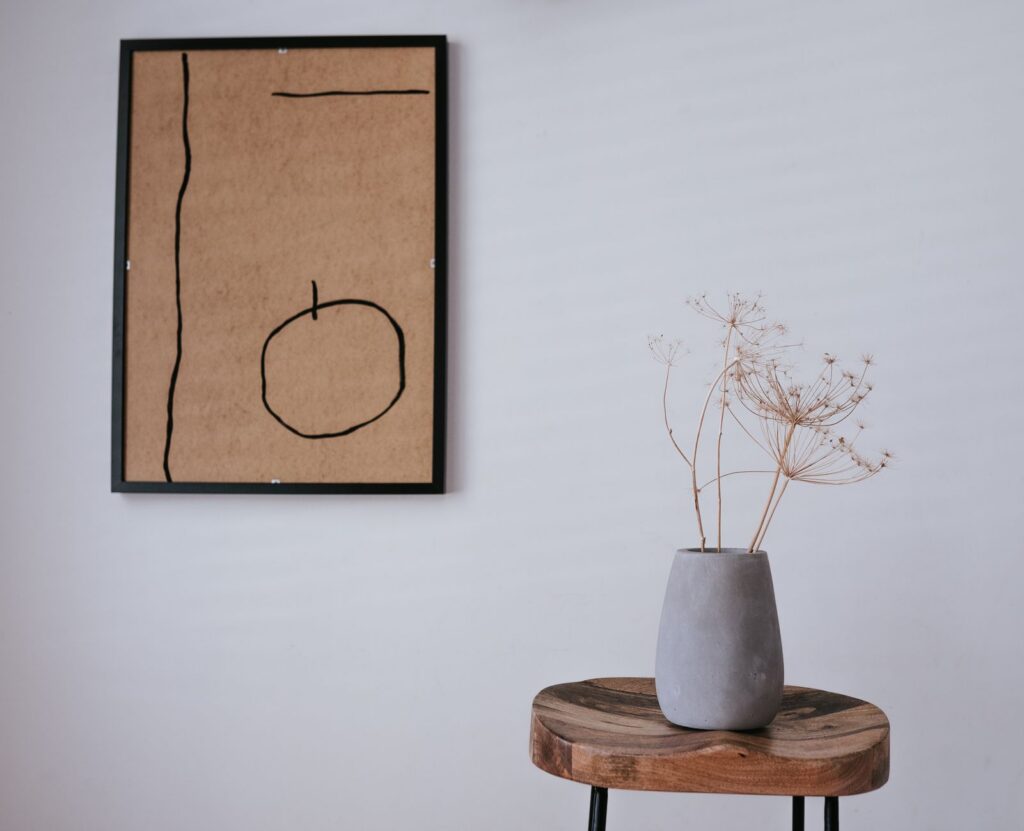
A small round stool with a rustic wood top and dark metal legs holds a gray vase with one dried umbel stem. Above it hangs a framed kraft-paper print with simple black line drawing. Use a stool in place of a side table, and keep the art and the object on it at roughly the same visual weight. Photo: PNW Production / Pexels
10. Lean Art Instead of Hanging It
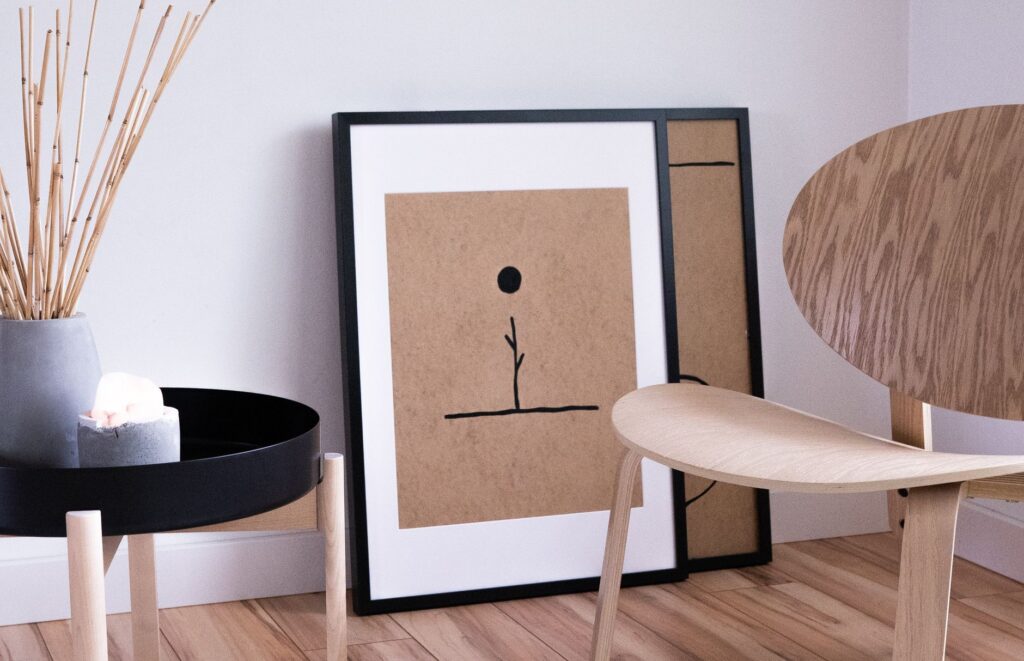
Two framed kraft-paper prints lean against the wall at floor level, partly overlapping, beside a black tray table and the edge of a plywood chair. A gray vase of reed stems and a candle sit on the table. Rest large frames on the floor or a low ledge and layer them so the corner feels casual rather than staged. Photo: PNW Production / Pexels
11. Rough Shelves for Handmade Pottery
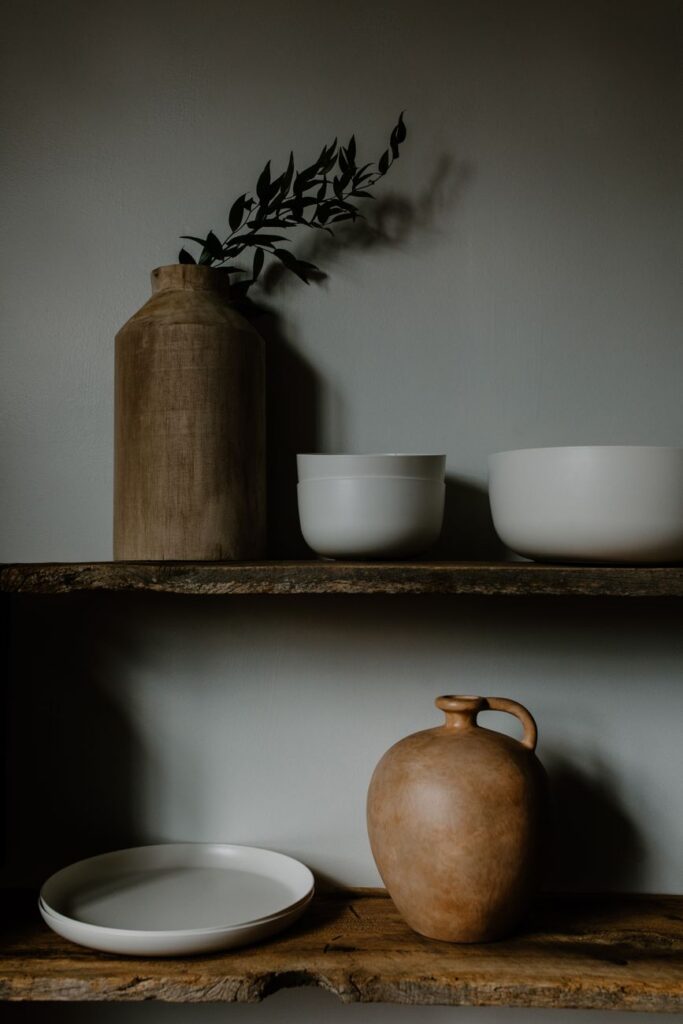
Two rustic wooden shelves hold a tall wooden vase with a leafy branch, white bowls, a flat plate and a round terracotta jug. The wall behind is a deep, muted gray, and the light is soft and low. Display only a few pieces of matte, unglazed or handmade-looking ceramics with generous space between them. Photo: Tara Winstead / Pexels
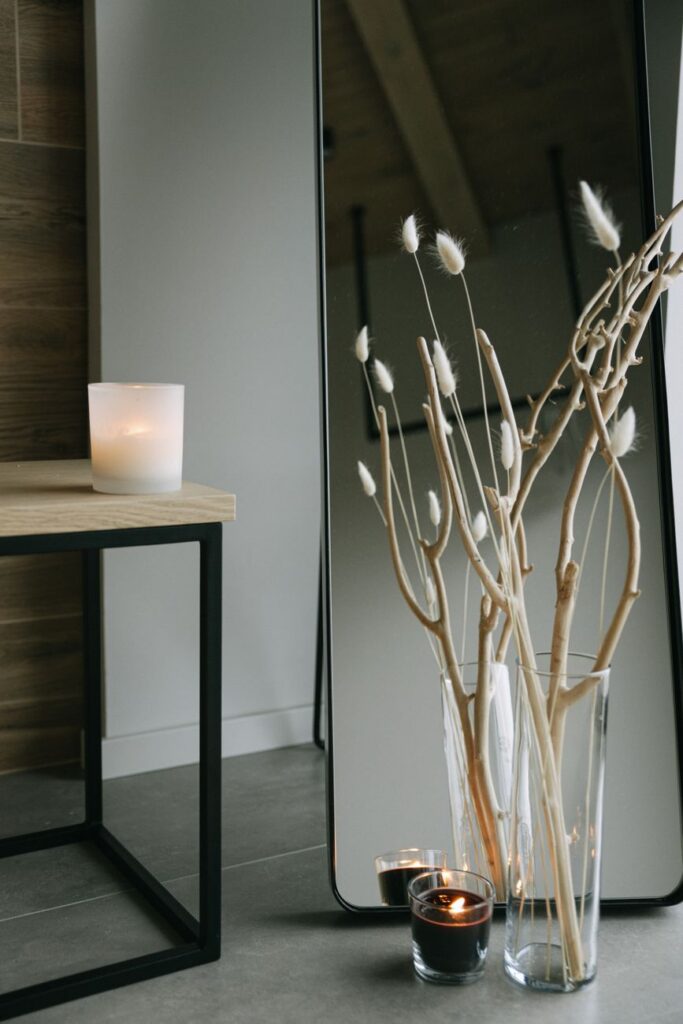
12. Branches, Mirror and Candlelight
Pale twisted branches with small dried seed heads stand in a tall clear glass vase on the floor next to a leaning mirror. Two tea lights in dark glass and a white candle on a black metal side table add a soft glow. Use one sculptural branch arrangement at floor level to fill a narrow corner without adding furniture. Photo: Ivan S / Pexels
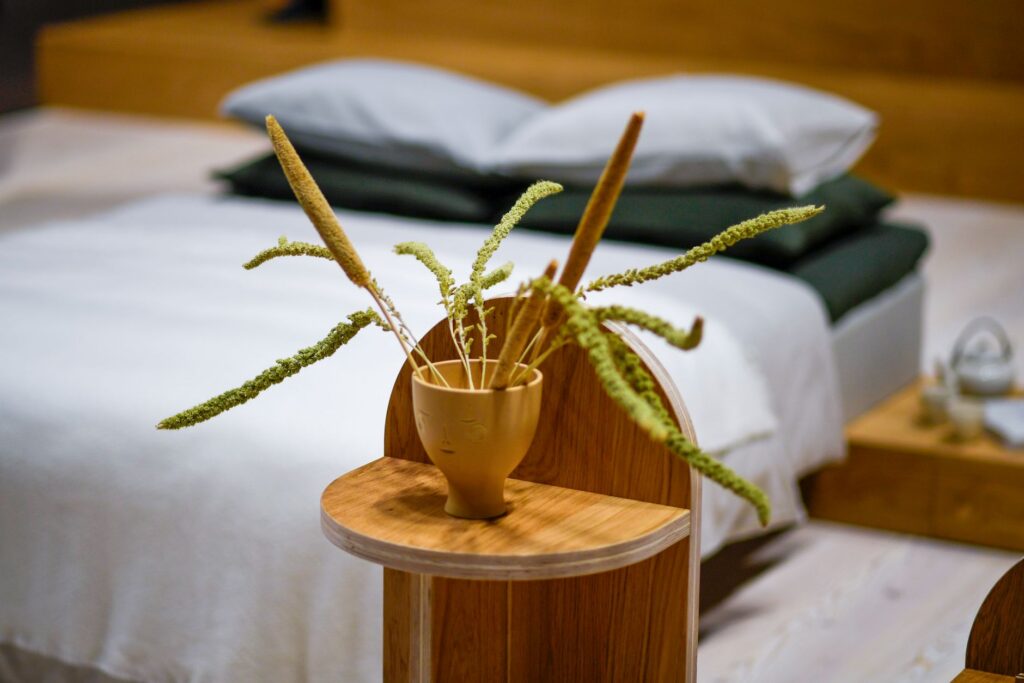
13. Curved Wood Side Table
A rounded wooden side table with a half-moon back panel holds a small ochre cup filled with dried grass stems. Behind it are white and dark green bedding and more pale wood furniture. The same rounded, solid-wood piece works next to a sofa: choose softened corners and warm honey-toned wood to offset straight lines. Photo: Margo Evardson / Pexels
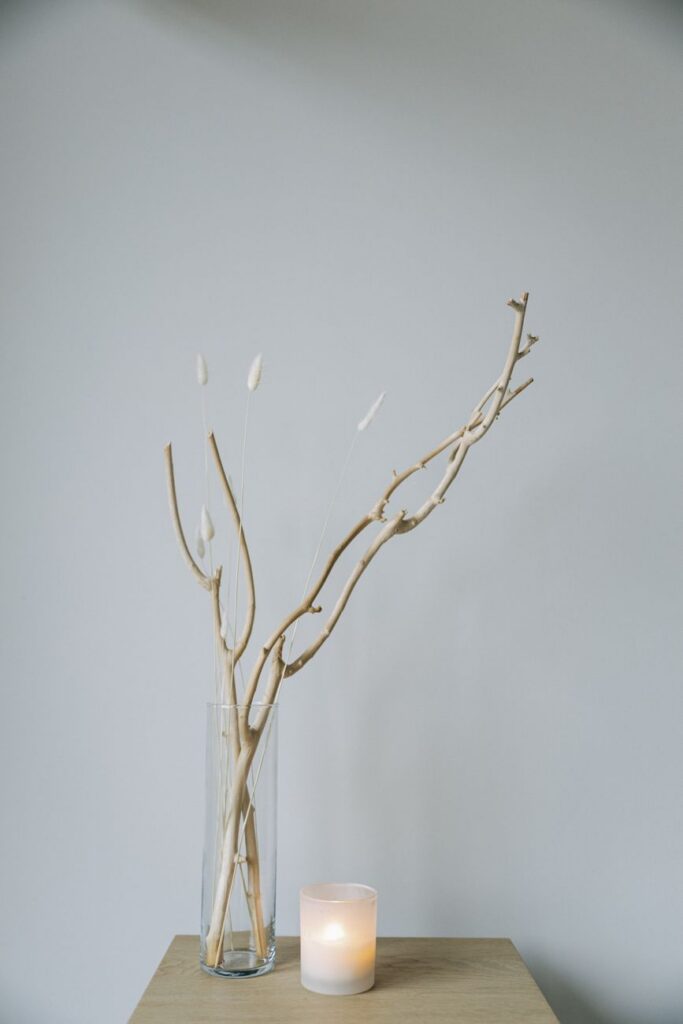
14. One Branch, One Candle
A single bare branch with a few pale grass tufts stands in a slim glass vase on a light wood surface, next to a lit white candle. The wall behind is plain pale gray. On a console or windowsill, try one tall natural element and one small light source, and leave the rest of the surface bare. Photo: Ivan S / Pexels
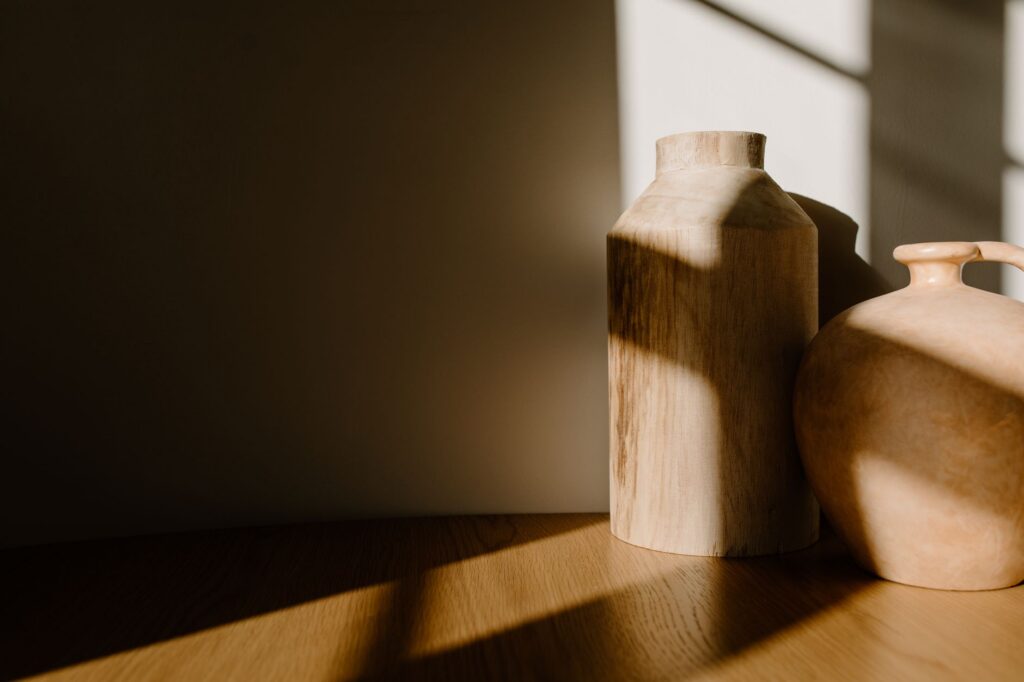
15. Wood and Clay in Raking Sunlight
A tall wooden bottle-shaped vase and a round clay jug sit on a wood surface, crossed by sharp bands of late sunlight and shadow. The wall is bare and the objects are unglazed. Group two vessels of different heights and materials where low sun reaches them, and let the shadows act as the decoration. Photo: Tara Winstead / Pexels
What colors work in a Japandi living room?
Japandi living rooms work best in warm neutrals, such as cream, oatmeal, sand and greige, with black or charcoal used sparingly for contrast. Wood tones count as part of the palette, so pick one main wood (pale pine, light oak or a warmer walnut) and repeat it. Muted greens and terracotta appear in plants and pottery rather than on walls or large upholstery.
Which materials and pieces define the look?
The style relies on a short list of natural materials, used in simple, low-profile shapes. The table below sorts the most common choices seen in the photos above.
Element
Options
Works best when
Seating
Bent plywood lounge chair, cane-back wood chair, cream boucle or linen armchair
Plain pine or oak cabinets, low benches, simple wall shelves
Doors are flat and hardware is minimal or hidden
Textiles
Sheer linen curtains, jute or flat-woven rugs, shaggy wool cushions
Colors stay within one neutral family
Decor
Dried grasses and branches, matte ceramics, kraft-paper or line-drawing prints
Pieces are spaced out with empty wall or surface around them
How do you make a Japandi living room feel warm, not empty?
Add warmth through texture and light rather than more objects. Layer a soft rug, a textured cushion and a rough wall or curtain fabric, then use low, warm lamps in the evening instead of bright overhead light. Natural elements such as dried stems, wood grain and clay pottery keep a sparse room from feeling cold.