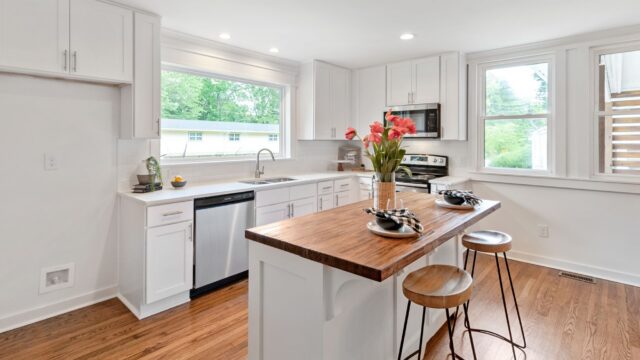
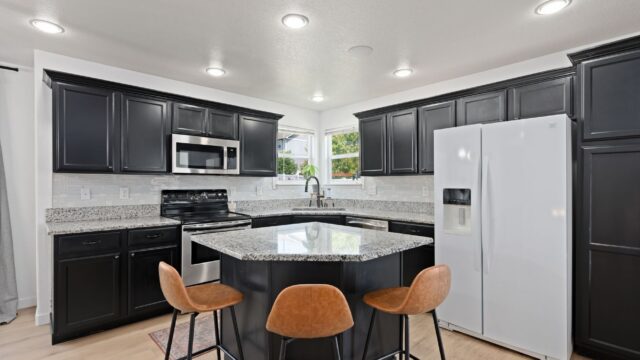
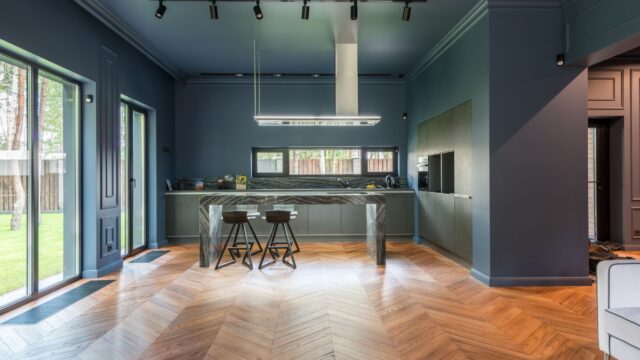
Two-tone kitchen cabinets pair two cabinet finishes in one kitchen, most often a darker or bolder color on the base cabinets or island and a lighter finish on the uppers. The looks that work share four traits: a clear rule for where each tone goes, one color that dominates, a shared counter or hardware finish that ties both together, and a second tone repeated at least twice in the room.
The 14 photos below cover painted and wood pairings, from sage and white to navy and white, wood and white, and tonal grays with wood. Each caption describes what is in the frame and gives one technique you can copy at home.
1. Sage Uppers, White Lowers
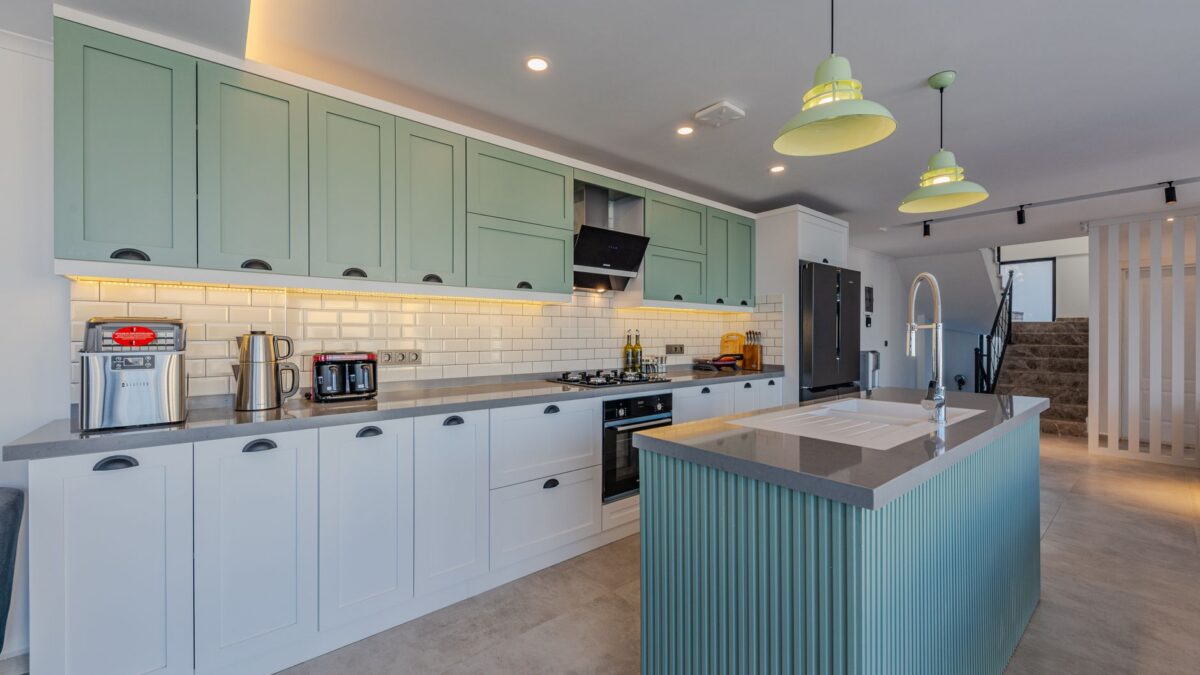
Sage-green shaker upper cabinets sit above white shaker base cabinets with black cup pulls, a gray counter and white subway tile lit from below. A reeded island in a blue-green tone and two green pendants complete the room. To copy it, put the stronger color up top, keep the base light, and give the island a third, related shade. Photo: Ahmet ÇÖTÜR / Pexels
2. Navy Base With Glass-Front Uppers
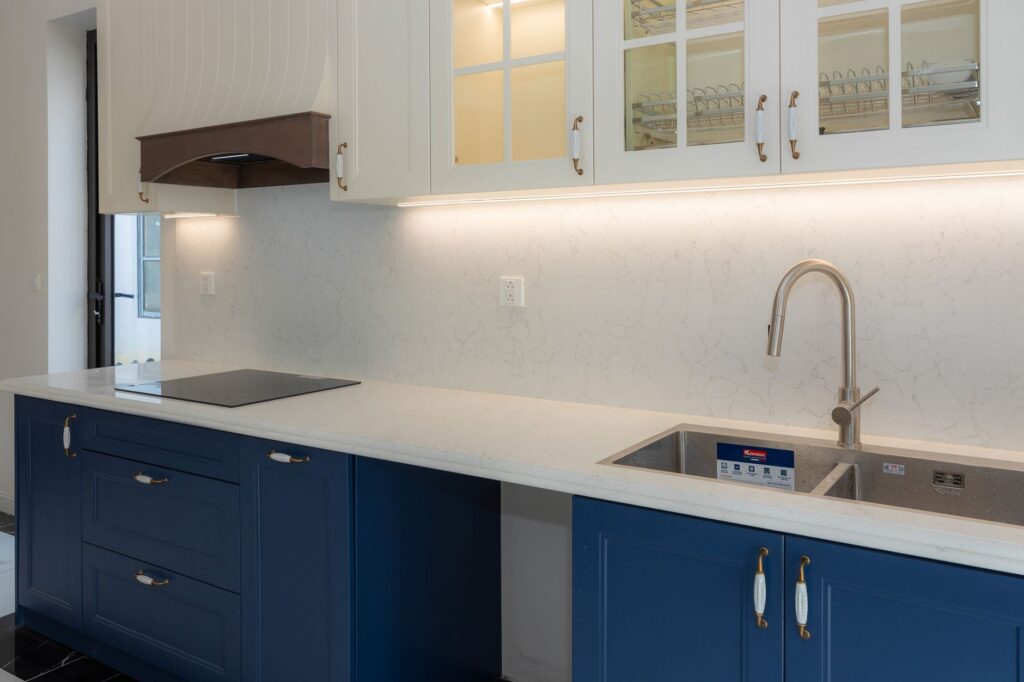
Navy raised-panel base cabinets with light pulls run under a white counter and a white stone-look backsplash. White upper cabinets with lit glass doors and a gooseneck faucet sit above. To copy it, choose the classic dark-below, light-above split, and add glass fronts or under-cabinet lights so the white uppers stay bright against the deep blue. Photo: HONG SON / Pexels
3. White Uppers Over Warm Wood
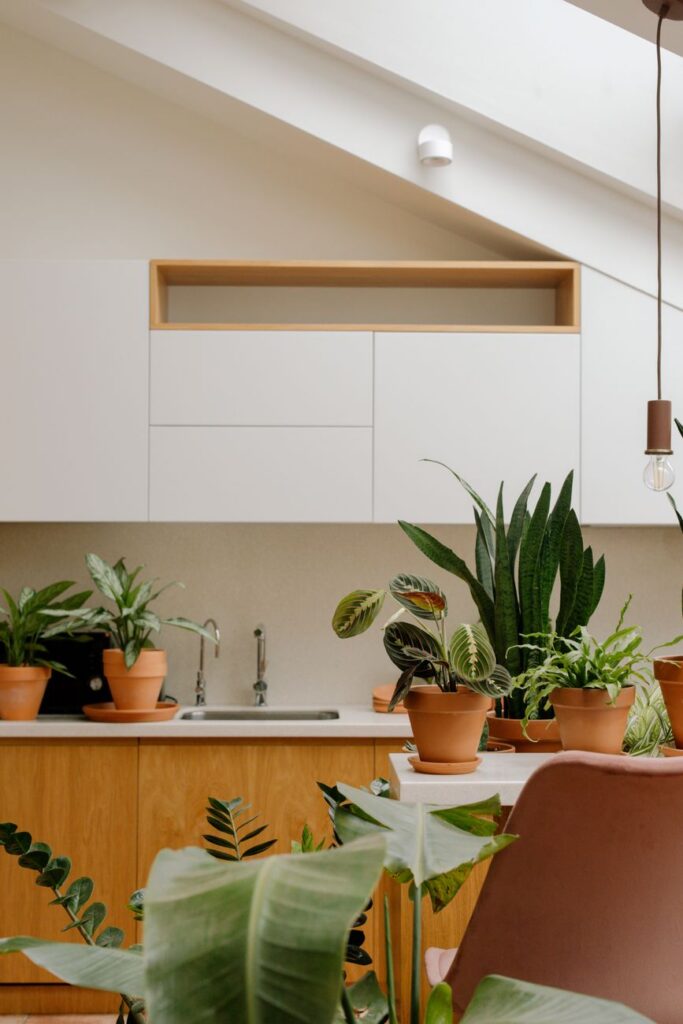
Flat white upper cabinets with a recessed oak niche sit above warm wood base cabinets under a sloped white ceiling. Potted plants of many sizes fill the counter in front. To copy it, use wood on the lower run, where it hides wear, and plain white uppers that blend into the walls, then repeat the wood once in an open niche. Photo: cottonbro studio / Pexels
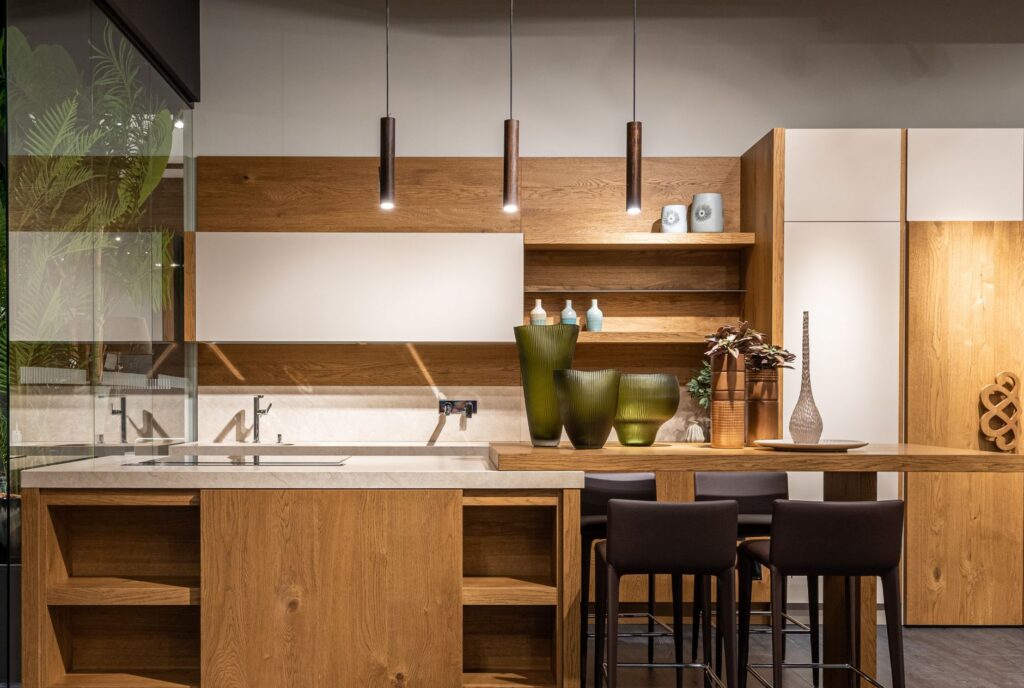
4. Wood Shelving With White Panels
Warm wood open shelving frames a row of white flat panels, and a wood island with open cubbies holds a sink and a raised bar with dark stools. Slim black pendants hang above, and a white tall cabinet stands at the end. To copy it, mix one wood finish with one white finish and repeat each at least twice, so the pairing looks planned. Photo: Max Vakhtbovych / Pexels
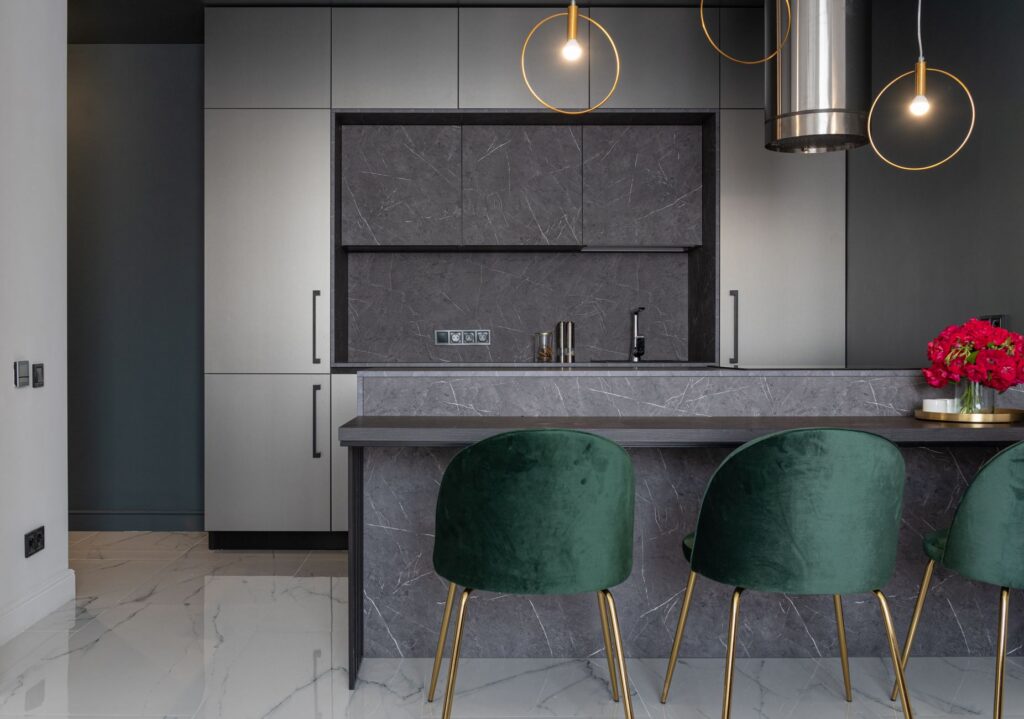
5. Light Gray Tall Units, Dark Stone Run
Light gray tall cabinets flank a darker gray marble-look wall and a matching island with a dark ledge. Green velvet chairs on brass legs, gold ring pendants and a steel hood finish the space. To copy it, keep the tall storage pale so it recedes, then put the darkest finish on the cooking wall and island. Photo: Max Vakhtbovych / Pexels
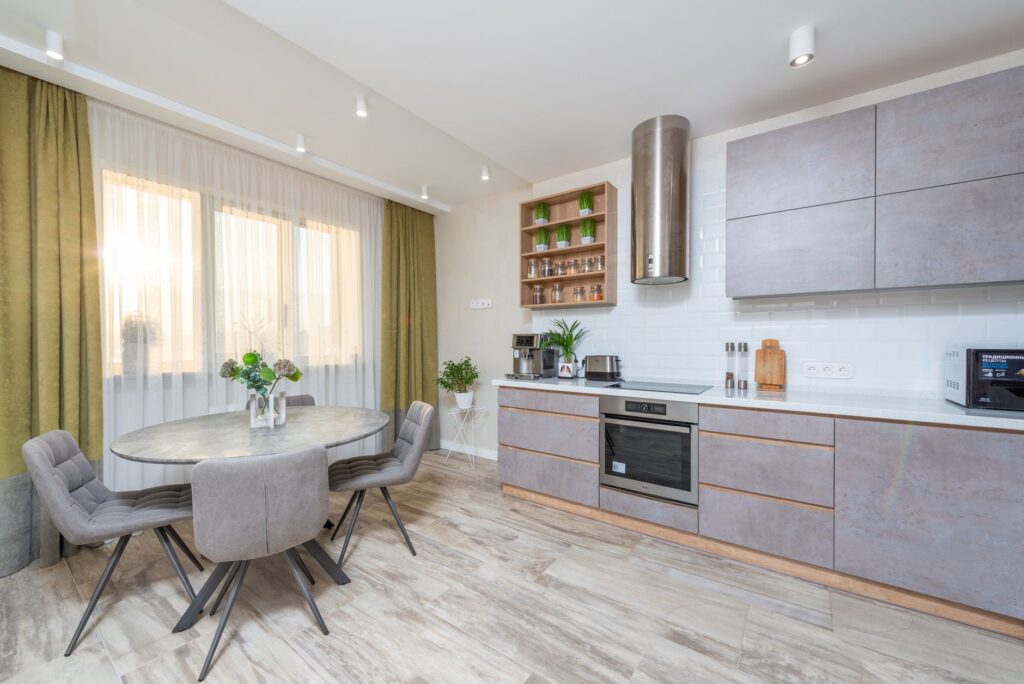
6. Concrete-Look Fronts With Oak Edges
Gray concrete-look flat-front cabinets, upper and lower, have thin oak-tone edges and an oak-tone plinth. A white counter, white subway tile and a cylindrical hood sit between them, and a round table with gray chairs fills the window end. To copy it, choose a matte gray front and a contrasting edge banding, a subtle two-tone that suits a minimalist room. Photo: Max Vakhtbovych / Pexels
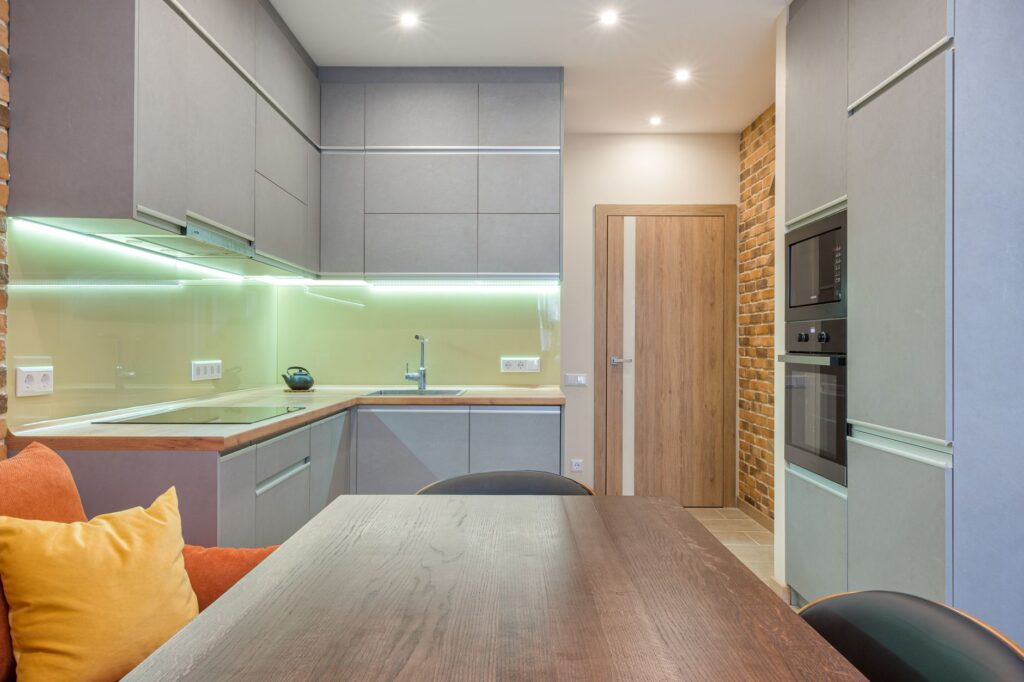
7. Tonal Gray With a Wood Counter
Handleless gray cabinets wrap an L-shaped kitchen, with a tall column housing a built-in microwave and oven. A wood-look counter and a lit glass backsplash run between the uppers and lowers, beside a brick accent wall. To copy it, keep all cabinet fronts in one cool gray and let a warm wood counter supply the second tone. Photo: Max Vakhtbovych / Pexels
8. Glossy Neutral With Printed Panels
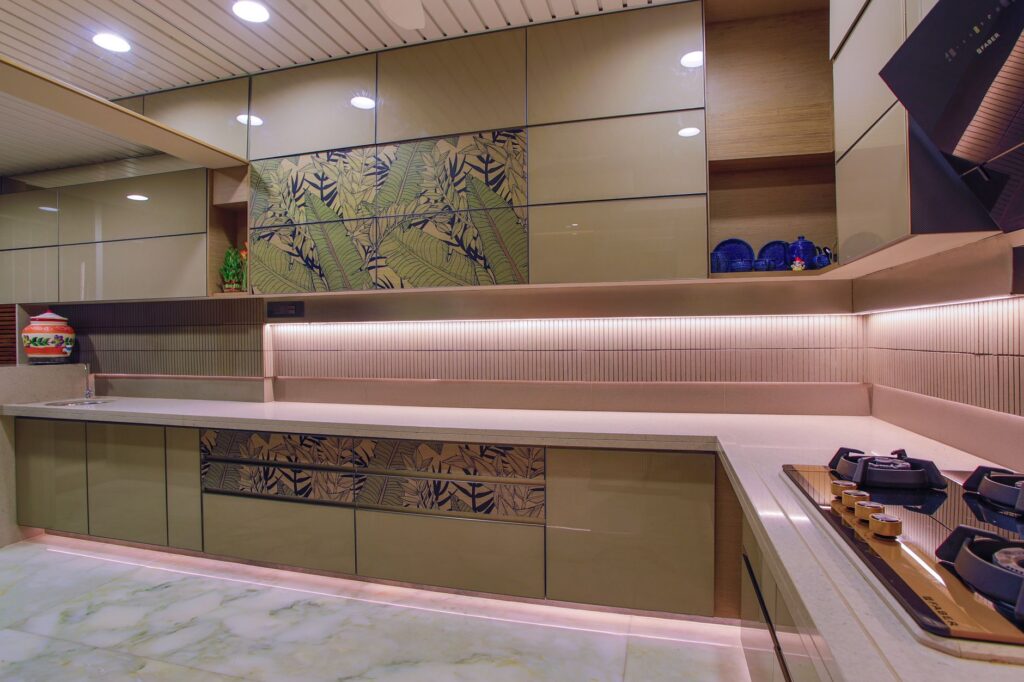
High-gloss champagne cabinets line an L-shaped kitchen, and a few upper and lower fronts carry a leaf print in green and blue. LED strips light the backsplash and the toe kick. To copy it, keep most doors one plain color and switch only two or three fronts to a pattern, so the print reads as an accent. Photo: Roshan Patel / Pexels
9. Sage Doors Beside Black Glass
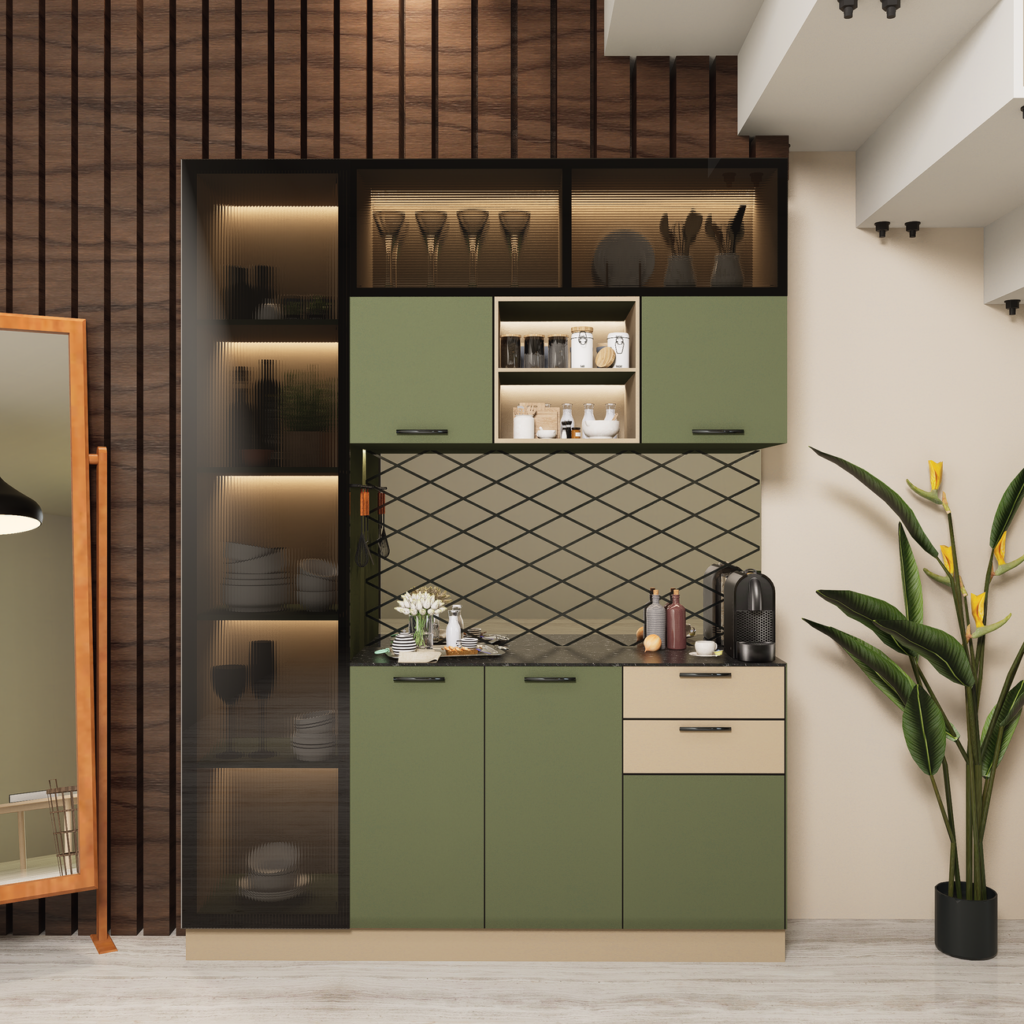
A wall of sage-green flat-front cabinets includes two cream drawer fronts and an open cubby, flanked by a black-framed glass cabinet with built-in lights. Walnut-tone vertical slats and a black lattice backsplash frame the unit. To copy it, pair one muted color with black-framed glass and pick a single accent drawer in cream. Photo: The Ghazi / Pexels
10. Deep Green Base, White Everything Else
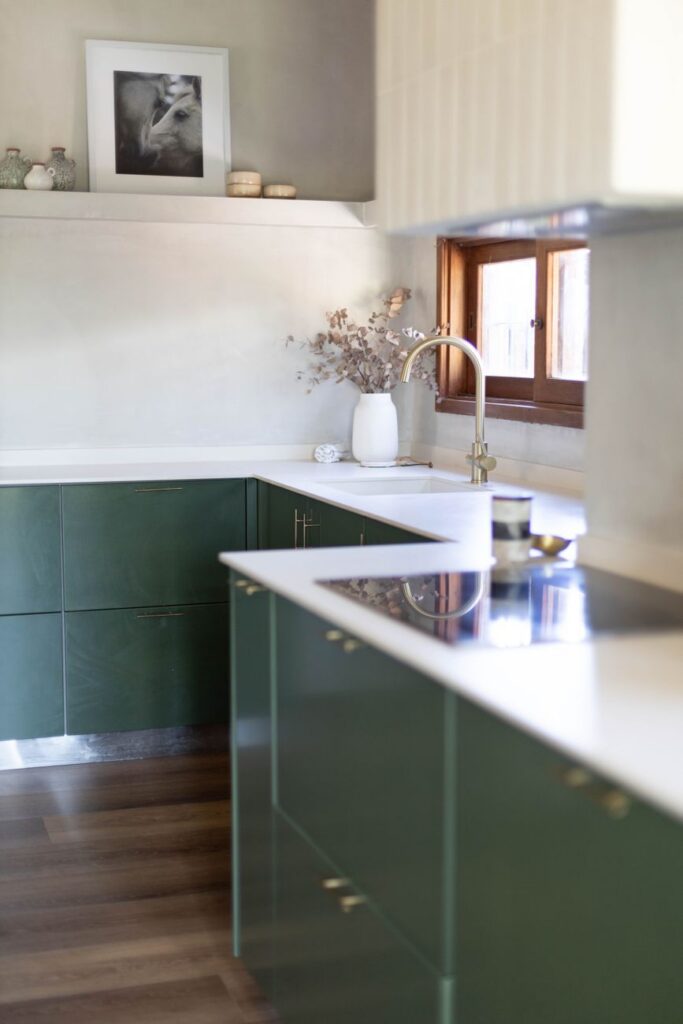
Deep green base cabinets with brass knobs wrap an L-shaped counter with a white top and a flush cooktop. White walls and a white paneled upper section keep the rest of the room light. To copy it, limit the dark color to the base cabinets and keep the counter, walls and anything above eye level white. Photo: Vale Bocchi / Pexels
11. Sage Lowers and Open Wood Shelves
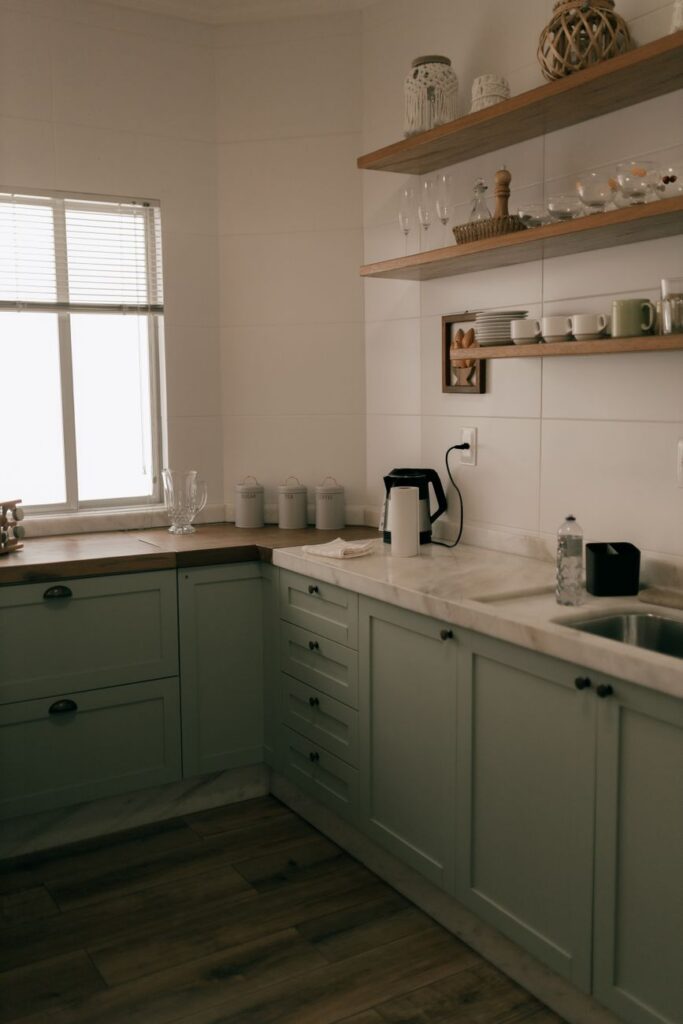
Sage-green shaker base cabinets with black pulls sit under a white stone-look counter, and open wood shelves replace upper cabinets on a white tile wall. A window lights the corner, and the floor is dark wood. To copy it, skip uppers on one wall and use wood shelves as the second tone above painted base cabinets. Photo: Alexander Mass / Pexels
12. Green Cabinets With a Wood Counter
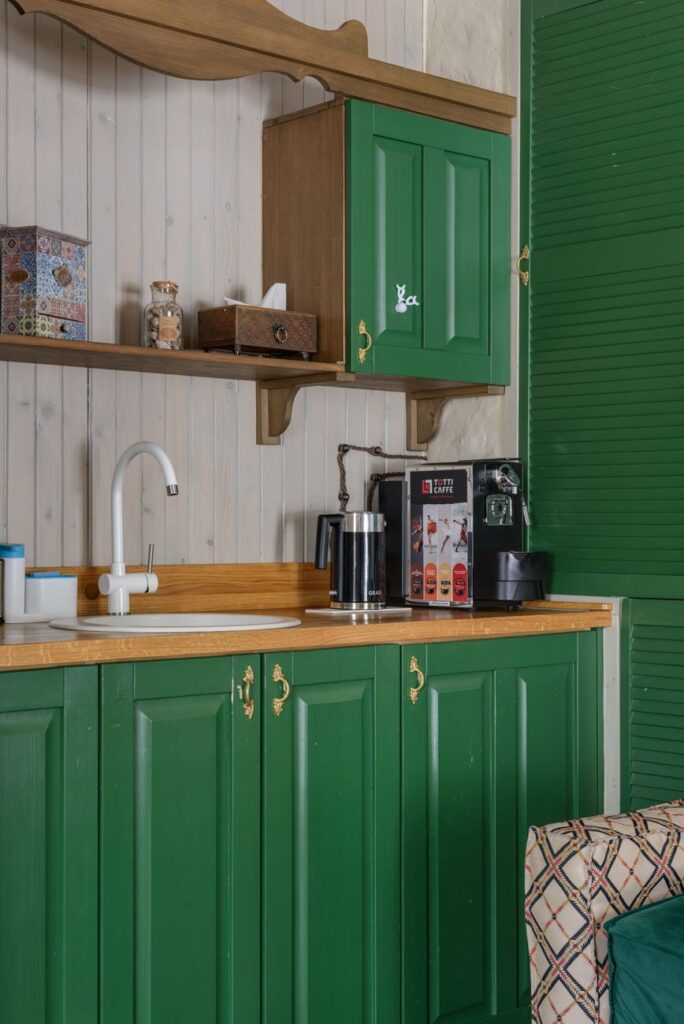
Green raised-panel base and wall cabinets with brass hardware pair with a wood counter and a wood shelf on brackets. The wall behind is clad in whitewashed planks, and a white faucet sits at the sink. To copy it, choose a saturated green and balance it with natural wood on the counter and shelving, against a pale wall. Photo: Max Vakhtbovych / Pexels
13. Teal Tall Cabinets, White Drawers
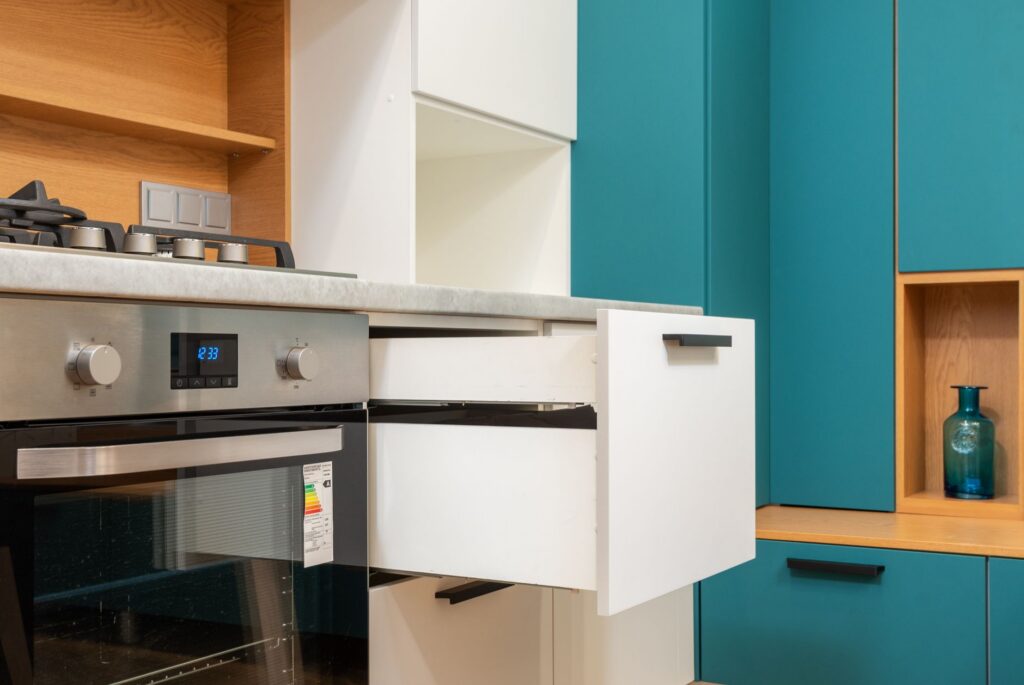
Teal tall cabinets stand next to white drawers, one pulled open, beside a stainless oven and a gray counter. Oak-lined open niches break up the teal and frame a small blue bottle. To copy it, give tall pantry units the bold color, keep drawer stacks white, and line open niches in a light wood. Photo: Max Vakhtbovych / Pexels
14. Oak-Look Counter Over Slate Blue
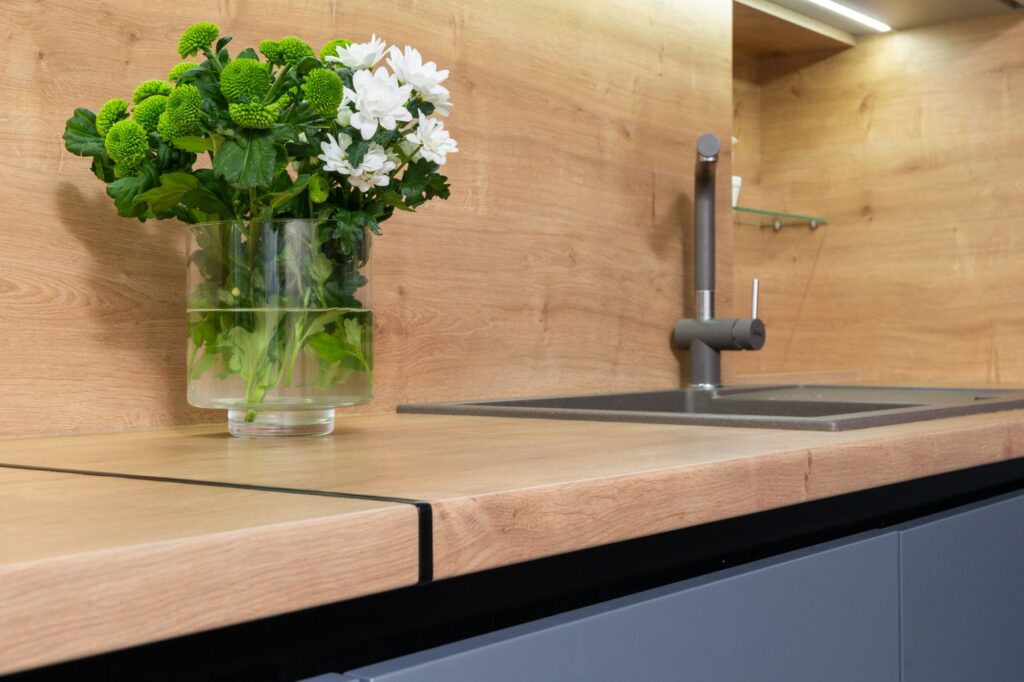
An oak-look counter and matching backsplash panel sit over slate-blue base cabinets, separated by a thin black edge. A gray sink, a gray faucet and a vase of flowers sit on the counter. To copy it, carry the same wood-look material from the counter up the wall, and pick a muted blue base for contrast. Photo: Max Vakhtbovych / Pexels
Which two cabinet colors go well together?
The most reliable pairings combine one deep or saturated tone with one light neutral, such as navy with white, deep green with white, or wood with white. Tonal pairings, such as two grays or gray with wood, are quieter and suit flat-front minimalist kitchens.
Pairing
Where each tone usually goes
Works best when
Navy or deep green with white
Dark on base cabinets or island, white above
You want contrast but a bright room
Sage green with white
Either way; sage can go on the uppers
The room has good daylight and white tile
Wood with white
Wood below or on open shelves, white uppers
You want warmth without a paint color
Gray with wood
Gray fronts, wood counter, edges or niches
The kitchen is minimalist with flat fronts
Bold color with white
Color on tall units or one wall only
One area should be the focal point
Should the darker color go on the top or bottom cabinets?
The darker color usually goes on the bottom cabinets, because it grounds the room and hides scuffs, while light uppers keep the space feeling open. Putting the stronger color on top, as in the sage-and-white kitchen above, also works when the base cabinets and floor stay light and the room gets plenty of daylight.
How do you make two-tone cabinets look planned?
Two-tone cabinets look planned when both tones appear in more than one place and something else connects them. Use the same hardware finish on every door, run one counter material across both colors, and repeat the accent tone in an island, open shelf or niche. Split the colors at a clear line, such as uppers versus lowers or one full wall, rather than door by door.