What Is the Best Kitchen Sink to Buy? Materials and Mounting Compared
There is no single best sink, but there is a best fit for your counter, cabinet and habits. Here's how the main materials and mounting styles compare.
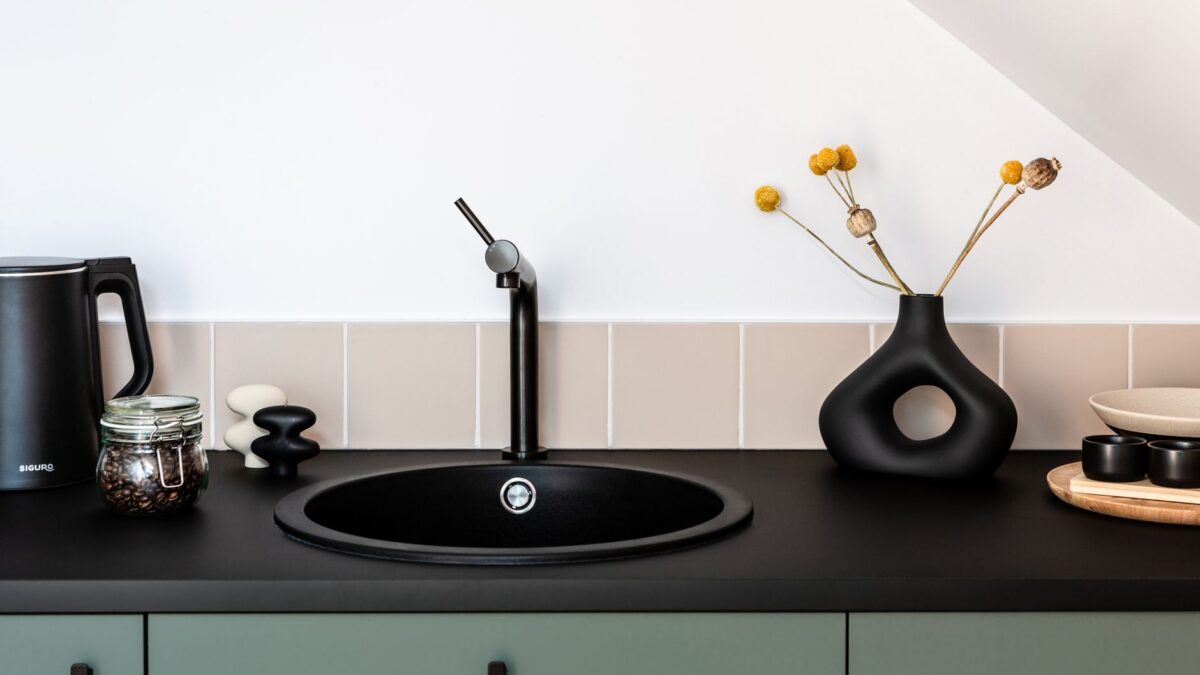
For most kitchens, a 16- or 18-gauge stainless steel sink is the safest all-round choice: it is light, resists heat, does not chip, and fits almost any counter and budget. Choose fireclay or enameled cast iron if you want a glossy farmhouse look and can support the weight, and granite composite if you want a quieter, matte sink in a color. Your countertop decides the mounting: undermount sinks need solid stone, quartz or solid surface counters, while drop-in sinks work with almost anything, including laminate.
Start with four questions
- What is your countertop? Laminate generally calls for a drop-in sink. Stone, quartz and solid surface allow undermount.
- How big is the sink base cabinet? The sink must fit inside the base cabinet with room for clips, plumbing and any garbage disposal. Check the sink maker’s minimum cabinet size.
- How do you cook? Big pots and sheet pans favor a large single bowl; hand-washing while something soaks favors a double bowl.
- How much weight can you support? Cast iron and fireclay are heavy and may need extra cabinet support.
Sink materials compared
| Material | Strengths | Weak points | Typical care |
|---|---|---|---|
| Stainless steel | Light, heat-resistant, won’t chip, widest choice of sizes | Shows scratches and water spots; thin gauges can be noisy and flex | Soap and water; wipe dry; clean with the grain |
| Fireclay | Hard glazed surface, classic farmhouse look, resists stains | Heavy; glaze can chip or crack from a hard impact; fewer sizes | Non-abrasive cleaners; avoid dropping cast iron pans |
| Enameled cast iron | Very durable, quiet, glossy | Very heavy; enamel can chip; needs strong support | Non-abrasive cleaners; a mat helps protect enamel |
| Granite/quartz composite | Matte, colors available, good sound damping, resists scratches | Heat limits vary by maker; light colors can stain; heavier than steel | Mild cleaners; follow maker’s heat guidance |
| Solid surface (e.g. acrylic) | Can be seamless with a matching counter; repairable | Less heat-resistant; can scratch | Mild abrasive on matte finish; run cold water when pouring boiling water |
| Copper | Distinctive look, develops patina | Expensive; reacts with acids; finish changes over time | Mild soap; follow maker’s patina guidance |
Stainless steel gauge, explained
Stainless sinks are sold by gauge, and a lower number means thicker steel. Common gauges are 16, 18, 20 and 22. A 16-gauge sink is roughly 1/16 inch thick, about 0.06 inch, while 18 gauge is slightly thinner, roughly 0.05 inch. Thicker steel dents less and dampens sound better, and it costs more. For a busy family kitchen, 16 or 18 gauge is a sensible target; very thin 22-gauge sinks are usually budget options.
Also look at:
- Sound pads or undercoating on the underside, which reduce drumming noise.
- Steel grade. Many sinks use 304 (also called 18/8 or 18/10) stainless, which refers to its chromium and nickel content.
- Corner radius. Tight corners look modern; rounded corners are easier to clean.
Stainless does not usually rust, but iron particles from steel wool or cast iron pans can leave rust spots. Our guide on getting rust off stainless steel applies to sinks too.
Sink makers also commonly warn against steel wool and wire brushes, which leave particles that rust, and against storing open bleach, acids or drain cleaners in the cabinet below, since chloride vapors can pit stainless over time.
Mounting styles
| Style | How it sits | Works with | Pros and cons |
|---|---|---|---|
| Drop-in (top-mount) | Rim rests on top of the counter | Almost any counter, including laminate | Easiest to install and replace; rim edge collects grime |
| Undermount | Clipped or bonded under the counter | Stone, quartz, solid surface | Wipe crumbs straight in; needs a finished cutout edge |
| Farmhouse (apron-front) | Front panel exposed; sits in a modified cabinet | Most solid counters | Deep and striking; often needs a special sink base cabinet |
| Integrated | Molded as one piece with the counter | Solid surface, some concrete and quartz | Seamless; replacing the sink means work on the counter |
Undermount sinks are generally not recommended with standard laminate, because laminate has a particleboard core that can swell when water reaches an exposed cutout edge. Some manufacturers make specific laminate-compatible undermount systems; follow their instructions if you go that route.
Bowl configuration and size
- Large single bowl: best for big pans and sheet trays.
- Double bowl (50/50 or 60/40): soak in one side, rinse in the other.
- Low-divide double bowl: a compromise; long items fit across.
- Workstation sinks: have a ledge for sliding cutting boards and racks.
Deeper is not always better. Very deep bowls (10 inches or more) hold more, but can be hard on the back for shorter users. Also check where the drain sits: a rear-offset drain leaves more cabinet room for storage or a garbage disposal. If you plan a disposal, our garbage disposal horsepower guide explains sizing. On a septic system, the EPA advises limiting garbage disposal use, which may affect whether you want one at all.
Installation notes
Replacing a drop-in sink with one of the same size is a common DIY job if you are comfortable with drain connections. Undermount and farmhouse sinks usually involve the countertop fabricator, and changing sink size means cutting the counter. Turn off the water supply valves before disconnecting anything, and unplug or switch off the breaker for a disposal before working near it. If your plumbing needs to move or you are not confident with leak-free drain joints, hire a licensed plumber.
Planning a bigger project? Our kitchen remodel order of steps shows where sink and counter selection fit.
Bottom line
Pick the mounting your countertop supports, then the material your habits can live with. Stainless steel in 16 or 18 gauge is the practical default; fireclay and cast iron give a classic look at the cost of weight and possible chips; composite is quiet and colorful but has heat limits. Confirm cabinet size and faucet hole count before you order.
FAQ
Is 16-gauge stainless worth it over 18-gauge?
It is thicker and a bit quieter and more dent-resistant. For many households the difference is modest, so it comes down to budget and how hard you use the sink.
Which sink material is easiest to keep clean?
Glossy fireclay and enamel wipe clean easily but show chips; stainless hides stains but shows water spots. Rounded corners and an undermount install make any material easier.
Can I put boiling water or hot pans in a composite sink?
Heat limits differ by brand. Check the manufacturer’s care guide, and use a rack or trivet for very hot pans.
Do I need a new faucet with a new sink?
Not necessarily. Check how many faucet holes the new sink or counter has, and whether your faucet needs a deck plate.