How to Clean Corian Countertops: Daily Care, Stains and Finish Tips
Corian is easy to keep clean if you know two things: dry it after every wipe, and match your stain fix to the finish. Here's the routine.
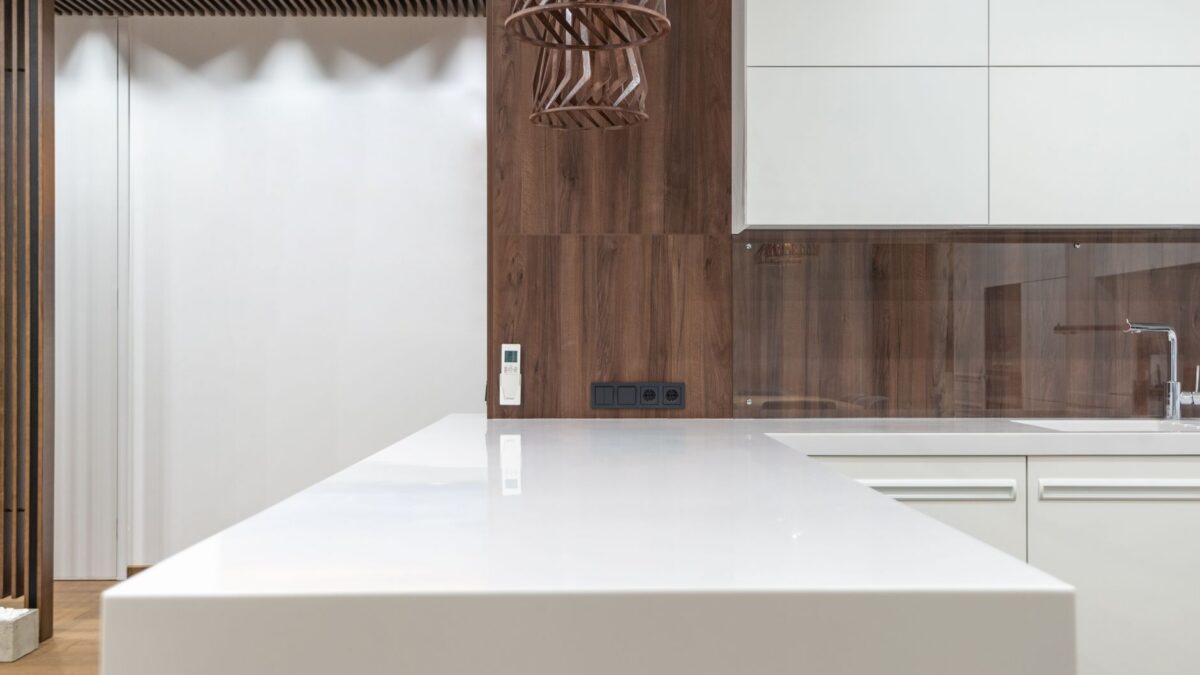
For everyday cleaning, wipe Corian and other solid surface countertops with warm soapy water or an ammonia-based cleaner (not window cleaner), rinse, then dry the surface completely. That last step matters most: water left to dry leaves a mineral film that makes the finish look blotchy. Most stains come out with a mild abrasive cleanser on matte finishes, but glossy finishes need gentler treatment to avoid dull spots.
First, know your finish
Corian’s own care bulletin (listed among the manufacturer’s technical documents) describes three finishes: matte/satin, semi-gloss and high-gloss. Lighter colors are typically matte, while darker colors are more often semi-gloss or gloss. Corian sinks are finished matte/satin. If you are not sure what you have, check your installation paperwork or ask the retailer or fabricator who installed it.
The finish decides how aggressive you can be. A matte surface tolerates mild abrasive cleansers and is easy to blend back to an even look. A glossy surface shows every swirl, and the manufacturer notes that abrasive cleaners may dull semi-gloss and gloss finishes.
Corian also makes a newer version sold with “Resilience Technology,” and some of its renewal guidance differs. If your countertop is that type, follow the specific instructions for it.
What you need
- Soft cloths or a non-scratch sponge
- Dish soap or an ammonia-based household cleaner (not glass cleaner)
- A dry microfiber towel for the final wipe
- A mild abrasive liquid cleanser (for matte finishes and sinks)
- A hard water remover, if your water leaves white spots
- Household bleach, only if you want to disinfect
Daily cleaning routine
- Clear crumbs and wipe up spills promptly. Many substances only stain if they sit for a long time.
- Wipe the counter with warm soapy water or an ammonia-based cleaner.
- Rinse with a cloth dampened in clean water to remove soap residue.
- Dry the whole surface with a towel. Do not let it air-dry.
Darker colors tend to need more frequent attention because film and water marks show up more. Over the years, any solid surface countertop develops a patina, so a slight change in sheen with age is normal.
Skip window cleaners. According to the manufacturer, they can leave a waxy buildup that dulls the surface.
How to remove stains
Start with the gentlest method and step up only if needed. That approach protects the finish and is the same one Corian recommends.
Matte and satin finishes
- Wash the stained area with hot soapy water and dry it.
- Put a little mild abrasive liquid cleanser on a damp sponge or cloth.
- Rub in small overlapping circles, first front to back, then side to side, so the area blends with the rest of the counter.
- Rinse thoroughly and dry. Repeat with a bit more pressure if the stain remains.
Semi-gloss and high-gloss finishes
Use soapy water or a solid surface cleaner first. Avoid scrubbing with powders or pads, which can leave a hazy patch that is hard to even out by hand. If a stain will not lift, contact your installer or a solid surface fabricator rather than scouring. Countertop polishes made for solid surfaces can help bring back the sheen on these finishes.
Quick stain guide
| Problem | Likely cause | What to try |
|---|---|---|
| Blotchy, uneven sheen | Hard water film left to dry | Hot soapy water, dry fully; then a hard water remover; on matte, a mild abrasive cleanser |
| White spots near the faucet | Mineral deposits | A cleaner formulated for hard water marks, then rinse and dry |
| Food, coffee or marker stains | Spills left to sit | Soapy water first; on matte, mild abrasive cleanser in circles |
| Fine scratches | Cutting or sliding objects | On matte, abrasive cleanser can soften them; deeper scratches need refinishing |
| Dull patch on a glossy counter | Over-scrubbing | Solid surface polish; larger areas, call a fabricator |
For scratches and worn areas that cleaning cannot fix, see our step-by-step guide on how to refinish Corian countertops. Sticky spills like adhesive have their own method, covered in removing super glue from Corian.
Disinfecting safely
Corian’s bulletin suggests occasionally wiping the surface with diluted household bleach, at a ratio of about 5 tablespoons of bleach per gallon of water. Wear gloves, keep it off your skin and out of your eyes, and follow the bleach label.
Never mix bleach with ammonia-based cleaners, vinegar or other acids. Those combinations release toxic gases. If you clean with an ammonia product, rinse the surface with plain water before using bleach on another day. If someone is exposed to a cleaning chemical, call Poison Control at 1-800-222-1222 (US).
What to keep off Corian
- Hot pans and heat-producing appliances. Use trivets or hot pads, including under toaster ovens and slow cookers.
- Knives. Always use a cutting board.
- Strong chemicals such as paint removers, oven cleaners and acid drain cleaners. If one spills, flush it off right away with plenty of water.
- Green scouring pads on the countertop. The manufacturer warns they will dull the surface. They are listed only for sinks, which are matte.
Cleaning a Corian sink
Solid surface sinks get more wear than the countertop. Clean them the same way, or use a mild abrasive cleanser with a non-metal scouring pad, rubbing over the whole bowl so the finish stays even. To disinfect, the bulletin describes filling the sink about a quarter full with diluted bleach (5 tablespoons per gallon), letting it stand 15 minutes, then washing the sides as it drains and rinsing well. Pour boiling water with the cold tap running. If you also have a disposal, our guide on keeping a garbage disposal clean covers the drain side.
Bottom line
Corian is low-maintenance: soapy water, a rinse, and a thorough dry handle almost everything. Match stain removal to your finish, scrub matte surfaces in even circles, treat glossy ones gently, and keep heat, knives and harsh solvents away. Check your warranty documents before any DIY repair, since Corian countertops carry a limited warranty and improper work may affect a claim.
FAQ
Can I use vinegar on Corian?
Corian’s care bulletin does not list vinegar as a routine cleaner; it recommends soapy water, ammonia-based cleaners or solid surface cleaners, and hard water removers for mineral spots. If you use any acidic product, rinse and dry afterward, and never combine it with bleach.
Why does my Corian look streaky right after cleaning?
Usually because it was left to air-dry or soap was not rinsed off. Rinse with clean water and dry the entire surface with a towel.
Are disinfecting wipes safe on Corian?
Many are, but formulas vary. Check the wipe label for compatibility with solid surface or acrylic materials, then rinse and dry to avoid residue film.
Can I put a hot pan on Corian?
No. The manufacturer says to always use a trivet or hot pad, because direct heat can damage the surface.