Laminate vs Vinyl Plank Flooring: Water Resistance, Cost, Kitchen Fit
The two look similar on the showroom floor but are built very differently. The core material decides how each handles water, scratches and daily life.
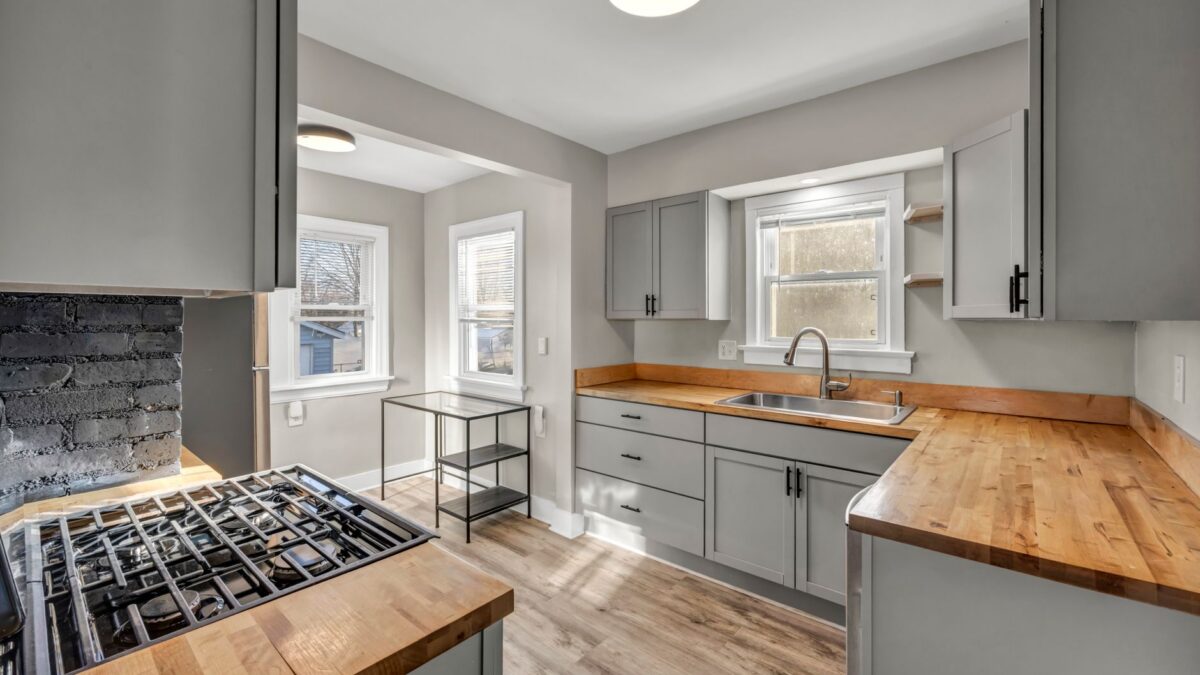
For most kitchens, bathrooms and basements, vinyl plank (LVP) is the safer choice because its plastic-based core does not swell when it gets wet. Laminate uses a wood-fiber core, so even “water-resistant” versions can be damaged by standing water or leaks that reach the edges, but it typically resists scratches well and feels firmer and more wood-like underfoot. Installed prices overlap heavily, so choose by room conditions first and compare the specifications of specific products second.
How each is built
Laminate
Laminate is a layered product: a backing layer, a dense core of high-density fiberboard (HDF) made from wood fibers and resin, a printed image of wood or stone, and a tough clear wear layer on top. The wear layer is what gives laminate its scratch resistance. Abrasion resistance is often expressed as an AC rating, with higher numbers intended for heavier traffic.
Vinyl plank
Luxury vinyl plank also has a printed design under a clear wear layer, but the core is plastic-based. Rigid-core types are commonly sold as SPC (stone plastic composite, denser and more dent resistant) or WPC (wood plastic composite, typically a little softer and warmer underfoot). Flexible glue-down vinyl also exists. Wear-layer thickness is usually listed in mils; thicker wear layers are generally meant for heavier use.
Side-by-side comparison
| Factor | Laminate | Vinyl plank (LVP) |
|---|---|---|
| Core | Wood-fiber HDF | PVC-based (SPC, WPC or flexible) |
| Water | Water-resistant versions handle spills if wiped up; swelling risk if water sits or reaches the core | Core is not damaged by water; often sold as waterproof |
| Scratches | Generally strong, depending on AC rating | Varies with wear layer; can scuff and scratch |
| Dents | Hard surface, resists dents well | Rigid core helps; softer types can dent under heavy loads |
| Feel and sound | Firm, more wood-like; can sound hollow without good underlayment | Softer and quieter; can feel more like plastic |
| Sunlight and heat | Fairly stable | Some products can fade or move with large temperature swings; check maker limits |
| Installation | Mostly floating click-lock; expansion gap needed | Click-lock floating or glue-down; expansion gap per maker |
| Repair | Damaged planks replaced; cannot be refinished | Damaged planks replaced; cannot be refinished |
“Waterproof” does not mean the room is protected
A waterproof plank only means the plank itself will not be ruined by water. If a dishwasher, fridge line or toilet leaks, water can still travel through seams and around the edges and sit underneath, where it can damage the subfloor and grow mold. Fix leaks quickly; our guide on how to find a water leak covers the free checks. Also read the warranty: many makers exclude damage from flooding or plumbing failures, and some require specific underlayment or a moisture barrier over concrete.
Cost as of 2026
Prices vary by region, product quality, subfloor condition and how much prep work the room needs. National cost guides in 2026 show wide and overlapping ranges for both: roughly the low single digits to low double digits of dollars per square foot installed, with labor often a few dollars per square foot of that. Budget-grade laminate is frequently among the cheapest hard floors, while premium rigid-core vinyl can cost as much as or more than mid-range laminate. Get several local quotes that list material, underlayment, removal of the old floor and any subfloor leveling separately.
Which one for which room
- Kitchen: vinyl plank in most homes, because of spills, mopping and appliance leaks. Water-resistant laminate is workable if you wipe spills quickly and the product warranty covers kitchens.
- Bathrooms and laundry rooms: vinyl plank or tile. Many laminate warranties exclude full bathrooms.
- Basements: vinyl plank, installed with any vapor barrier the maker requires over concrete.
- Living rooms, bedrooms, hallways: either works. Laminate with a high AC rating is a strong pick for scratch-heavy homes with pets or kids.
- Sunrooms: check maker temperature and sun-exposure limits; some vinyl products restrict use.
Indoor air and materials
Both products can emit volatile organic compounds when new. Some products carry third-party low-emission certifications; look for them on the spec sheet and ventilate the room after installation.
Installation notes
- Most floating floors need an expansion gap around the perimeter, hidden by baseboard or trim.
- Let planks acclimate in the room if the maker requires it.
- Subfloors must be flat within the maker’s tolerance; uneven floors cause clicking, gaps and broken joints.
- Heavy kitchen islands and cabinets usually should not sit on top of a floating floor; check the instructions.
Planning a full kitchen project? Flooring order matters; see our kitchen remodel order of steps.
Care
Both are cleaned like a sealed hard floor: sweep or vacuum grit, then use a damp, not wet, mop with a cleaner the maker approves. Many of the same habits that protect wood apply; see how to mop hardwood floors. Avoid wax and “shine” products, which can leave a slippery film.
Bottom line
Pick vinyl plank where water is likely: kitchens, baths, laundry rooms and basements. Pick laminate where scratch resistance and a firmer, wood-like feel matter more and water exposure is low. Then compare actual products by wear layer, AC rating, core type, warranty terms and installed quote, not by the label “waterproof” alone.
FAQ
Is vinyl plank better than laminate?
Not overall. Vinyl plank handles water better; laminate is often more scratch resistant and feels more like wood. The room decides.
Can laminate go in a kitchen?
Yes, if the product is rated water-resistant and the warranty covers kitchens. Wipe up spills promptly and fix leaks fast.
Which lasts longer?
It depends on the wear layer and use. Neither can be sanded and refinished, so damaged planks are replaced individually.
Can I install either over my old floor?
Often over flat, solid hard floors, but not over carpet. Check the maker’s instructions for allowed subfloors and flatness.