A kitchen backsplash protects the wall behind the sink and cooktop, ties the cabinets and counter together, and sets the style of the whole room. The backsplashes that age best share four traits: one clear focal point (usually behind the range), a tile color pulled from the cabinets or counter, grout chosen on purpose, and a clean stopping point at the upper cabinets, a window or the ceiling.
The 18 photos below move from full kitchens to close-ups and cover plain subway tile, patterned cement-look tile, linear and hexagon mosaics, and stone-look squares. Each caption describes what you can see in the photo and gives one practical way to recreate the look.
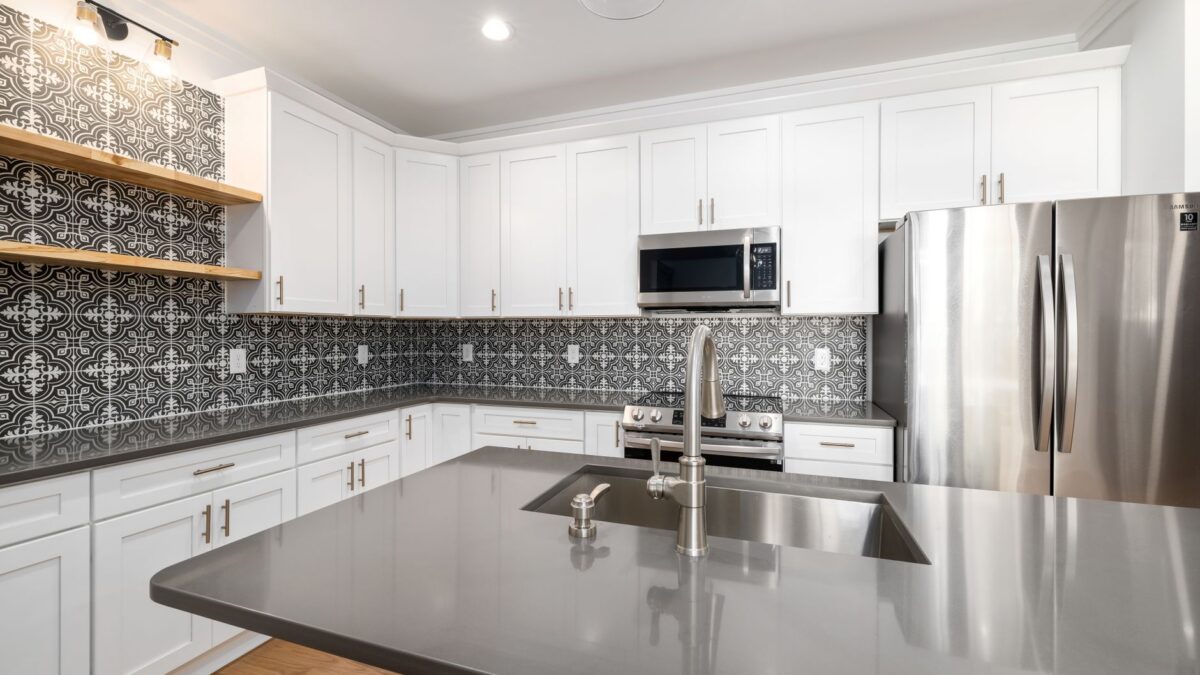
1. Black-and-White Patterned Tile, White Shaker
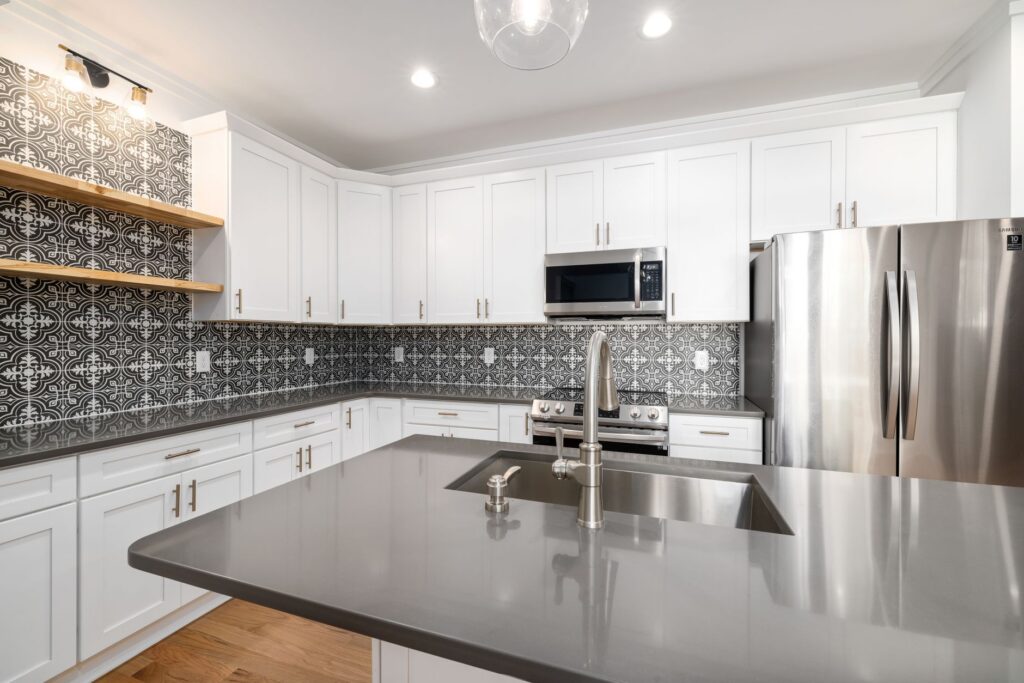
White shaker cabinets wrap the walls while a black-and-white patterned tile covers the backsplash and climbs behind two wood open shelves. A smooth charcoal counter on the island holds the sink, and stainless appliances keep the palette cool. To copy it, pair one bold printed tile with plain white doors and a solid, unveined counter so the pattern has no competition. Photo: Curtis Adams / Pexels
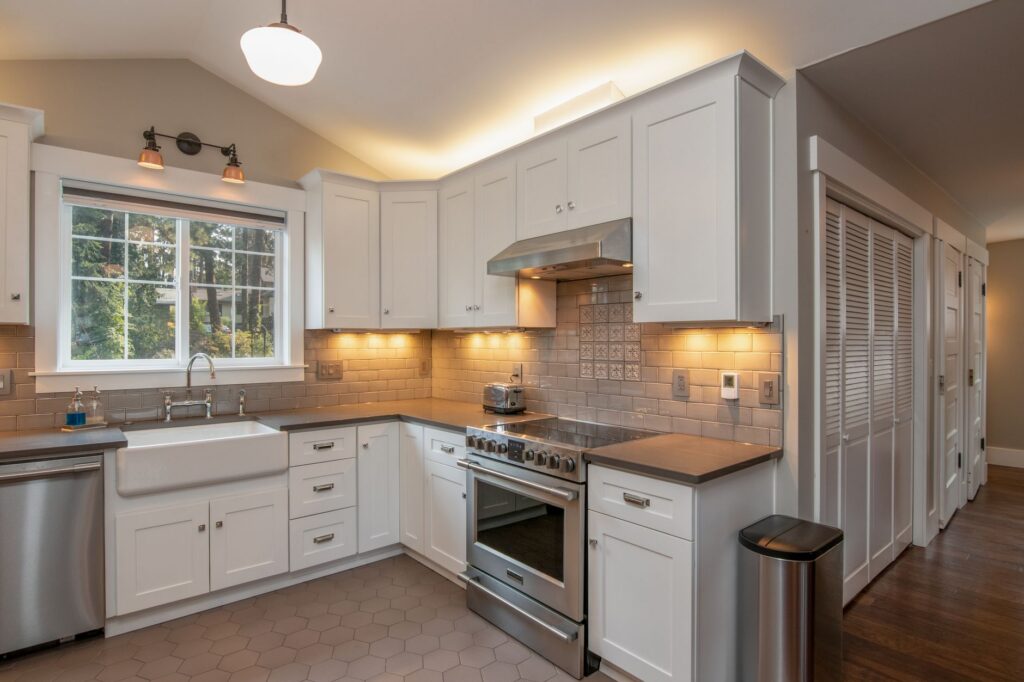
2. Handmade-Look Subway With a Range Inset
This L-shaped kitchen pairs white shaker cabinets with a gray-beige subway backsplash that has a slightly wavy, handmade look. Behind the range, a small panel of patterned relief tiles breaks up the field, and under-cabinet lights wash the tile in warm light. Repeat the idea by centering a modest decorative inset on the range and lighting the tile from below the upper cabinets. Photo: Clay Elliot / Pexels
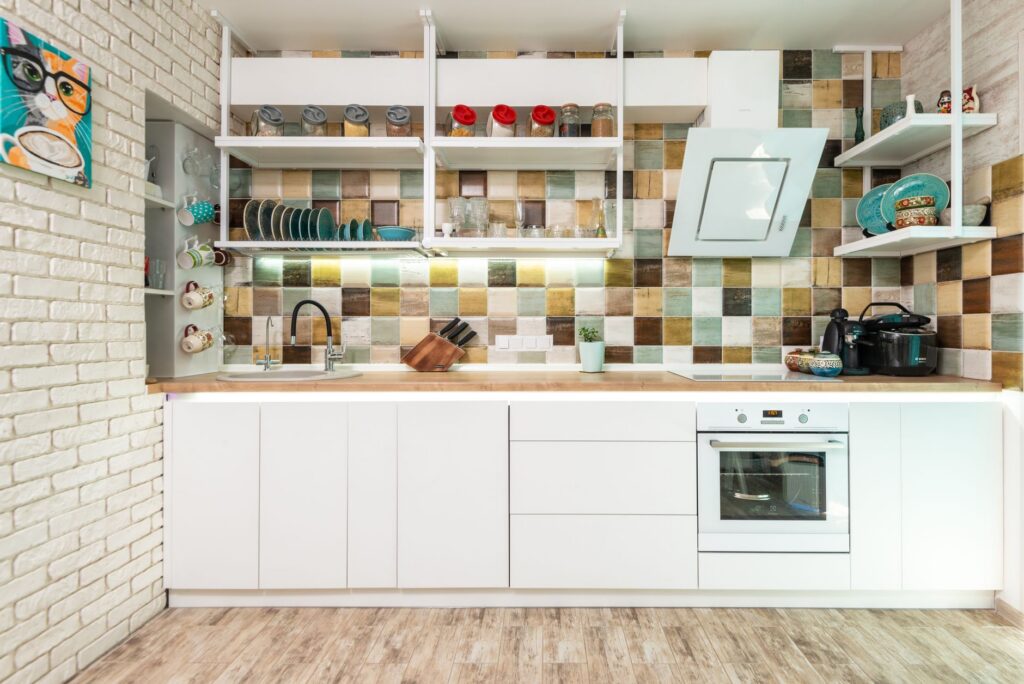
3. Patchwork Squares With Open Shelving
A single wall of flat white cabinets sits below a patchwork of square tiles in green, gold, cream and brown that reaches nearly to the ceiling. White open shelves hang across the tile, and a light strip under the lowest shelf makes the glaze shimmer. To try it, keep the base cabinets plain and handleless, then run a mixed-color tile full height where wall cabinets would usually go. Photo: Max Vakhtbovych / Pexels
4. Large Tan Tile With a Diamond Accent
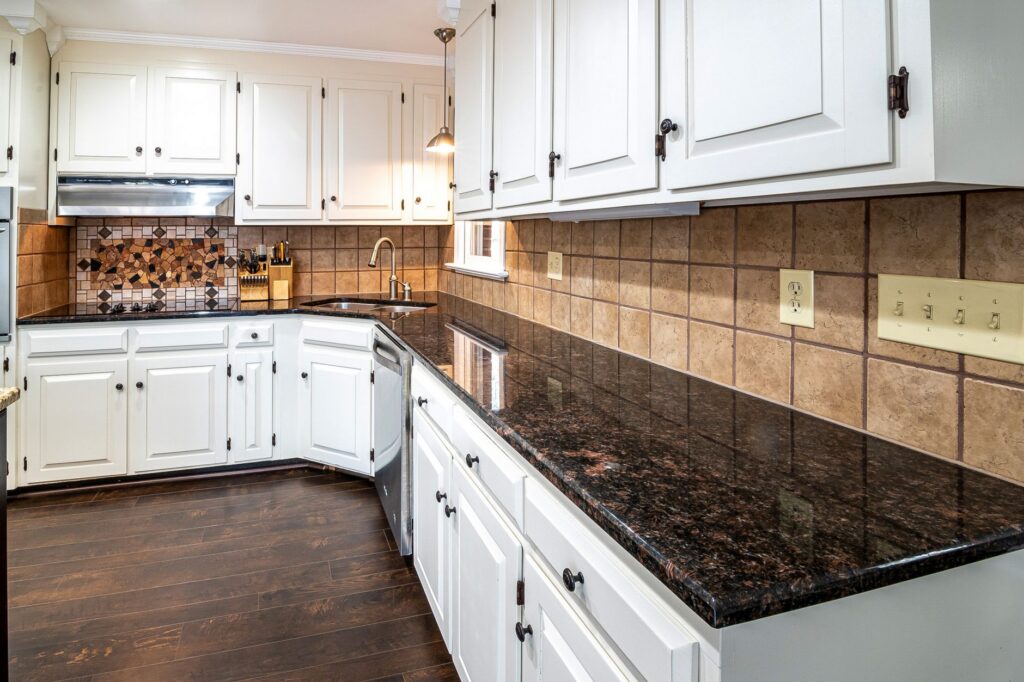
Large tan square tiles cover the backsplash of this kitchen with white raised-panel cabinets and a dark speckled granite counter. On the far wall, under the range hood, smaller tiles set on the diagonal with dark diamond accents form a focal panel. Copy the approach with an affordable field tile everywhere and one patterned inset where the eye lands first, usually above the cooktop. Photo: Curtis Adams / Pexels
5. Stone-Look Subway and a Framed Panel
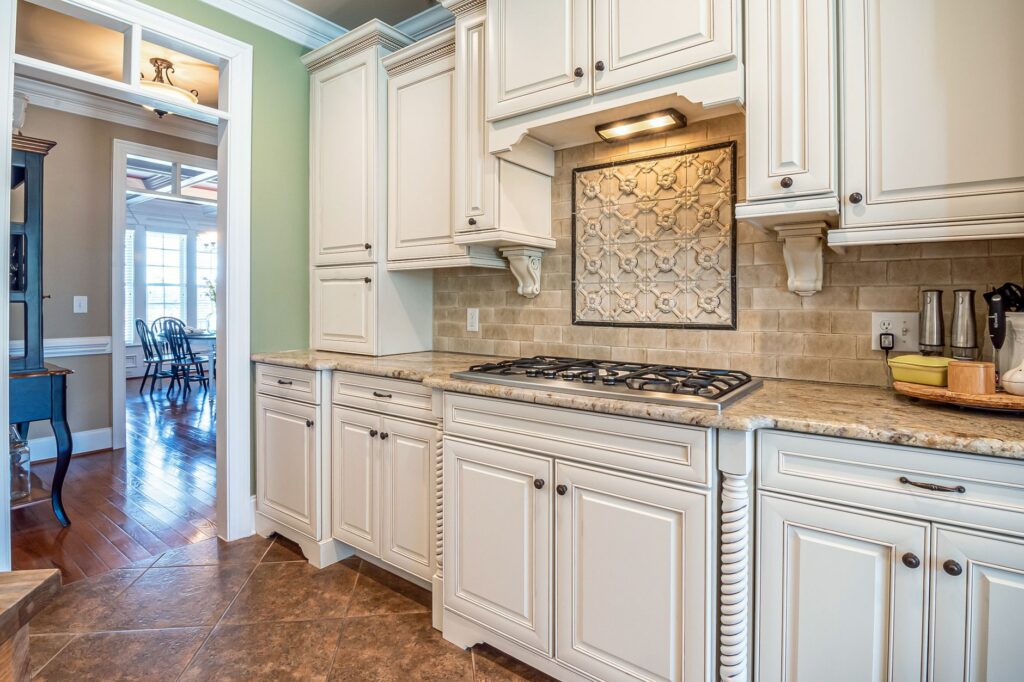
Cream glazed cabinets with turned posts and corbels frame a backsplash of beige stone-look subway tile. Above the gas cooktop, a square relief-pattern panel is outlined with a thin dark border, and a light under the hood highlights it. For a similar traditional look, choose a warm, tumbled-style tile and frame one decorative piece with a slim liner so it reads as artwork. Photo: Curtis Adams / Pexels
6. Classic White Subway, Glossy Fronts
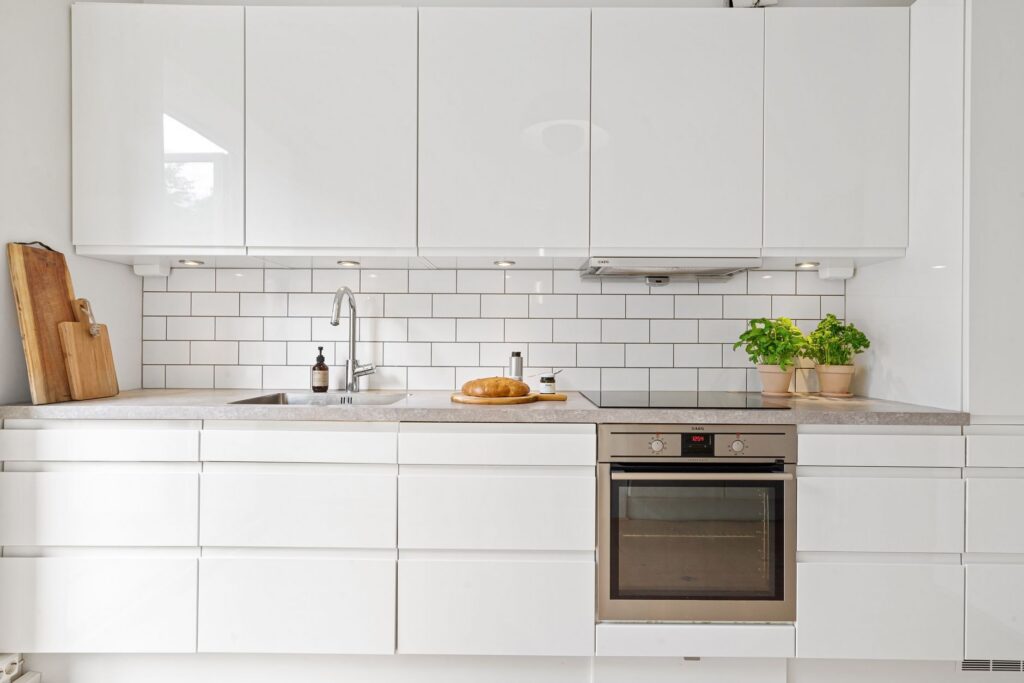
Handleless high-gloss white cabinets line a single wall, with plain white subway tile filling the band between the counter and the upper cabinets. A built-in stainless oven sits below the counter, and wood cutting boards and potted herbs add the only warm notes. Copy it by matching the tile white to the cabinets and using light gray grout so the brick pattern stays crisp but quiet. Photo: Lisa Anna / Pexels
7. Glossy Gray Subway Up to the Ceiling
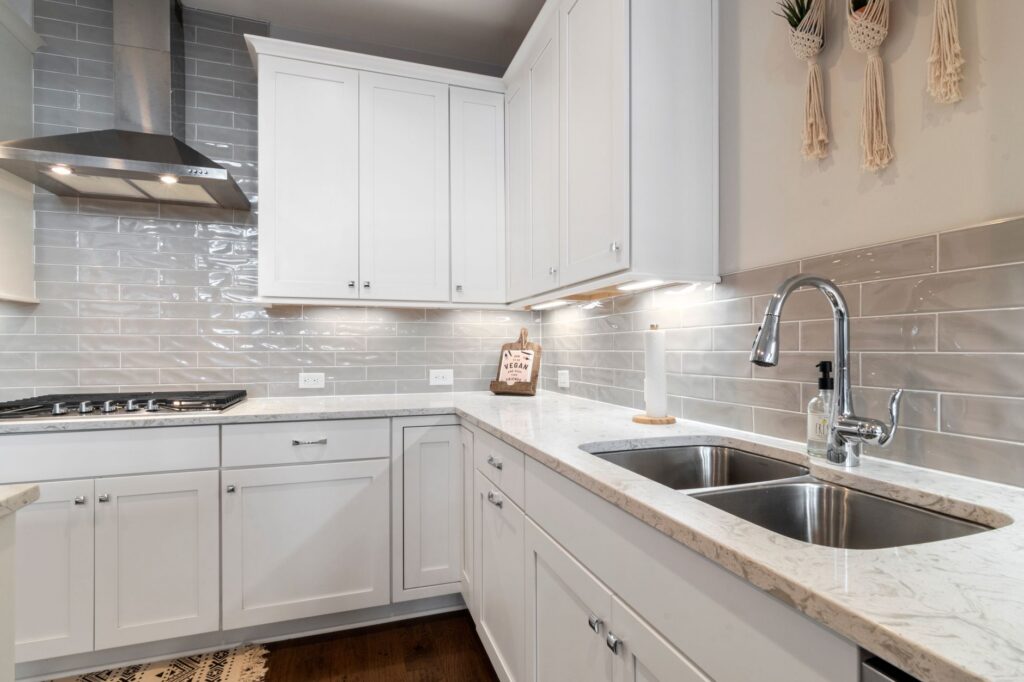
Elongated gray subway tiles with a glossy, slightly uneven glaze run all the way to the ceiling behind a stainless chimney hood. White shaker cabinets, a white-and-gray veined counter and under-cabinet lighting keep the room bright. To copy it, take one tile to the ceiling on the hood wall only, and stop it at the underside of the upper cabinets everywhere else. Photo: Curtis Adams / Pexels
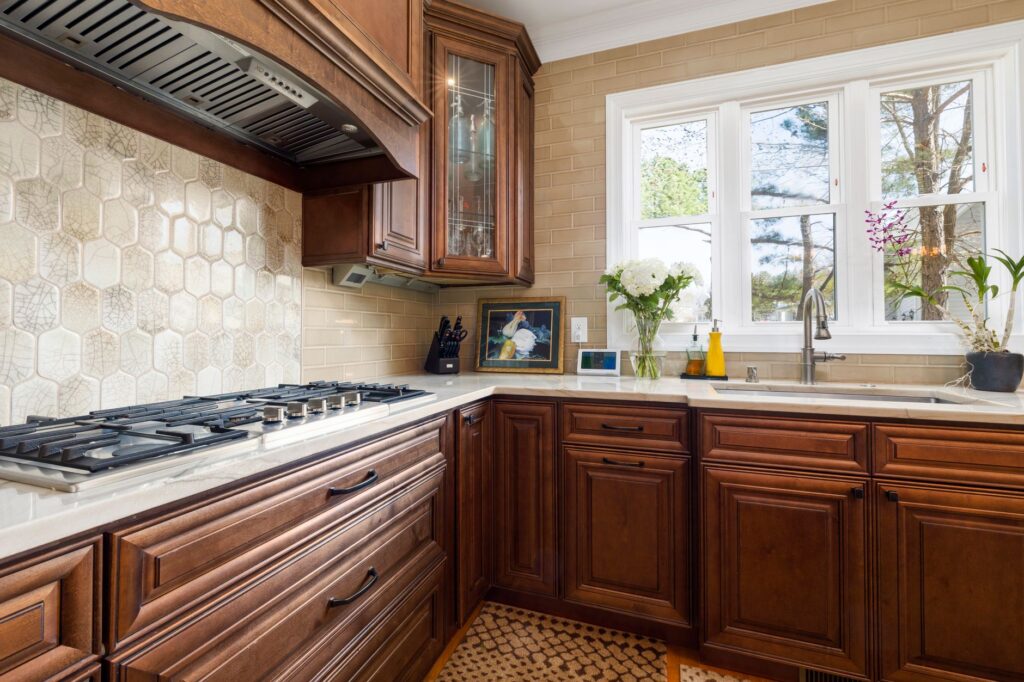
8. Hexagon Feature Behind the Cooktop
Large textured hexagon tiles in cream and gold fill the wall behind the gas cooktop, while a simple beige subway tile continues to the window above the sink. Reddish-brown raised-panel cabinets and a light counter complete the corner. Use two tiles in the same color family like this: a showpiece shape at the cooktop and a plain, quiet tile for the remaining runs. Photo: Curtis Adams / Pexels
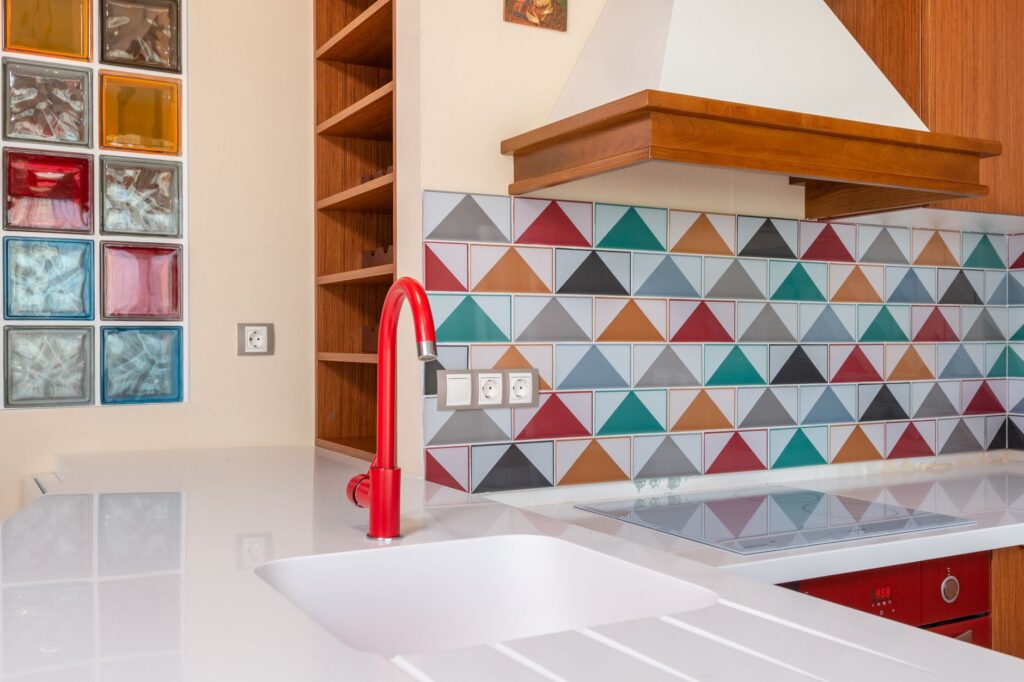
9. Colorful Triangle Tile With Red Accents
Triangle-pattern tiles in teal, red, orange, gray and black wrap the corner of this kitchen. A white counter with an integrated sink, a red faucet and red lower fronts pick up one of the tile colors, while wood shelving and hood trim warm the scheme. To repeat it, pull one shade from a multicolored tile and echo it in two or three small fixtures. Photo: Max Vakhtbovych / Pexels
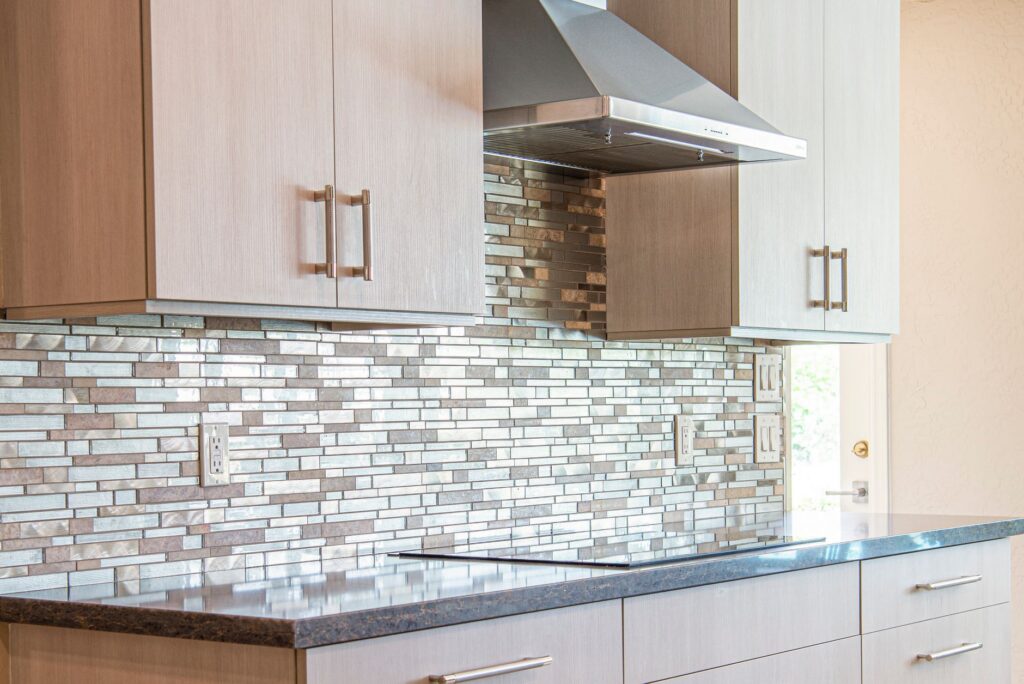
10. Linear Mosaic in Metallic Tones
Thin horizontal strips in silver, beige and bronze tones form a linear mosaic that runs under the upper cabinets and up behind a stainless chimney hood. The cabinets have a pale wood-grain finish with long bar pulls, and the counter is a dark speckled stone. To copy it, use a linear mosaic on mesh sheets and carry it up to the hood so the cooktop wall becomes the focal point. Photo: Derwin Edwards / Pexels
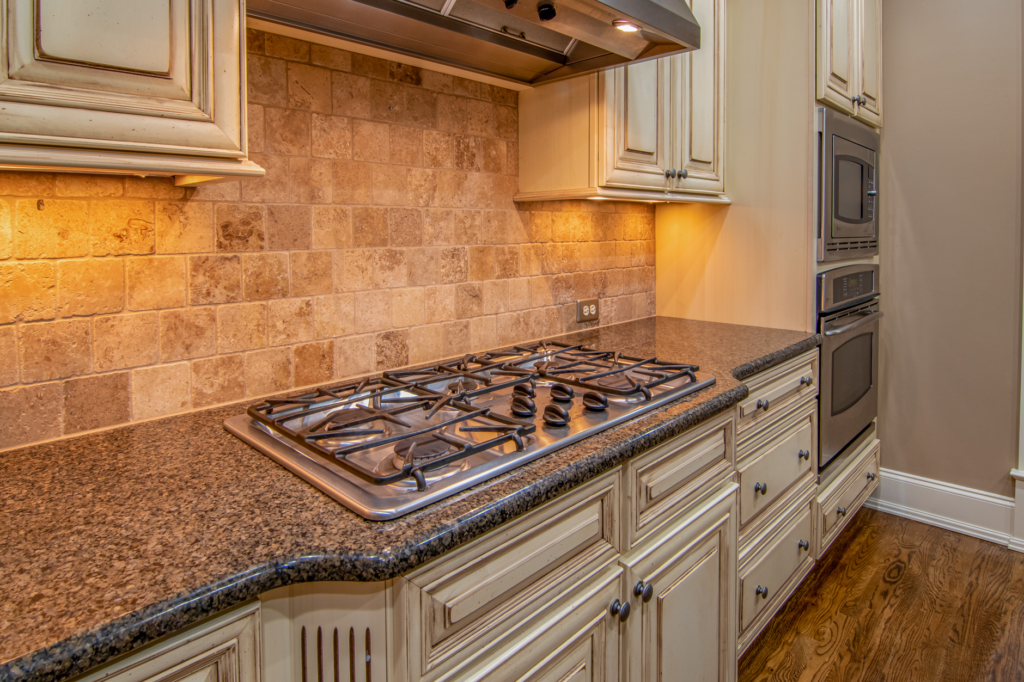
11. Tumbled Stone Squares Under Warm Light
Squares of what looks like tumbled travertine cover the wall from counter to hood, glowing under warm under-cabinet lights. A stainless gas cooktop sits in a dark speckled counter, flanked by cream raised-panel cabinets and stacked wall ovens. For this look, choose a tumbled stone or stone-look tile in mixed beiges and add warm-white under-cabinet lighting to bring out its texture. Photo: Curtis Adams / Pexels
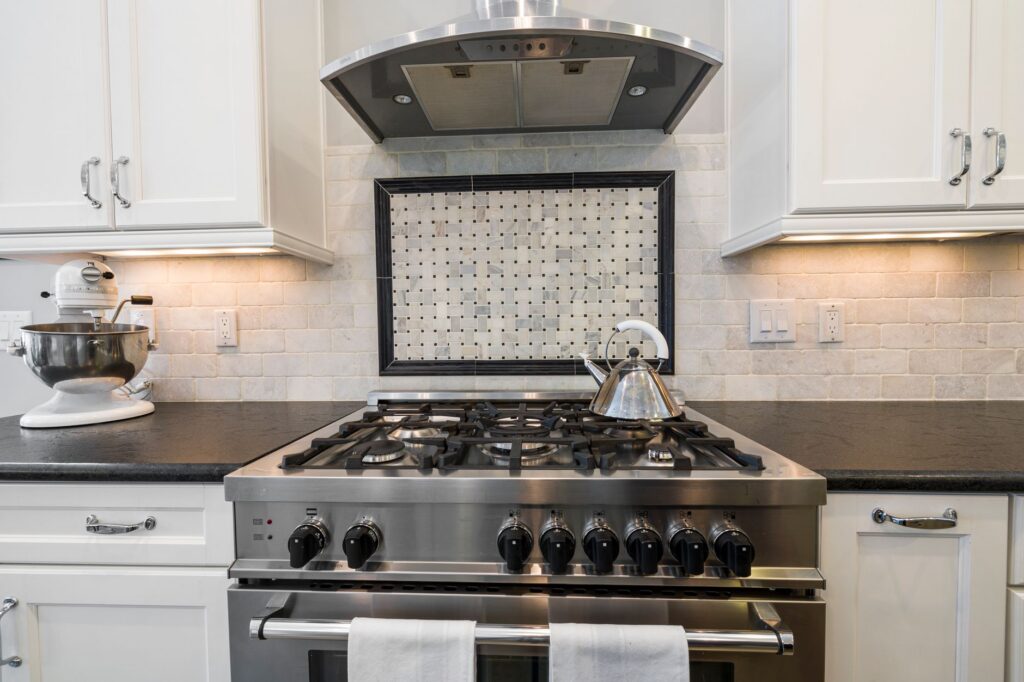
12. Framed Basketweave Above the Range
White cabinets and a dark counter flank a stainless range with black knobs. The backsplash is a pale stone-look subway tile, interrupted above the range by a basketweave mosaic panel outlined in black. Copy it by framing a contrasting mosaic with a dark pencil liner, sized to the width of the range and stopped below the hood. Photo: Curtis Adams / Pexels
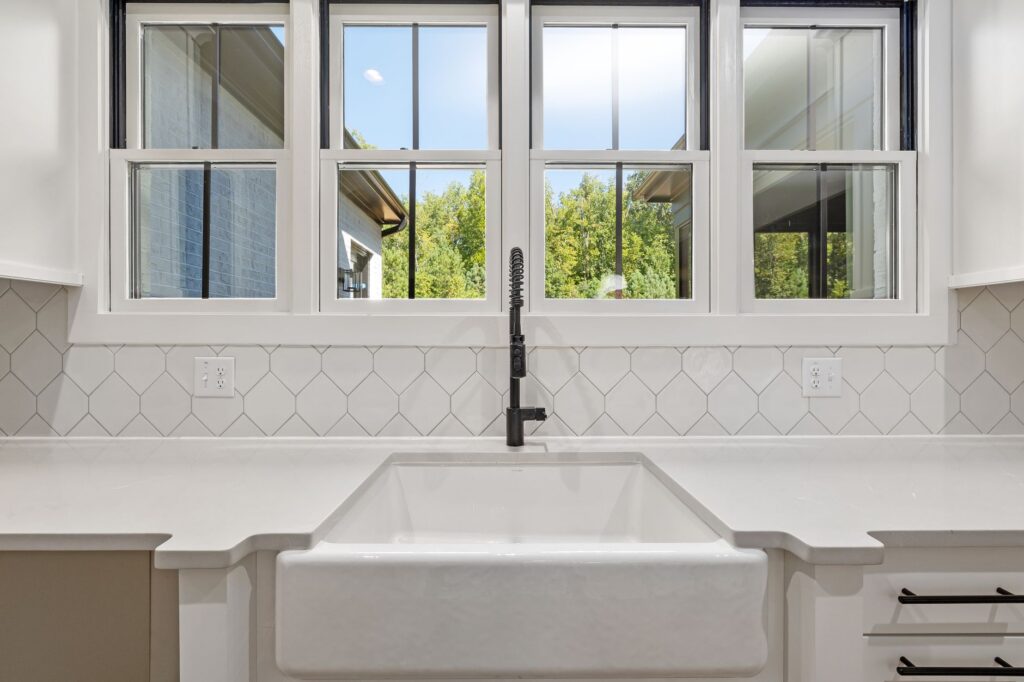
13. White Shaped Tile Below the Windows
A row of four double-hung windows sits above a white farmhouse sink, and white elongated hexagon tiles with gray grout fill the band between the counter and the sills. A matte black pull-down faucet and black bar pulls echo the dark window frames. When windows take up most of the wall, a shaped tile in a short band adds pattern without competing with the view. Photo: Curtis Adams / Pexels
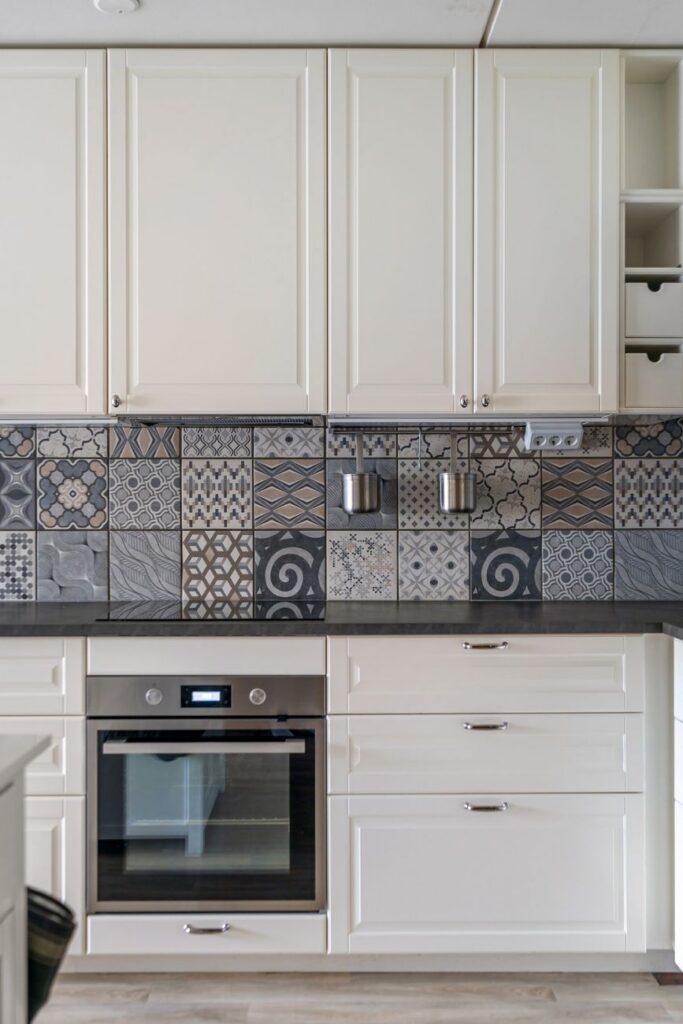
14. Gray Patchwork Pattern Tile
Square tiles in a patchwork of gray, black and white patterns form the backsplash between white cabinets and a dark counter. Two small metal holders hang against the tile, and a built-in stainless oven sits in the base run. To copy it, pick a mixed-pattern tile set that stays within one color family so the effect looks collected rather than busy. Photo: Alex Tyson / Pexels
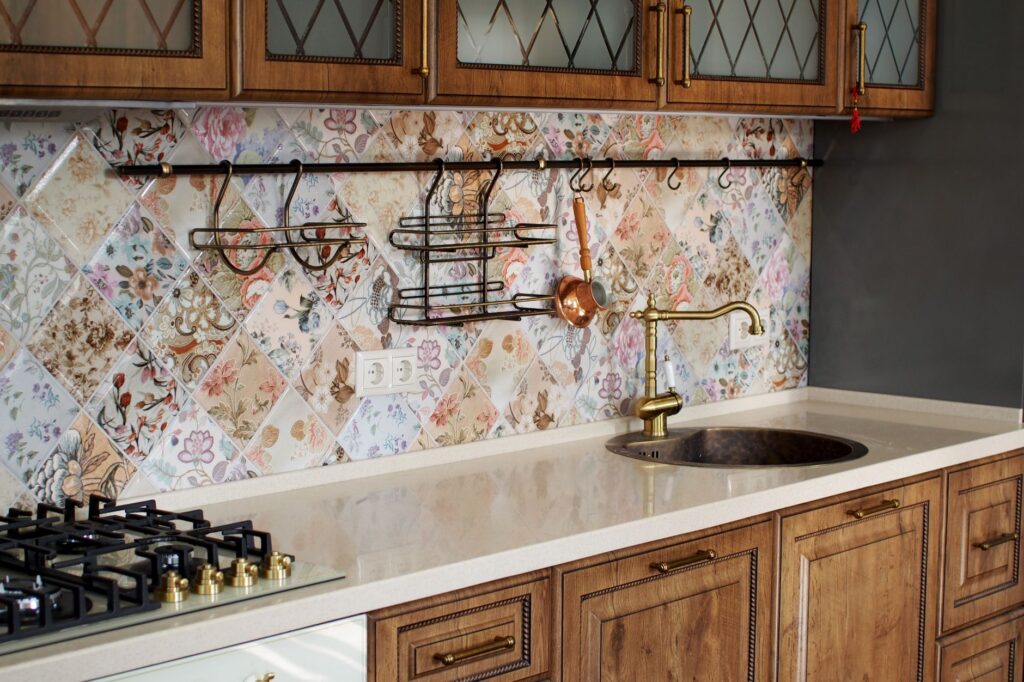
15. Floral Tiles Set on the Diagonal
Pastel floral tiles laid on the diagonal cover the wall between a light counter and wood upper cabinets with leaded-glass doors. A black rail with hooks holds racks and a copper ladle, and a brass gooseneck faucet stands over a round dark sink beside a gas cooktop. To repeat it, set a busy patterned tile at 45 degrees and add a metal rail so tools hang in front of it. Photo: Natalia Goryaeva / Pexels
16. Damask Pattern in Small Mosaic
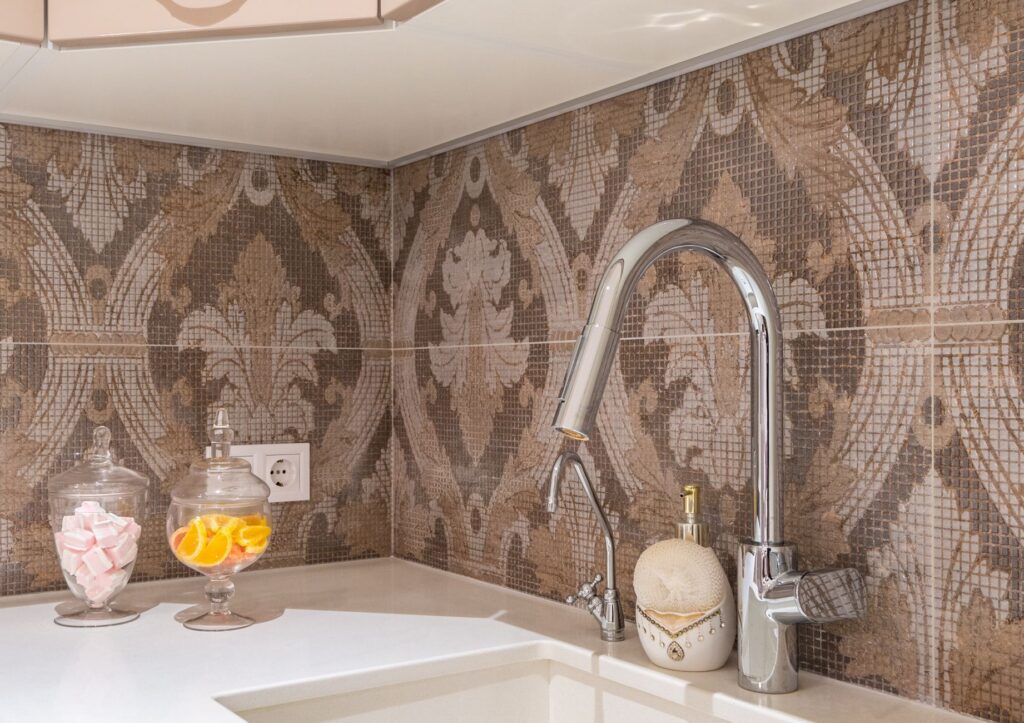
Tiny mosaic tiles in brown, beige and bronze build a large damask pattern that wraps both walls of a corner. A white counter, a sink and a tall chrome pull-down faucet sit below it, with glass jars as the only decor. To copy it, look for pre-patterned mosaic sheets that assemble into one large motif, and keep the counter plain and light. Photo: Max Vakhtbovych / Pexels
17. White Subway With Gray Grout
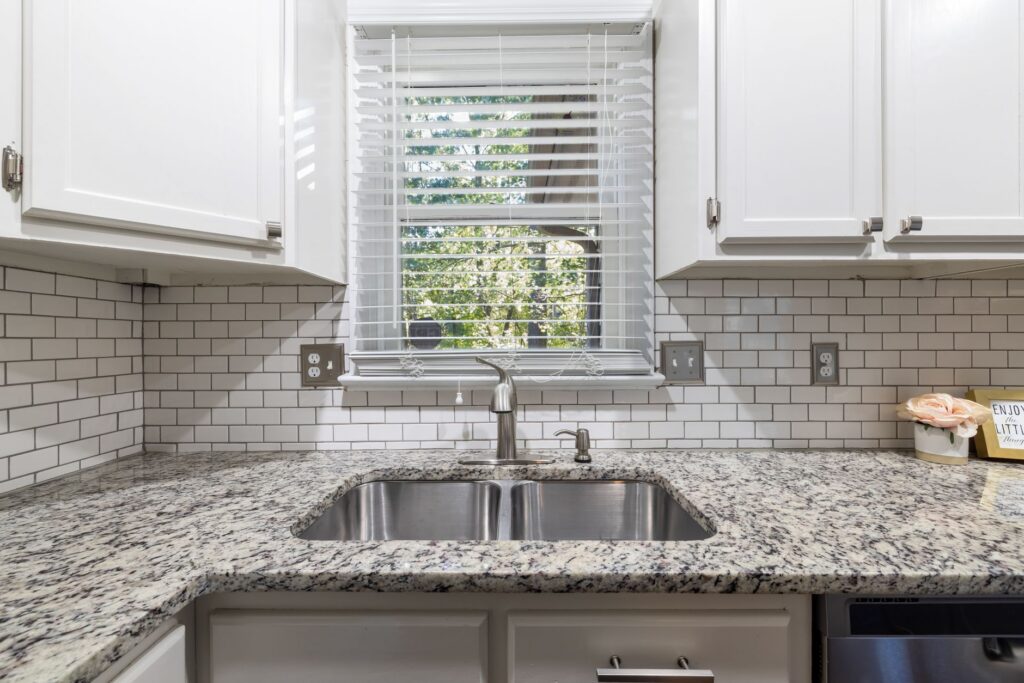
White subway tile with gray grout lines surrounds a window with white blinds above a stainless double sink. White raised-panel cabinets and a busy white, gray and black granite counter complete the sink wall. To copy it, use a mid-gray grout with plain white tile: it shows kitchen stains less than white grout and outlines each brick. Photo: Curtis Adams / Pexels
18. White Hex Mosaic With Dark Wood
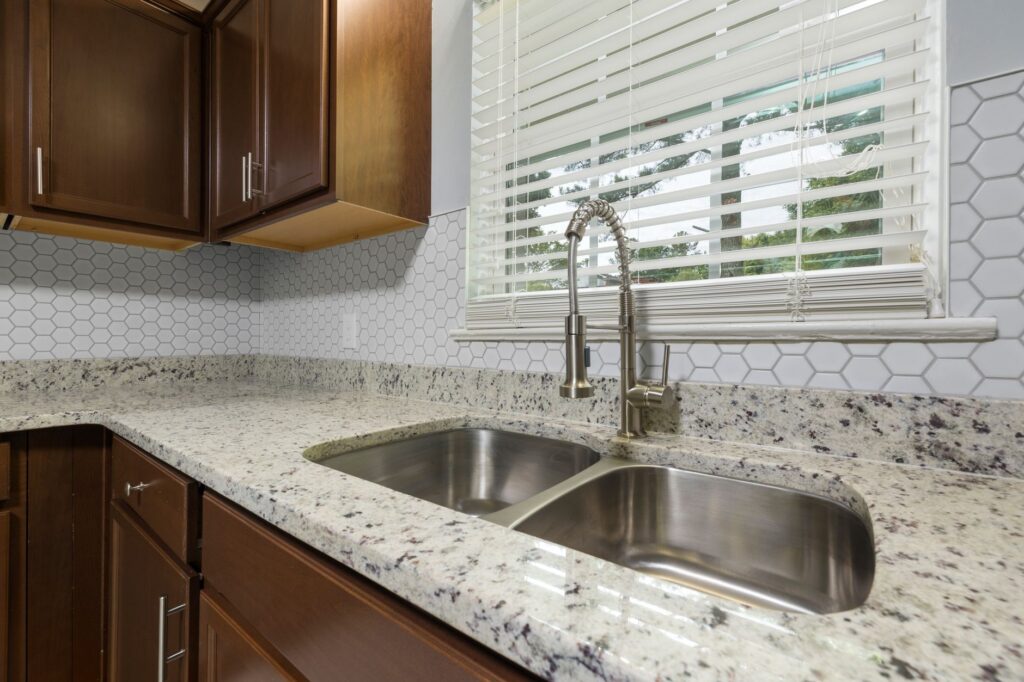
A white hexagon mosaic runs between dark brown cabinets and a white granite counter flecked with gray and black, and it continues up beside the window. A stainless double sink and a spring-style pull-down faucet sit under the window. Repeat this by using a small white mosaic to brighten dark cabinetry, wrapping the tile around the window for a finished edge. Photo: Curtis Adams / Pexels
What is the most timeless kitchen backsplash?
Plain subway tile in white or a soft neutral is the most timeless backsplash, because it suits shaker, flat-panel and traditional cabinets alike. Glossy tile reflects light in a darker kitchen, while a handmade-look glaze adds texture without adding color. If you want pattern, keep it to one area, such as the wall behind the range, and use a quiet tile everywhere else.
Where should a kitchen backsplash start and stop?
A backsplash starts on top of the counter and usually stops at the underside of the upper cabinets. On a cooking wall without upper cabinets, it looks finished when it runs up to the hood or all the way to the ceiling. At the sides, end the tile at a natural break: the end of the counter, the edge of a cabinet or a window casing. Where the tile has an exposed edge, finish it with a bullnose piece or a slim metal or stone edge trim.
Which backsplash tile works best in my kitchen?
The best tile depends on how busy your counter and cabinets already are: a patterned counter calls for a plain tile, and a plain counter can carry a pattern.
Tile type
Look
Works best when
Ceramic subway
Clean, classic, easy to match
The counter or cabinets already have pattern or color
Handmade-look glazed subway
Soft shine, slight wave
You want texture in an all-white or gray kitchen
Patterned cement-look tile
Bold, graphic
Cabinets are plain and the counter is solid, not veined
Linear or glass mosaic
Modern, reflective
The tile runs up to a hood as a focal point
Hexagon or shaped tile
Playful, geometric
The backsplash is a short band, for example under windows