Air Fryer vs Convection Oven: Same Idea, Different Strengths
Both use a fan and hot air. The differences are chamber size, airflow, capacity and how much you cook at once.
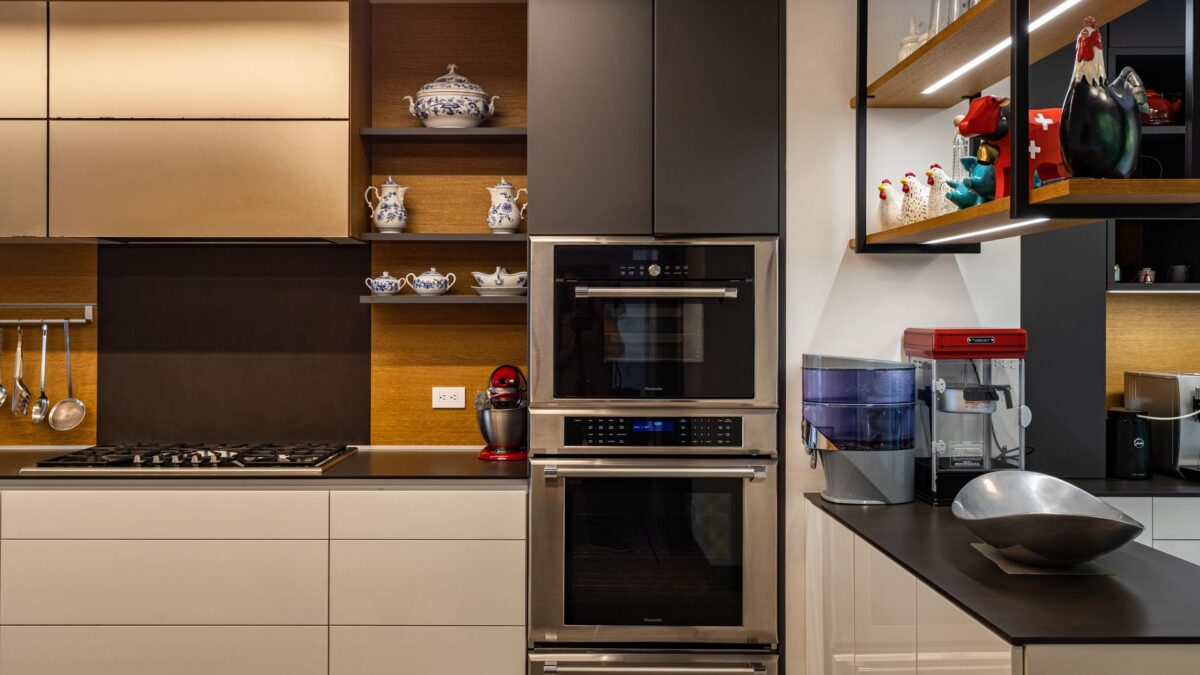
An air fryer and a convection oven use the same basic technology: a heating element plus a fan that circulates hot air. The difference is scale. An air fryer packs that airflow into a small chamber close to the food, so it heats up fast and crisps small batches quickly. A convection oven, whether built into a range or on the countertop, has far more space, cooks large or flat items better and handles several dishes at once. If you mostly cook for one or two people, an air fryer is often quicker; for family meals, sheet-pan dinners and baking, a convection oven usually wins.
What does it cost to run?
Enter the appliance’s watts (on the rating plate) and how long it runs each day to estimate the electricity cost per year. An oven cycles its heating element on and off once it is hot, so watts × time overstates it more than it does for an air fryer. The default price is the U.S. home average from the EIA: 18.16 cents per kWh in August 2026.
How each one works
In a convection oven, a fan at the back of the cavity moves air around the food. In ovens sold as “true” or “European” convection, a separate heating element surrounds the fan, so the moving air is heated directly. Others simply circulate air heated by the regular bake and broil elements.
In an air fryer, the element and a fast fan sit directly above the food in a compact chamber. The air travels a short distance at high speed, which dries and browns surfaces quickly. We explain this in more detail in how an air fryer works.
Side-by-side comparison
| Feature | Air fryer (basket) | Convection oven (full-size range) |
|---|---|---|
| Capacity | Roughly 2–10 quarts; food best in one layer | Several cubic feet; multiple racks and full sheet pans |
| Preheat | Often a few minutes or none | Often 10–15 minutes or more, depending on the oven and temperature |
| Airflow | Concentrated, close to food | Gentler, spread across a large cavity |
| Best at | Crisping small batches, frozen snacks, reheating | Roasts, sheet-pan meals, baking, large batches |
| Weak spots | Batch cooking, wet batters, large cuts | Slower to heat for small portions |
| Power | Commonly about 1,200–1,800 W on a regular outlet | Electric ovens typically run on a dedicated 240 V circuit; gas ovens use a gas burner plus electric controls |
| Counter space | Takes up counter and storage room | None extra if built into a range |
| Cleanup | Basket and drawer, often dishwasher-safe per manual | Racks, cavity; may have self-clean or steam-clean cycles |
Check the actual capacity, wattage and dimensions in the spec sheet for any model you are considering; figures vary widely.
Speed
For small portions, an air fryer is usually faster, mainly because it needs little or no preheating and the food sits close to strong, moving heat. A tray of frozen fries or a couple of chicken thighs can be done before a full-size oven has finished preheating. For large quantities, the advantage disappears: if you need three batches in the air fryer, one sheet pan in the oven may finish first.
Energy use
Countertop air fryers do not carry a standardized energy label, so there is no official rating that lets you compare one directly with an oven. What you can compare is the logic: an air fryer heats a much smaller space for less time, so for small portions it generally uses less electricity than heating a full-size oven. Consumer testing in the UK has found the same pattern, with the gap shrinking as the amount of food grows. For a large meal that fills the oven, the oven can be the more efficient choice. Your cost per use depends on wattage, cooking time and your local electricity rate.
To estimate it yourself: watts ÷ 1,000 × hours of heating = kilowatt-hours, then multiply by your rate per kWh from your electric bill. The appliance cycles on and off once it reaches temperature, so the real figure is usually lower than the full-power estimate.
Results: texture and evenness
- Crispness: air fryers generally crisp surfaces faster because of the concentrated airflow. Convection ovens crisp too, especially on a rack set over a sheet pan, but take longer.
- Evenness: a convection oven usually cooks large, flat batches more evenly. In an air fryer, you shake or flip food to avoid pale spots.
- Baking: cakes, cookies and bread are easier in an oven. Strong airflow can over-brown the tops of baked goods in a small air fryer.
- Accuracy: both can run hotter or cooler than the display. An oven thermometer helps; see why your oven temperature may be off.
Converting recipes between them
Many oven manufacturers advise lowering the temperature by about 25°F when using convection for a recipe written for a regular (non-convection) oven, or keeping the temperature and checking earlier. A similar rule of thumb works for air fryers: start about 25°F lower than a conventional oven recipe and check about 20% sooner. These are starting points, not exact conversions; your manual may give specific guidance. Always confirm meat, poultry and fish with a food thermometer.
What about countertop convection ovens and combos?
Countertop convection toaster ovens and air fryer ovens sit between the two. They usually fit a quarter-sheet pan or a small pizza, have a window and several racks, and many have an “air fry” setting that uses a faster fan. They are more versatile than a basket model but take more counter space and often crisp a little less intensely. If you are short on space, one combo appliance can replace a separate toaster and air fryer.
Which should you use?
- Choose the air fryer for one to three servings, frozen snacks, reheating leftovers, wings, roasted vegetables and anything you want crisp quickly.
- Choose the convection oven for family meals, large roasts, baking, sheet-pan dinners or when you need several dishes ready at once.
- Thinking of buying an air fryer? Start with capacity; see what size air fryer you need.
Bottom line
An air fryer is a small, fast convection oven. It beats a full-size oven on speed and often on energy for small portions, while the oven wins on capacity, baking and evenness for big batches. Many kitchens use both: the air fryer for quick weeknight sides and the oven for larger meals.
FAQ
Can a convection oven replace an air fryer?
Mostly. Use the convection setting, a rack over a sheet pan and a single layer of food. It will take longer, but results can be similar.
Is an air fryer cheaper to run than an oven?
Usually for small portions, because it heats a small space for less time. For large batches that need repeated rounds, the oven may cost the same or less.
Do I lower the temperature for air fryer recipes?
When adapting a conventional oven recipe, a common starting point is about 25°F lower and checking around 20% sooner.
What is true convection?
An oven with a third heating element around the rear fan, so circulated air is heated directly. It tends to give more even heat than a fan alone.