Can You Put Aluminum Foil in an Air Fryer? Foil and Parchment Safety
Foil and parchment can save cleanup, but loose liners, blocked airflow and acidic foods cause problems. Here is how to use them safely.
In most air fryers you can use aluminum foil, as long as your manual does not prohibit it and you follow three rules: food must weigh the foil down, the foil must never touch or get near the heating element, and it must not cover the whole basket floor or block the air holes. Never preheat with an empty sheet of foil or parchment in the basket, because the fan can lift it into the element. For acidic foods such as tomato sauces or citrus marinades, parchment is a better choice than foil.
Check your manual first
Air fryer makers do not all agree. Some manuals allow foil or parchment in the basket, some limit it to certain accessories, and some say not to use liners at all, especially in models where the element sits close to the basket or in oven-style units with exposed elements. The manual is the rule for your specific appliance and also protects your warranty. The model number is usually printed on a label on the bottom or back of the unit, and most manufacturers post manuals online.
Why foil can be a problem
- It can fly. The fan in an air fryer moves air fast. A loose or lightly weighted sheet can lift and touch the heating element, where it can scorch, melt holes or, combined with grease, start smoking.
- It blocks airflow. Air fryers rely on hot air moving under and around food. Foil covering the whole floor turns the basket into a pan, so the underside steams instead of crisping and food cooks unevenly.
- It traps grease. Fat that would normally drip into the drawer pools on the foil, so food sits in it and can smoke.
- Acidic foods react with it. Tomato, citrus, vinegar and some marinades can react with aluminum, leaving small holes in the foil and a metallic taste on the food.
How to use foil safely
- Cut it to size, smaller than the basket floor, so air can still pass around the edges.
- Place it in the basket only when food goes in, and put enough food on it to hold it flat.
- Fold or crimp the edges down so nothing sticks up toward the element.
- Poke holes in the foil if you want some airflow and drainage underneath.
- Do not wrap the basket or line the drawer in oven-style models unless the manual says it is fine; some designs need that area clear for airflow.
- Check halfway that the foil has not shifted.
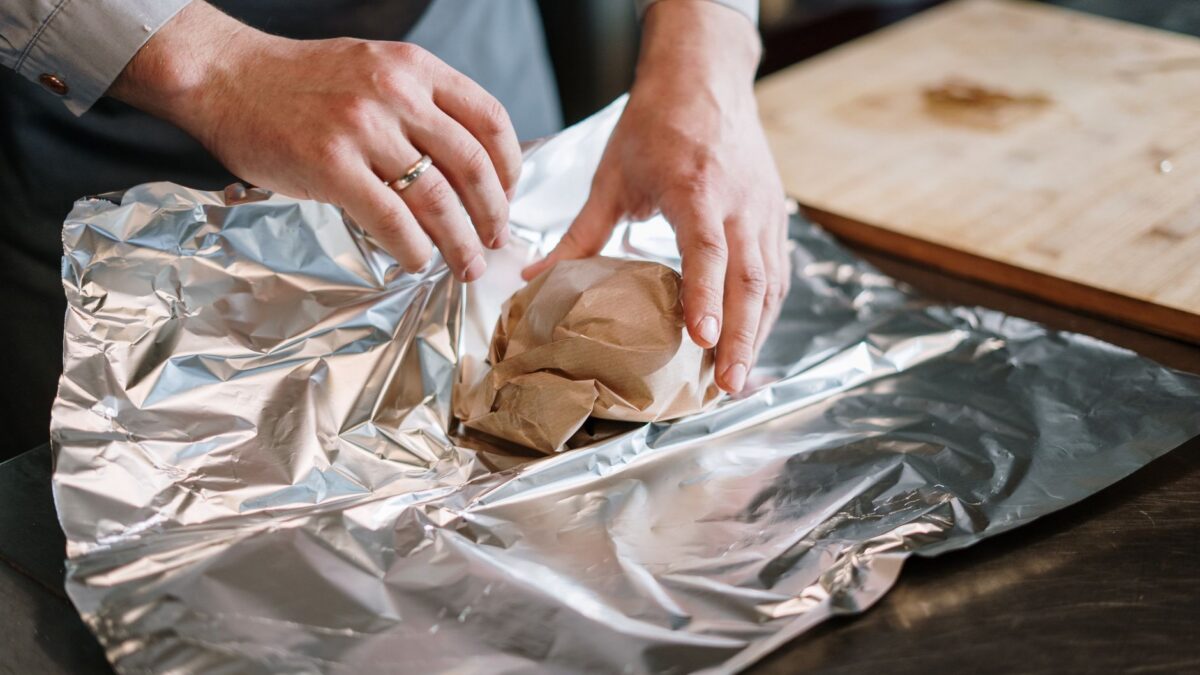
Foil is most useful for wrapping foods that should steam or stay moist, such as a foil packet of vegetables with butter, or for loosely shielding something that is browning too fast, folded securely so it cannot lift.
Parchment: often the better liner
Parchment paper is less likely to react with food and releases sticky items such as glazed salmon or cheesy foods easily. The same airflow rules apply:
- Use perforated parchment or poke holes in a plain sheet, so air and fat can pass through.
- Never preheat with parchment alone in the basket. Light paper is easily blown into the element, where it can scorch or catch fire.
- Check the temperature rating on the box. Many parchment papers are rated for oven use up to roughly 420–450°F, but brands vary; do not exceed what the package states.
- Keep it trimmed. Paper that hangs over the edges can curl up toward the element.
What not to use
- Wax paper. The wax coating can melt and smoke at air frying temperatures. It is not the same as parchment.
- Paper towels, napkins or paper plates. They are light, flammable and blow around easily.
- Plastic wrap or plastic containers, unless explicitly rated as oven-safe at the temperature you plan to use.
- Thin disposable foil pans that fill the basket. They block airflow; if you use a pan, choose one that leaves space around the sides and is rated as oven-safe.
Liner options compared
| Liner | Good for | Avoid when | Key rule |
|---|---|---|---|
| Aluminum foil | Foil packets, shielding, very messy foods | Acidic foods; manual prohibits it | Weigh down, keep off element, leave gaps |
| Perforated parchment | Fish, glazed or sticky foods, baked goods | Above the package temperature rating | Never preheat empty |
| Silicone liner (reusable) | Everyday messy cooking | It blocks too much airflow for crisp results | Use a size made for your basket; check its heat rating |
| No liner | Fries, wings, vegetables, most frozen foods | Very sticky glazes | Best for crisping |
Is it safe to eat food cooked on foil?
Cooking on aluminum foil is a normal home practice. Some aluminum can transfer into food, more so with acidic or salty foods and long cooking times. If you want to limit that, use parchment for tomato-based, citrus or vinegar-heavy dishes and keep foil for other foods.
Signs something is wrong
- Burning smell or smoke soon after starting: stop, unplug, and when it is safe, check whether a liner has moved toward the element.
- Visible scorch marks on the element or a liner stuck to it: unplug, let it cool fully, then remove carefully. If the element looks damaged, contact the manufacturer before using it again.
- Food steaming instead of crisping: the liner is blocking airflow; trim it or remove it.
For more on safe placement, cords and recalls, see our air fryer safety tips. If you are using liners mainly to avoid scrubbing, our guide on how to clean an air fryer may make liners unnecessary. Wondering about foil in other appliances? Rules for microwaves are very different; see what you can put in a microwave.
Bottom line
Foil is usually fine in an air fryer if the manual allows it, the food holds it down, it stays well away from the element and air can still flow. Use perforated parchment for sticky and acidic foods, never preheat with an empty liner, and skip wax paper and paper towels entirely.
FAQ
Can I put foil at the bottom of the air fryer drawer?
Only if your manual allows it. In many basket models the drawer area helps airflow, and foil there can trap grease. Follow the manufacturer’s instructions.
Which side of the foil should face the food?
For standard foil, it makes little practical difference. Non-stick foil has a designated side; follow the box.
Can I use parchment paper rounds from the store?
Yes, if they fit the basket, are perforated and rated for your cooking temperature. Put them in with the food, never empty.
Why did my parchment burn?
It probably lifted into the element or the temperature exceeded its rating. Weigh it down with food, trim it and stay within the package rating.