How to Clean Laminate Floors Without Streaks: Cleaner, Mop and Method
Clean laminate floors without streaks using a barely damp microfiber mop and a little cleaner. See which cleaners leave film, how to mop and how to fix haze.
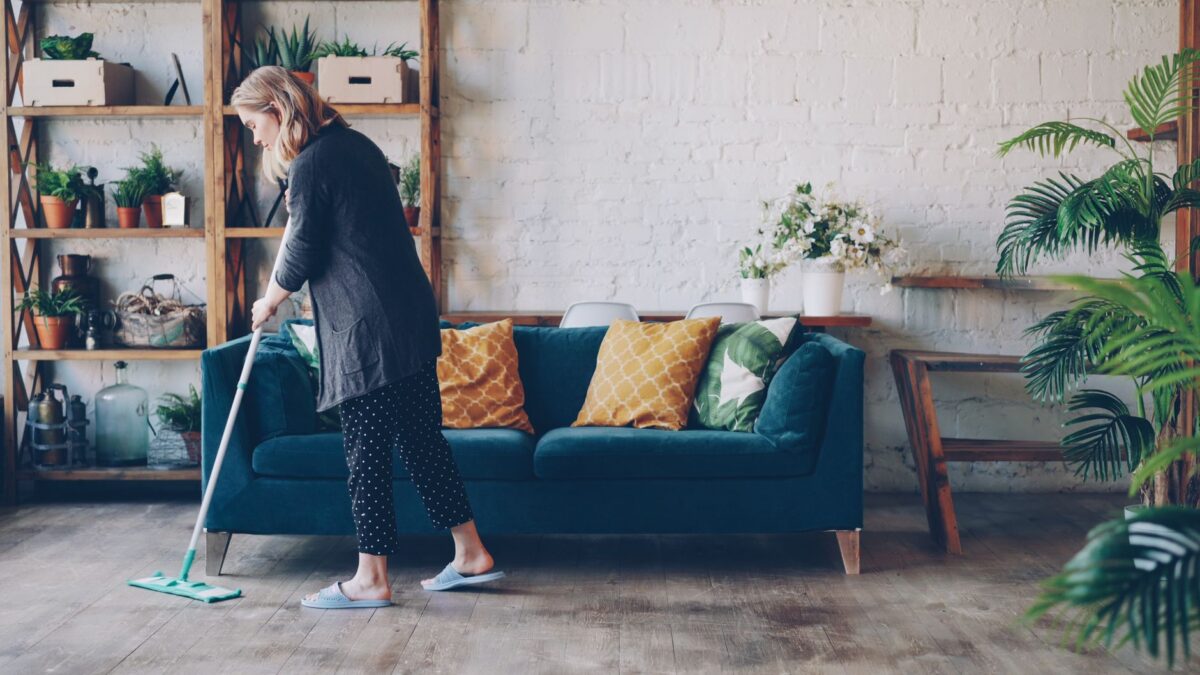
To clean laminate floors without streaks, sweep or vacuum first, then mop with a microfiber pad that is wrung out until it is barely damp, using either a cleaner made for laminate or a few drops of mild dish soap in warm water. Use as little liquid as possible and change or rinse the pad often. Streaks almost always come from too much product, dirty mop water or a film left by wax, oil or “shine” cleaners.
Laminate has a printed photo layer under a clear plastic wear layer, sitting on a fiberboard core. The surface is easy to wipe, but the core swells if water gets into the seams, so a light hand with water protects the floor as well as the finish.
What causes streaks on laminate floors?
Streaks are residue that dries on the smooth wear layer, where every trace of soap or minerals shows in raking light. The usual causes are:
- Too much cleaner or soap in the water, which leaves a sticky film that dries in lines.
- Dirty water or a dirty pad that spreads grime instead of lifting it.
- Products with wax, oil or polish, which laminate cannot absorb, so they sit on top as a cloudy layer.
- Hard tap water that leaves mineral spots when it dries slowly.
- A cotton string mop that holds too much water and leaves puddles.
- Old residue from earlier cleaners that each new mopping smears around.
Which cleaner is best for laminate floors?
The best cleaner is one labeled for laminate by the floor maker, or a very weak solution of mild, dye-free dish soap: about a few drops in a gallon (3.8 liters) of warm water. More soap is the most common mistake, because suds that are not rinsed away dry as haze.
Many people use diluted white vinegar, roughly 1/2 cup (120 ml) per gallon of water. It cuts soap film and mineral spots, and many laminate makers accept it at that weak strength, but some warranties do not, so check your floor maker’s care page first. For a household product with a simpler ingredient list, the EPA Safer Choice program lists cleaners that meet its safety criteria.
Avoid these on laminate:
- Oil soaps, wax, “mop and shine” or polish products.
- Abrasive powders, scouring pads and steel wool, which scratch the wear layer.
- Bleach and ammonia at full strength, and never mix any two cleaners.
- Hardwood finish restorers, which are made for wood coatings.
Treat laminate much like a sealed wood floor when it comes to water: the advice in our guide on mopping hardwood floors damp rather than wet applies here too.
What kind of mop works best on laminate?
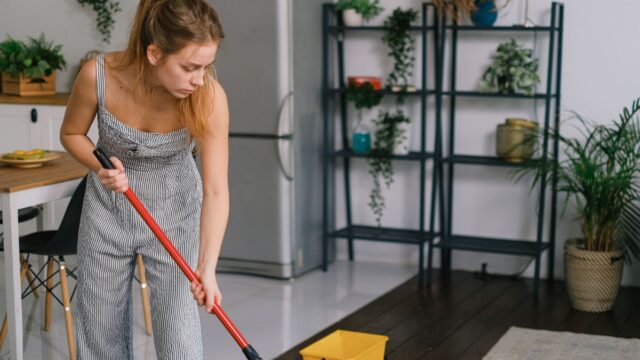
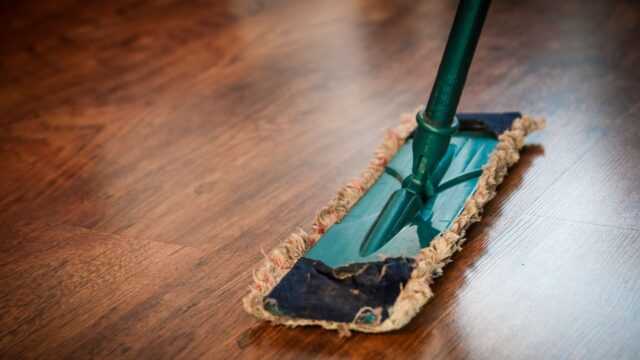
A flat microfiber mop with a removable, washable pad works best because it holds a small, even amount of liquid and traps fine dust. A spray mop that mists the floor ahead of the pad also works well, since you control exactly how much liquid goes down.
Skip steam mops unless your floor maker says they are allowed. Steam and heat push moisture into the seams and can make the edges swell or the surface layer lift. Sponge mops and string mops also tend to leave too much water behind.
Keep at least two pads so you can swap to a clean one halfway through a large room. Wash pads without fabric softener, which coats the fibers and then transfers to the floor as streaks.
How do you mop laminate step by step?
- Dry-clean first. Vacuum with the hard-floor setting (beater bar off) or sweep, paying attention to corners and along baseboards. Grit left on the floor scratches it and turns to mud when wet.
- Mix the solution in a clean bucket or spray bottle, keeping the amount of cleaner small.
- Dampen the pad, then wring it until no drops fall. It should feel cool and slightly damp to the touch.
- Mop in the direction of the planks, working in sections of about 3 by 3 feet (1 by 1 meter), so you follow the grain pattern and the light.
- Rinse or swap the pad whenever it looks gray.
- Check that each section dries within a minute or two. If water stands on the surface, you are using too much.
- Buff any damp patches with a dry microfiber cloth or a dry pad, especially near windows where sunlight shows marks.
Wipe spills right away, and treat any appliance leak as urgent: a fridge that drips under the kick plate can swell laminate planks in days. Our guide to finding and fixing a refrigerator leak covers the common sources.
How do you remove existing haze and streaks?
Old film needs one or two “reset” passes with a cleaner that dissolves residue, followed by a plain-water rinse. Use the weak vinegar solution (if your floor maker allows it) or a laminate cleaner, mop a small area, and then go over it again with a pad dampened in clean water only. Dry-buff the area while it is still slightly damp.
For spots that stay sticky, such as dried juice or grease near the stove, put a little cleaner on a microfiber cloth and rub only that spot. Rubbing alcohol on a cloth removes marker, ink and sticky tape residue from most laminate; test in a closet or under a sofa first. Crayon and gum come off more easily if you harden them with an ice cube and lift them with a plastic scraper.
The same rule that keeps laminate clean also works on other kitchen surfaces: a little soap, a rinse and a dry cloth. Our guide to cleaning kitchen cabinets without residue follows the same method.
How often should laminate floors be cleaned?
Sweep, dust-mop or vacuum laminate daily in kitchens and entryways and two or three times a week in quieter rooms. Damp-mop about once a week in busy areas and every two weeks elsewhere. Doormats at outside doors, felt pads under chair and table legs, and trimmed pet nails cut down on the grit and scratches that make floors look dull.
Quick answers
Can you use a Swiffer-style wet pad on laminate?
Disposable wet pads are fine for quick touch-ups if they are not too wet, but some leave a film over time. If streaks build up, switch back to a washable microfiber pad and a plain-water rinse.
Is vinegar safe for laminate floors?
A weak solution of about 1/2 cup (120 ml) white vinegar per gallon of water is widely used on laminate, but some manufacturers advise against it. Your floor maker’s care instructions decide what the warranty covers.
Why does my laminate look streaky after it dries?
Leftover soap, a dirty pad or hard water are the most likely reasons. Rinse with clean water on a fresh pad, then dry-buff, and use less cleaner next time.
Can laminate floors get wet?
The top layer resists water, but the fiberboard core swells if water sits in the seams. Wipe spills quickly and never leave standing water on the floor.