Cooking Holiday Dishes in One Oven: Rack Positions, Timing and Temps
One oven can handle most holiday dishes if you pick a shared temperature, stagger the timing and use racks well. Here is how to plan rack positions and times.
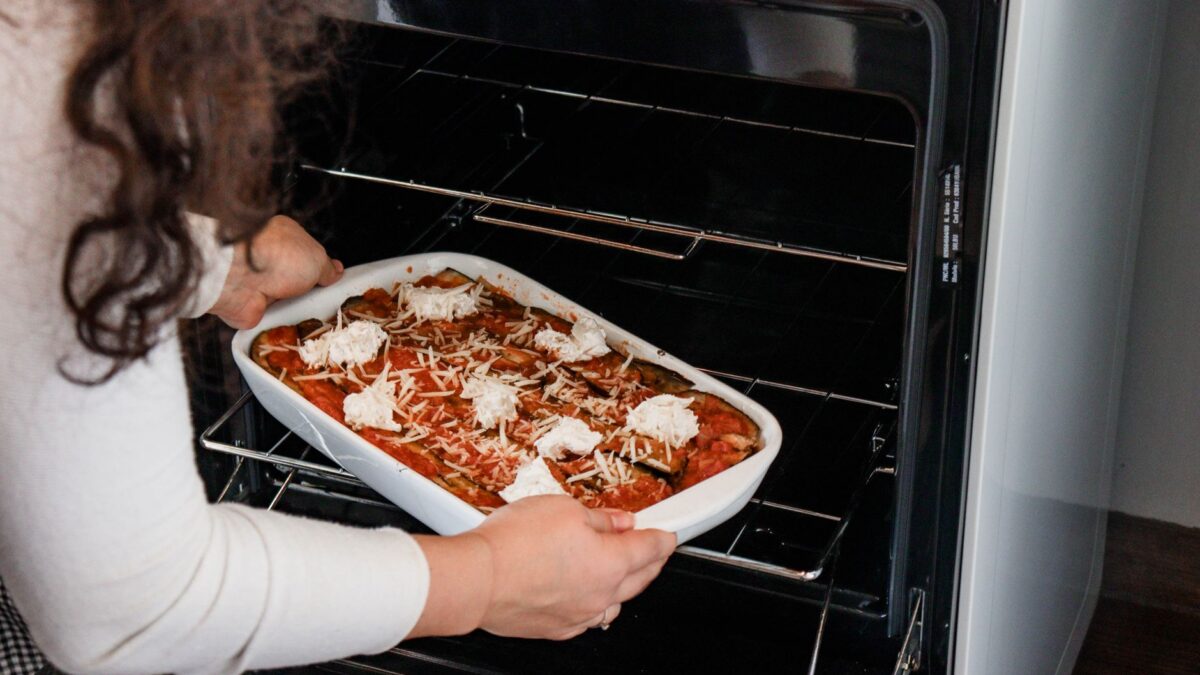
Yes, one oven can cook most holiday meals if you plan the order: roast the turkey or main dish first, then bake the sides while the meat rests, and group dishes that need temperatures within about 25°F (about 15°C) of each other. Most casseroles, stuffing and roasted vegetables are flexible enough to cook at 350°F to 400°F (175°C to 205°C) with small time changes. A crowded oven cooks more slowly, so add time, rotate pans and check each dish by doneness instead of by the clock.
Can you cook dishes that need different temperatures at the same time?
You can cook two dishes together when their recipe temperatures are close, usually within 25°F (about 15°C). Set the oven to the middle temperature, or to the temperature of the dish that is most sensitive, and adjust times:
- A dish that wanted a higher temperature will need extra time at the lower setting.
- A dish that wanted a lower temperature will cook faster, so check it early.
- Casseroles, stuffing, sweet potatoes and green bean bakes tolerate this well.
- Pies, rolls, soufflés and anything with a rise or a crust are less forgiving. Bake them at their own temperature, before or after the rest.
If one recipe calls for 325°F and another for 425°F, cook them separately. Running the oven in the middle would leave one dish undercooked and the other dried out or burnt on top.
Which rack positions work best for two or three dishes?
For two pans, use the racks in the upper third and lower third of the oven, and stagger the pans so one is not directly above the other. Heat comes mostly from the bottom element in a standard oven, so the lower rack browns the bottom of a dish faster, and the upper rack browns the top.
- Leave at least 1 to 2 inches (2.5 to 5 cm) between pans and between pans and the oven walls, so hot air can move.
- Put the dish that needs a browned top, such as a gratin or stuffing, on the upper rack.
- Put the dish that needs a crisp bottom, such as roasted potatoes, on the lower rack.
- Swap the pans between racks and turn them front to back about halfway through.
- For a large turkey, lower one rack to the bottom position before you preheat. The bird usually takes the whole oven, so plan sides around it.
Rimmed baking sheets placed under casseroles catch spills, but a sheet that blocks a whole rack also blocks airflow. Use one that leaves a gap around the edges.
Does convection help when the oven is full?
Convection helps a full oven because the fan moves hot air around the pans, so dishes on different racks cook more evenly. Most manufacturers recommend lowering the temperature by about 25°F (about 15°C) from a standard recipe when you use convection, or keeping the temperature and checking for doneness earlier. Your oven’s manual says which method your model expects, since some ranges convert the temperature on their own.
Convection dries surfaces faster, which is good for roasted vegetables and turkey skin and less good for custards or covered dishes that should stay moist. If you are deciding between a countertop unit and the main oven for overflow, the differences are covered in how an air fryer compares with a convection oven.
How much extra time does a crowded oven need?
A full oven usually needs more time than any single recipe says, because cold dishes absorb heat and the oven takes longer to recover after the door opens. There is no fixed number for every oven, so build in a buffer of extra time and check doneness from the earliest time in the recipe.
- Preheat fully before loading, and give the oven a few extra minutes after the preheat signal.
- Take refrigerated casseroles out a short time ahead so they are not fridge-cold, without leaving them out longer than food safety guidance allows.
- Open the door as little as possible. Use the oven light and window to check progress.
- Use a thermometer for anything with eggs, meat or poultry.
An oven that runs hot or cold makes all of this harder. If dishes keep coming out under or over, check your oven temperature accuracy with a thermometer before the holiday.
What is a good one-oven schedule for Thanksgiving?
A workable plan is to roast the turkey first, bake sides while it rests, and finish rolls and anything crisp in the last minutes. A typical order looks like this:
- The day before: bake pies and make casseroles ahead so they only need reheating.
- Morning: roast the turkey. Check the thickest part of the thigh, the wing and the thickest part of the breast with a food thermometer.
- When the turkey is done, take it out, tent it loosely with foil and let it rest. A whole bird stays hot for a good while, which frees the oven.
- Raise the temperature and bake or reheat stuffing, casseroles and vegetables, two racks at a time.
- Bake rolls last, since they need only a short time and are best warm.
Cooked stuffing and turkey must reach 165°F (74°C) inside, according to the USDA Food Safety and Inspection Service. Cooking stuffing in a separate dish instead of inside the bird makes it easier to reach that temperature and frees up timing.
What else can take pressure off the oven?
Moving a few dishes to other appliances is often easier than squeezing everything into one oven. Mashed potatoes and gravy belong on the stovetop. A slow cooker can keep mashed potatoes or stuffing warm, and a microwave reheats vegetables quickly. A countertop air fryer or toaster oven can handle rolls or a small tray of vegetables.
A clean oven also matters when it runs for hours: old spills smoke at roasting temperatures. If yours needs it, there are ways to clean an oven before Thanksgiving without the self-clean cycle, which can stress older ovens right before a big cooking day.
Quick answers
Can I put a casserole on the rack under the turkey?
Usually there is no room under a large turkey, since the bird sits on the lowest rack. If space allows, keep enough gap for air to move and make sure turkey drippings cannot fall into the dish.
Should I cover dishes when the oven is crowded?
Covering with foil keeps casseroles moist and stops tops from over-browning while they share the oven. Uncover for the last part of the cooking time if you want a browned top.
Can I use both racks for pies?
Yes, two pies can bake on two racks if you stagger them and swap positions halfway. The pie on the lower rack may brown faster on the bottom.
Does opening the oven door add a lot of time?
Each opening lets heat escape, and the oven has to reheat, so frequent checks add up. Check through the window when you can.