How to Drain a Dishwasher With Standing Water (Step by Step)
Most standing water comes from a clogged filter or a blocked drain path, not a dead pump. Here's how to empty the tub safely and find the blockage.
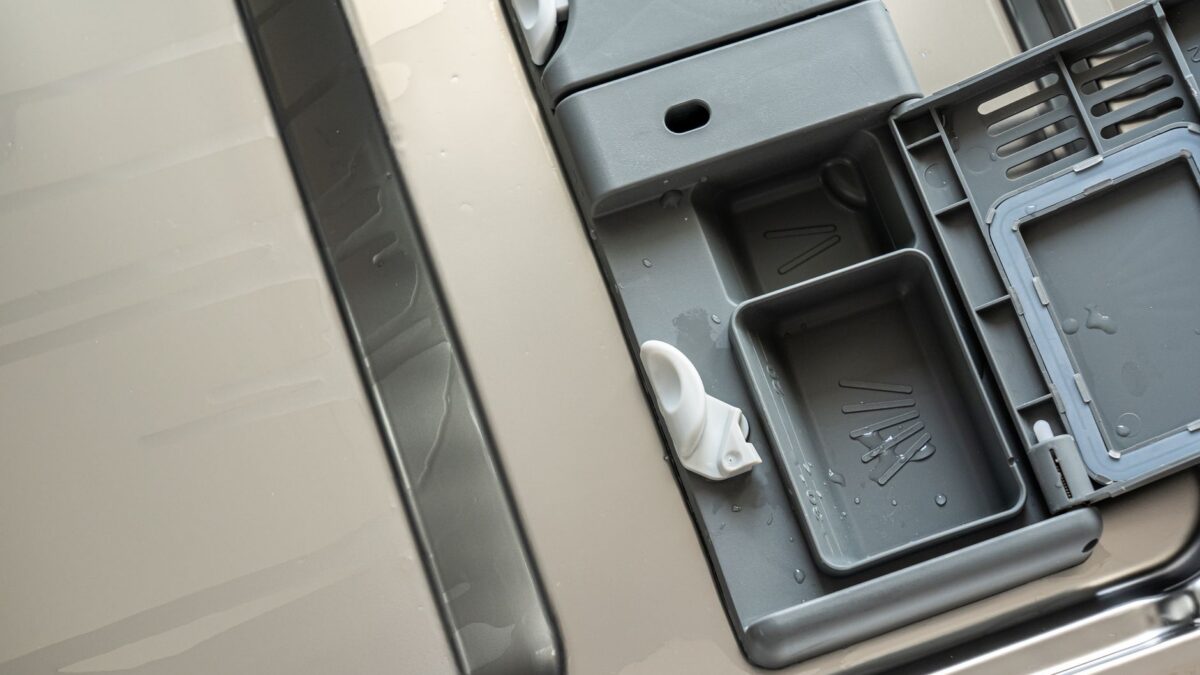
Standing water in the bottom of a dishwasher is most often caused by a clogged filter, a kinked or blocked drain hose, or a blocked air gap or garbage disposal connection. Turn off the power at the breaker, bail out the water with a cup and towels, clean the filter, then check the drain path; most people finish in 30 to 60 minutes. Don’t reach into the tub or touch wiring while the machine still has power.
First: is it really a problem?
A small puddle, roughly a cup or less, sitting around the filter area after a cycle is normal on many models. Water that covers the tub floor, smells, or is still there after you run a drain or cancel/drain command is a real clog. If the cycle was interrupted (power blip, door opened mid-cycle), try the cancel or drain function from your manual first. It costs nothing.
What you need
- Old towels and a shallow pan or bucket
- A plastic cup or measuring jug, plus a sponge or turkey baster
- Rubber gloves
- A soft brush (an old toothbrush works)
- Flashlight and a screwdriver or nut driver (for the kick panel or hose clamp, if needed)
- Your model’s use and care manual (the model number is on a label on the edge of the door or the tub frame)
Step-by-step: drain the dishwasher by hand
- Cut power. Switch off the dishwasher’s breaker, or unplug it if it plugs in under the sink. If you are not sure which breaker it is, see our guide on finding and resetting breakers.
- Protect the floor. Lay towels along the front of the door. Some water will spill when you move the racks.
- Remove the bottom rack and set it in the sink or on a towel.
- Bail the water. Scoop it into the bucket with a cup, then soak up the rest with a sponge or towel. A wet/dry shop vacuum speeds this up.
- Take out the filter. On most current models it twists out of the floor of the tub (often a quarter-turn counterclockwise) and lifts up; some have a coarse screen beneath. Check your manual for the exact method.
- Clean the filter under warm running water with a soft brush and a drop of dish soap. Don’t use a wire brush; the fine mesh tears easily.
- Clear the sump. With a flashlight, look into the opening under the filter. Remove bits of glass, bones, labels, fruit pits or seeds by hand (gloves on). Be careful: broken glass is common here.
- Reinstall the filter firmly until it locks. A loose filter lets debris into the pump.
Check the drain path
If the filter was clean or the water comes back, the blockage is further down the line. Work from the dishwasher toward the sink drain.
Drain hose
The corrugated drain hose runs from the dishwasher, under the cabinet, to the sink drain, disposal or air gap. Look under the sink for kinks, especially if someone recently stored things there or pushed the dishwasher back in. If you’re comfortable, loosen the clamp where the hose meets the disposal or sink tailpiece (with a pan underneath), and check the end for packed food. A hose that is cracked or crushed should be replaced, not patched.
Air gap
Some kitchens have a small chrome or plastic cap on the sink deck or countertop. That’s an air gap, which keeps dirty sink water from siphoning back into the dishwasher. Pull or twist off the cap, remove the inner cover and clear any gunk with a brush. A clogged air gap often shows itself by spitting water onto the counter during a cycle.
Garbage disposal
If the hose connects to a disposal, run the disposal briefly with cold water first: a full disposal chamber can block the dishwasher’s drain. If the disposal was just installed and the dishwasher has never drained properly since, the most likely cause is that the knockout plug inside the disposal’s dishwasher inlet was never removed. See how to remove a garbage disposal knockout plug.
Sink drain
If the kitchen sink itself drains slowly, the clog is downstream of both appliances. Clear that first; our guide to unclogging a kitchen sink covers the plunger and P-trap methods. Avoid chemical drain openers: they can damage disposals and pipes, and they’re dangerous if they splash back.
Quick diagnosis table
| Symptom | Likely cause | What to try |
|---|---|---|
| Water stands after every cycle, filter dirty | Clogged filter | Clean filter monthly |
| Started right after a new disposal install | Knockout plug still in place | Remove the plug |
| Water spurts out of a cap on the sink | Clogged air gap | Clean the air gap |
| Sink also drains slowly | Clog in the shared drain | Clear the sink drain and trap |
| Hum or buzz, but no draining; filter and hose clear | Drain pump blocked or failed | Call a technician |
| Error code shown | Drain fault detected by the control | Look up the code in your manual |
Many models show a code for a drain fault. Our overview of dishwasher error codes explains the common families.
Test it
Restore power, add about a cup of water to the tub floor if it’s dry, and run a rinse-only or short cycle. Stay nearby and watch under the sink with a flashlight for drips at the hose connections. If the tub empties at the end, you’re done.
When to call a pro
- The pump hums but water doesn’t move after you’ve cleared the filter, hose and air gap.
- You hear grinding, or you find broken pieces of the pump impeller.
- You see water under the machine, damaged wiring, or a scorched smell.
- The dishwasher is under warranty. DIY repairs beyond routine cleaning may void it, so check the warranty terms first.
Drain pump replacement is a common repair, but it means pulling the machine out and working near wiring and water connections. An appliance technician can confirm whether the pump, a check valve or the control is at fault.
Bottom line
Cut power, bail the water, and clean the filter; that solves most standing-water problems for free. If it comes back, follow the drain path: hose, air gap, disposal, then the sink drain. A humming pump with a clear path is a job for a technician.
FAQ
Is it safe to leave standing water in a dishwasher?
A day or two won’t hurt the machine, but stagnant water starts to smell and can grow bacteria. Drain it and clean the filter as soon as you can.
Can I use a drain cleaner in my dishwasher?
No. Chemical drain cleaners can damage seals, pumps and plastic parts, and they’re a burn hazard. Clear clogs mechanically instead.
Why does my dishwasher only have water left after some cycles?
An interrupted cycle, a partially clogged filter or a sink full of water at the moment the dishwasher drains can all leave water behind. If it happens regularly, clean the filter and check the hose.
How much does a drain pump replacement cost?
As of 2026, it is often a mid-range repair, with parts plus labor commonly running a few hundred dollars. Prices vary by brand and region, so get a quote that lists parts and labor separately.