Do Magnets Stick to Stainless Steel Fridges? Scratch Risks Explained
Magnets stick to most stainless steel fridges, but not all. Learn which steel types are magnetic, how magnets scratch the finish and how to prevent it.
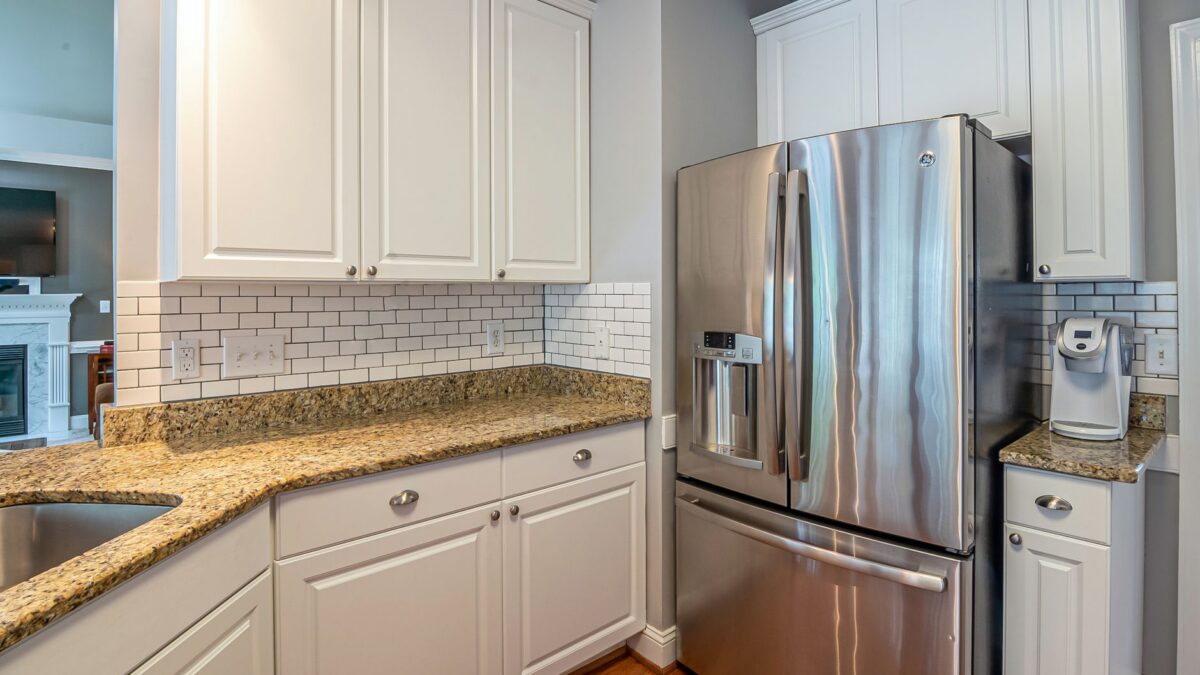
Magnets stick to most stainless steel refrigerators, but not every one. Whether a magnet holds depends on the type of steel used for the door, and some fridges are clad in a grade that is only weakly magnetic or has a non-magnetic finish over a steel panel. A magnet can scratch the surface if grit is trapped under it or if it is dragged across the door.
Testing is simple: hold a small magnet to the door. If it clings firmly, the door is magnetic. If it slides off or barely holds, it is not.
Why do magnets stick to some stainless steel fridges and not others?
Stainless steel is a family of alloys. Ferritic grades contain iron in a structure that magnets grab, so they stick firmly. Austenitic grades, the type commonly used for sinks and cookware, contain more nickel and are weakly magnetic or not magnetic in their annealed state. Forming and bending the metal can make an austenitic grade slightly magnetic.
Fridge makers choose the steel for cost, appearance and corrosion resistance, so two stainless fridges can behave differently. Some models use a thin stainless layer over a coated steel panel, and some use “smudge-proof” finishes that are a coating over the steel. Brand and finish names do not reliably predict magnetism, so test your own door.
Can magnets scratch a stainless steel refrigerator?
Yes, though the magnet itself rarely does it. The usual cause is dirt. Dust, cooking grit and metal dust get trapped between the magnet and the door, and sliding the magnet then drags that grit across the finish like fine sandpaper. Magnets with hard, rough or bare-metal backs do the most harm. Brushed finishes show fine scratches along the grain, and darker or coated finishes show them more readily.
Gravity helps too. A heavy magnet holding paper or a photo can slip a little each time the door opens and closes, which repeats the abrasion in the same spot.
How do I use magnets on a stainless fridge without marking it?
- Wipe the door and the magnet’s back before placing it, and lift magnets straight off the door instead of sliding them.
- Choose magnets with a smooth rubber, felt or foam backing.
- Do not use magnets with exposed ceramic, metal or plastic edges that touch the door.
- Keep the load light. Several heavy magnets or a thick stack of papers increase slipping.
- Rearrange them occasionally so the same spots do not wear.
Alternatively, a few magnetic hooks or a magnetic board mounted to a nearby wall keep paper off the door altogether.
What if the fridge is not magnetic?
Non-magnetic doors are not a defect. Adhesive hooks, a wall-mounted board or a small magnetic panel placed elsewhere are practical options. Avoid sticky adhesives on the finish, because residue can be hard to clean off and cleaners themselves can leave marks. See our guide to the best cleaner for a stainless steel fridge and the notes on using Windex on stainless steel before cleaning residue.
How do I deal with scratches and other marks?
Light surface scratches on brushed stainless can sometimes be softened by cleaning along the grain with a non-abrasive stainless cleaner and a soft cloth. Never scrub across the grain, and avoid steel wool, abrasive pads and scouring powders, which add scratches. Check the manufacturer’s care instructions first, since coated finishes can be damaged by products that are fine on bare steel.
Deeper scratches generally cannot be removed at home without changing the look of the panel. Magnets can also leave rust-colored marks if bits of ferrous metal were stuck to them. For that, see how to get rust off a stainless steel fridge. Door dings are a separate matter, covered in why stainless fridges dent so easily.
Quick answers
Are fridge magnets safe for the appliance?
Ordinary decorative magnets do not affect a refrigerator’s cooling or electronics. Keep small, strong magnets away from young children, who can be seriously hurt if they swallow them. The U.S. Consumer Product Safety Commission publishes safety information on magnets.
Do magnets damage the door seal?
The gasket has its own magnetic strip, and a decorative magnet on the door face does not interfere with it. Keep magnets and paper from sitting where the door closes against the cabinet.
Why does a magnet stick to one side of my fridge and not the other?
Door panels and side panels can be made of different materials or finishes. Many fridges have a magnetic door but non-magnetic sides, so test each surface.