How to Get Grease Off Hardwood Floors: Safe Steps by Finish
Blot fresh grease, lift it with a mild dish soap solution and a barely damp cloth, then dry at once. Steps for hardwood and kitchen floors.
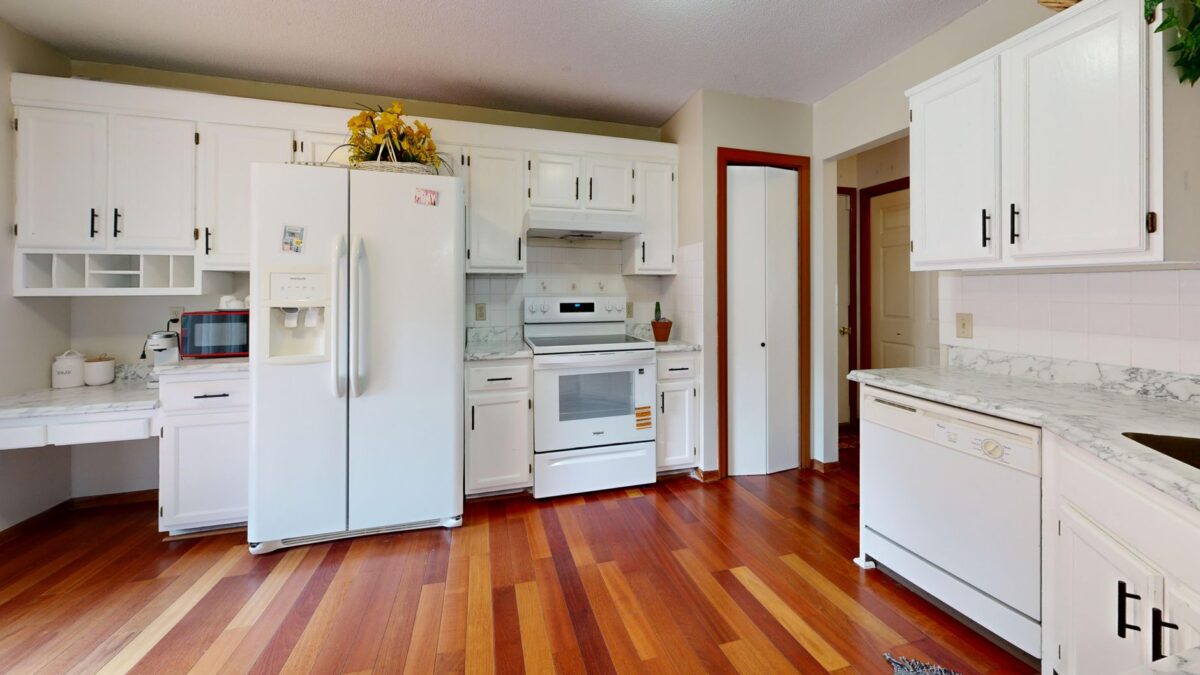
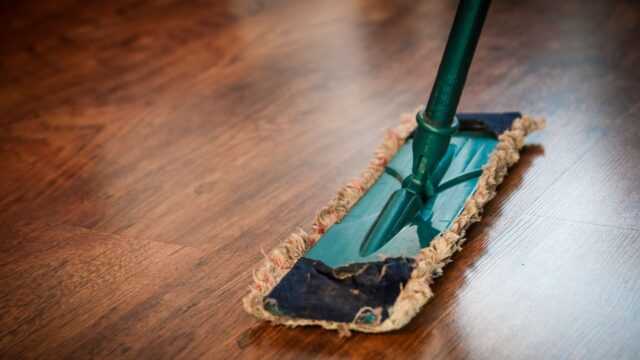
To get grease off a hardwood or kitchen floor, blot up fresh grease right away, absorb the rest with an absorbent powder, wipe with a cloth wrung almost dry from a few drops of mild dish soap in warm water, then wipe with a clean damp cloth and dry the spot. Avoid soaking the boards, steam, abrasive pads and strong solvents, because they can dull or strip a finish. Work gently and in small areas, and test any cleaner somewhere hidden first.
What finish does my floor have?
Most modern hardwood has a surface finish such as polyurethane, which forms a protective film. A floor with this finish tolerates a lightly damp cloth. Older or specially treated floors may be oiled or waxed, and these soak up liquid and are damaged by water and soap. A quick check is to put a drop of water on a hidden spot: if it beads and stays on the surface, the floor is sealed; if it darkens the wood, treat it as an oiled or waxed floor and use as little moisture as possible. For routine care, see how to mop hardwood floors by finish.
How do I remove fresh grease?
- Lift any solid or pooled grease with a plastic scraper or an old card, without pressing hard enough to scratch.
- Blot the rest with a paper towel. Do not rub, which spreads grease into a larger patch and can push it into seams.
- Cover the stain with cornstarch, baking soda or plain flour and leave it for 15 to 30 minutes so the powder draws out oil.
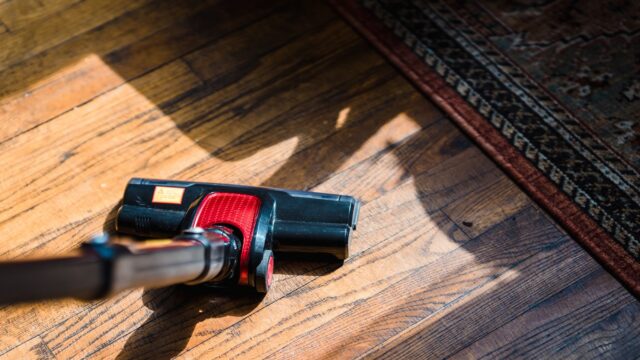
- Sweep or vacuum the powder up and check the spot. Repeat once if it still looks dark.
What cleaner works on a sealed floor?
A few drops of plain dish soap in a bowl of warm water is enough for a sealed floor. Dip a soft cloth, wring it out until it is barely damp, and wipe along the grain. Then go over the area with a second cloth dampened with clean water to remove soap film, and dry with a towel. Leftover soap attracts dirt and leaves a hazy patch. Do not pour liquid on the floor. A pH-neutral cleaner made for hardwood is another option; follow its label.
Never mix cleaning products, and do not combine soap with vinegar, ammonia or bleach.
What about oiled or waxed floors?
Skip water-based cleaning as far as possible. Blot, absorb with powder, and wipe with a dry or very slightly damp microfiber cloth. A spot that remains may need a product from the floor’s maker or a professional, and a waxed floor often needs the wax renewed in that spot afterward. If you do not know what the floor has, ask the installer or the manufacturer before using anything stronger.
How do I clean grease from tile, vinyl and laminate?
Kitchen floors of tile or vinyl handle warm soapy water better than wood. Mop with a mild degreasing dish soap solution, rinse with clean water and dry. Laminate is different: its core swells when water gets into the seams, so use a barely damp mop and dry immediately. For a streak-free result, see how to clean laminate floors without streaks.
What mistakes make it worse?
- Soaking the boards or using a steam mop, which can push moisture into seams and cause cupping or white clouding.
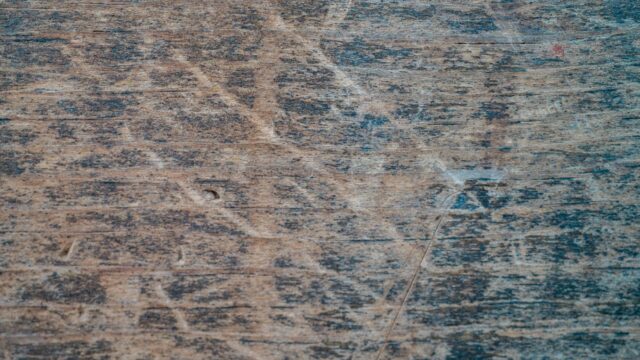
- Scrubbing with steel wool or abrasive pads, which leave scratches that hold more grease. If that has happened, see how to fix scratches in hardwood floors.
- Using vinegar or ammonia repeatedly on a surface finish, which can dull it.
- Skipping the rinse, so soap residue holds new dirt.
How do I keep grease off the floor in the first place?
Grease travels as fine airborne droplets and lands on cabinets and floor near the stove. Use the range hood when frying, put a washable mat in front of the stove, and wipe small drips the same day. Cabinet fronts collect the same film, and the method in how to remove grease from kitchen cabinets follows the same gentle approach. Information on removing hazards and cleaning products is available from the EPA Safer Choice program.
Quick answers
Can I use vinegar on hardwood?
It is better avoided. Vinegar is acidic and repeated use can dull a surface finish. Mild dish soap, lightly applied and rinsed, is the safer routine choice.
Will baking soda scratch the floor?
Used dry as a light absorbent and swept off gently, it is generally fine on a sealed floor. Do not scrub it in as a paste.
When should I call a professional?
Call one when the grease has soaked in and left a dark patch that does not lift, or when the finish itself is worn through. A floor refinisher can tell whether a spot needs a repair or a recoat.