How to Mop Hardwood Floors: Damp, Not Wet, and Matched to Your Finish
Water is the main enemy of wood floors, so the goal of mopping is to clean with as little of it as possible. The right method also depends on the finish.
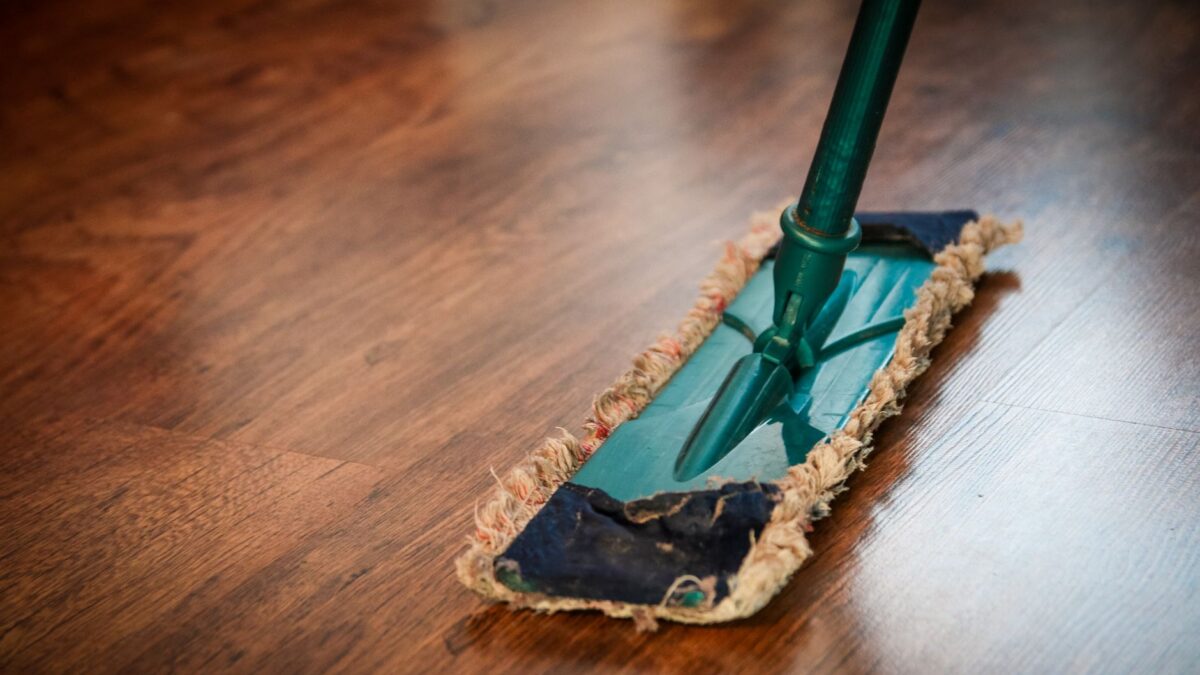
To mop hardwood floors, vacuum or sweep first, then use a flat microfiber mop that is damp, not wet, with a pH-neutral cleaner made for finished wood (or the one your flooring maker recommends). Work a small area at a time and let the floor dry within a minute or two. Skip steam mops, soaking string mops and harsh or acidic cleaners, and do not wet-mop waxed or unfinished floors at all.
Wood swells when it absorbs water. Standing water and repeated soaking can push moisture into seams, causing cupped boards, gray stains and peeling finish over time. That is why “damp” is the single most important word in hardwood care.
Know your finish
| Finish type | How to recognize it | How to mop |
|---|---|---|
| Polyurethane or other surface finish | Sheen; water beads on top | Damp microfiber and pH-neutral wood-floor cleaner |
| Prefinished (factory finish) | Boards often have small beveled edges | Use the flooring maker’s recommended cleaner; check warranty terms |
| Penetrating oil or hardwax oil | Matte, natural look; no film | Use the finish maker’s soap or cleaner; minimal water |
| Wax | Gray smudge when rubbed in a hidden spot | Dust mop and vacuum only; no water-based mopping |
| Unfinished or worn to bare wood | Water darkens the wood quickly | Dry methods only until it is refinished |
A simple test: put a drop of water in an inconspicuous spot. If it beads and sits, the surface is sealed. If it soaks in and darkens the wood within a few minutes, the floor is unsealed or worn and should not be mopped with water.
What you need
- Vacuum with a hard-floor setting or soft brush (turn off the beater bar)
- Flat microfiber mop with two or more washable pads
- pH-neutral cleaner labeled for finished wood floors
- Spray bottle (if the cleaner is not already in one)
- Dry microfiber cloth for spills and corners
Step-by-step
- Remove grit. Vacuum or dry-mop thoroughly. Sand and grit act like sandpaper under a mop.
- Prepare the cleaner. Use it ready-to-use or diluted exactly as the label says. More concentrate leaves residue, not a cleaner floor.
- Dampen the pad. Mist the floor lightly or dampen the pad and wring it until it feels barely moist. Water should never pool.
- Work in sections. Clean a few square feet at a time, moving with the grain of the boards.
- Change pads. Switch to a clean pad when the current one looks gray.
- Check for drying. A properly damp mop leaves a film that evaporates in a minute or two. If streaks of water remain, use less.
- Dry trouble spots. Wipe any wet patches, especially near seams and edges, with a dry cloth.
How often to mop
- Vacuum or dust mop: several times a week in busy areas, daily in kitchens and entryways if possible.
- Damp mop: roughly weekly in high-traffic areas, less often in bedrooms.
- Spills: wipe up right away with a dry or barely damp cloth.
Cleaners and tools to avoid
- Steam mops. Heat and moisture can force water into seams and damage finishes. Many hardwood flooring makers specifically warn against them, so check your warranty.
- Vinegar and water. A popular home mix, but vinegar is acidic and some finish makers say repeated use can dull the finish. A purpose-made neutral cleaner is the safer choice.
- Oil soaps, waxes and “mop and shine” products on polyurethane. They can leave a film that attracts dirt and may stop a future recoat from bonding.
- Ammonia, bleach and abrasive powders. Too harsh for most wood finishes. Never mix bleach with ammonia or acids; the fumes are dangerous. For chemical exposures in the US, call Poison Control at 1-800-222-1222.
- String mops and buckets of water. They hold far too much water for wood.
Kitchens and entryways
These rooms see grease, grit and spills. Place washable mats at doors and in front of the sink, put felt pads under chairs and wipe cooking splatters promptly. If a sink, dishwasher or fridge regularly drips on the floor, fix the leak; no cleaning routine survives a slow leak. If you are deciding what to install in a kitchen in the first place, our comparison of laminate vs vinyl plank flooring covers more water-tolerant options.
When mopping is not enough
If the floor stays dull or hazy after a careful clean, you may be looking at residue buildup or worn finish. Our guide on restoring hardwood floors without sanding explains residue removers, refreshers and screen-and-recoat. Visible scratches have their own fixes, covered in how to fix scratches in hardwood floors.
Bottom line
Dry grit removal does most of the work. Then a barely damp microfiber pad and a pH-neutral wood-floor cleaner keep a sealed floor clean without risking water damage. Match the method to your finish, check the flooring maker’s care guide and avoid steam, soaking mops, vinegar habits and shine products on polyurethane.
FAQ
Can I mop hardwood floors with just water?
A barely damp microfiber pad with plain water is fine for light cleaning on sealed floors. Water alone does not cut greasy film well, which is where a neutral cleaner helps.
Is dish soap safe for hardwood floors?
A tiny amount diluted well can clean, but it easily leaves a dulling residue. A cleaner formulated for wood floors rinses cleaner.
Are spray mops okay?
Yes, if you use a cleaner made for wood and spray lightly. The pad should leave a thin film that dries quickly.
How do I clean an oiled wood floor?
Use the soap or cleaner sold by the oil finish maker, with very little water, and re-oil on the schedule they recommend.