Stand Mixer vs. Hand Mixer: Specs, Uses and Which One You Need
Most home bakers can do a lot with a hand mixer. A stand mixer earns its counter space with yeast doughs, double batches and long whipping jobs.
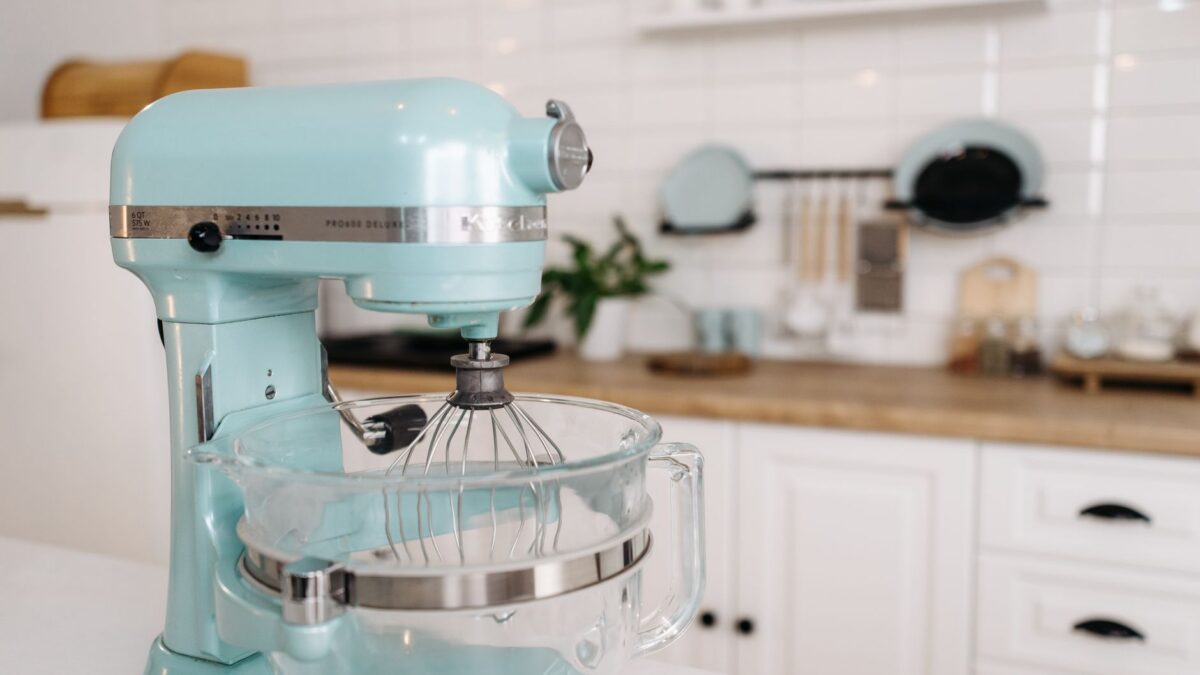
Choose a hand mixer if you bake occasionally and mostly make cake batter, cookie dough, mashed potatoes or whipped cream: it is inexpensive, light and fits in a drawer. Choose a stand mixer if you knead yeast dough, bake big or double batches, or want hands-free mixing for long jobs like meringue. The deciding specs are bowl capacity, motor power, the mixer’s design (tilt-head or bowl-lift) and attachments.
How they differ
A hand mixer is a handheld motor with two removable beaters, sometimes with dough hooks or a whisk. You hold it and move it around any bowl. A stand mixer is a fixed motor head over a dedicated bowl. A single attachment, such as a flat beater, dough hook or wire whip, moves in a pattern that covers the bowl while you do something else.
| Feature | Hand mixer | Stand mixer |
|---|---|---|
| Typical price range | Low | Moderate to high |
| Storage | Fits in a drawer or cabinet | Needs counter or cabinet space; heavy |
| Bowl | Use any bowl | Dedicated bowl, commonly about 3.5–7 quarts |
| Hands-free | No | Yes |
| Bread and pizza dough | Light doughs only, small amounts | Designed for it (with dough hook) |
| Small jobs (1–2 egg whites, a cup of cream) | Excellent | Can be hard if the whip doesn’t reach small amounts |
| Attachments | Beaters, sometimes hooks or whisk | Beater, hook, whip; many models take extras via a power hub |
Specs that matter for stand mixers
Bowl capacity
Capacity is usually listed in quarts. Many popular home models sit around 4.5–5.5 quarts, which handles a standard batch of cookies or a loaf or two of bread. Larger bowl-lift models go up to about 7 quarts for big batches. Bigger bowls can struggle with very small amounts, so match capacity to what you usually make.
Tilt-head vs. bowl-lift
- Tilt-head: the motor head tilts back so you can add ingredients and swap attachments. According to KitchenAid’s tilt-head vs. bowl-lift comparison, its tilt-head bowls range from 3.5 to 5 quarts, and those models are lighter.
- Bowl-lift: the head is fixed and a lever raises the bowl. These are typically larger (that maker lists 5–7 quarts), heavier and sturdier for stiff doughs. Check the height: some won’t fit under upper cabinets.
Motor power
Wattage is listed on every mixer, but it’s an imperfect guide. It usually describes power drawn from the outlet, not power delivered to the bowl, and gearing and motor type (some models use DC motors) affect real performance. Stand mixer ratings often range from about 250 to over 500 watts. Instead of chasing the biggest number, look at what the manufacturer says the mixer can handle, such as maximum flour capacity or number of loaves, and whether stiff doughs are recommended at low speeds only.
Other details
- Speeds and soft start, which reduce flour clouds.
- Planetary mixing action, where the beater spins while orbiting the bowl, for better coverage.
- Bowl material: stainless steel is durable; glass lets you see; ceramic is heavy.
- Weight: heavier mixers walk less on the counter during kneading, but are harder to move.
- Warranty length and parts availability.
Specs that matter for hand mixers
- Speed range with a true low speed to avoid splatter.
- Beater design: wire beaters without a center post are easier to clean.
- Weight and balance, since you hold it the whole time.
- Cord length or cordless; cordless models trade freedom for battery run time.
- Included attachments, such as dough hooks or a whisk, and a storage case.
- Eject button that’s easy to press but hard to hit by accident.
Which tasks suit which mixer
| Task | Better choice | Why |
|---|---|---|
| Boxed cake mix, brownies | Either | Short mixing time |
| Cookie dough, single batch | Either | Hand mixer may labor near the end with stiff dough |
| Whipped cream, small amounts | Hand mixer | Works in any small bowl |
| Meringue, Italian buttercream | Stand mixer | Long whipping while pouring hot syrup |
| Yeast bread, pizza dough | Stand mixer | Kneading is hard on hand mixers |
| Mashed potatoes | Hand mixer | Works right in the pot (off the heat) |
| Double or triple batches | Stand mixer | Capacity and stability |
Safety and care
- Unplug before changing attachments or scraping beaters, and keep hands, hair, spatulas and loose sleeves away from moving parts.
- Don’t run a hand mixer in a nonstick pan, which can scratch the coating.
- Follow the manual for maximum run times with heavy doughs to avoid overheating the motor. If it smells hot or slows, stop and let it rest.
- Check the manual before putting beaters or bowls in the dishwasher. Some coated or aluminum beaters can discolor.
- Wipe the motor housing with a damp cloth only; never immerse it.
If you’re building out a baking setup, it’s worth knowing how other countertop appliances compare. See our guides to slow cookers vs. pressure cookers and how to clean a blender.
Bottom line
A hand mixer covers most everyday baking for little money and space. A stand mixer is worth it if you bake bread, make big batches or want to walk away while it mixes. When comparing stand mixers, focus on bowl capacity, tilt-head vs. bowl-lift, the maker’s stated dough capacity and warranty, not wattage alone.
FAQ
Can a hand mixer knead bread dough?
Some include dough hooks for small, soft doughs. Stiff or large doughs strain the motor; check the manual’s limits or knead by hand.
Is a higher-watt stand mixer always better?
No. Wattage reflects input power, and gearing and motor design matter. Compare stated dough or flour capacity instead.
Do I need both?
Many bakers who own a stand mixer keep a hand mixer for small jobs like whipping a little cream.
Will a bowl-lift mixer fit under my cabinets?
Check the listed height against the space between your counter and upper cabinets before buying.