Fridge Freezing Food in the Fresh Food Section: Causes and Fixes
A refrigerator freezes food when the fresh food section drops below 32°F (0°C), usually from a cold setting, a blocked vent or a stuck damper.
A refrigerator freezes food in the fresh food section when that compartment runs below 32°F (0°C). The usual causes are a temperature setting that is too cold, food pressed against the back wall or an air vent, a stuck air damper, or a failed temperature sensor. Most of these can be checked at home in an afternoon, and the first step is to measure the real temperature instead of trusting the dial.
What temperature should the fresh food section be?
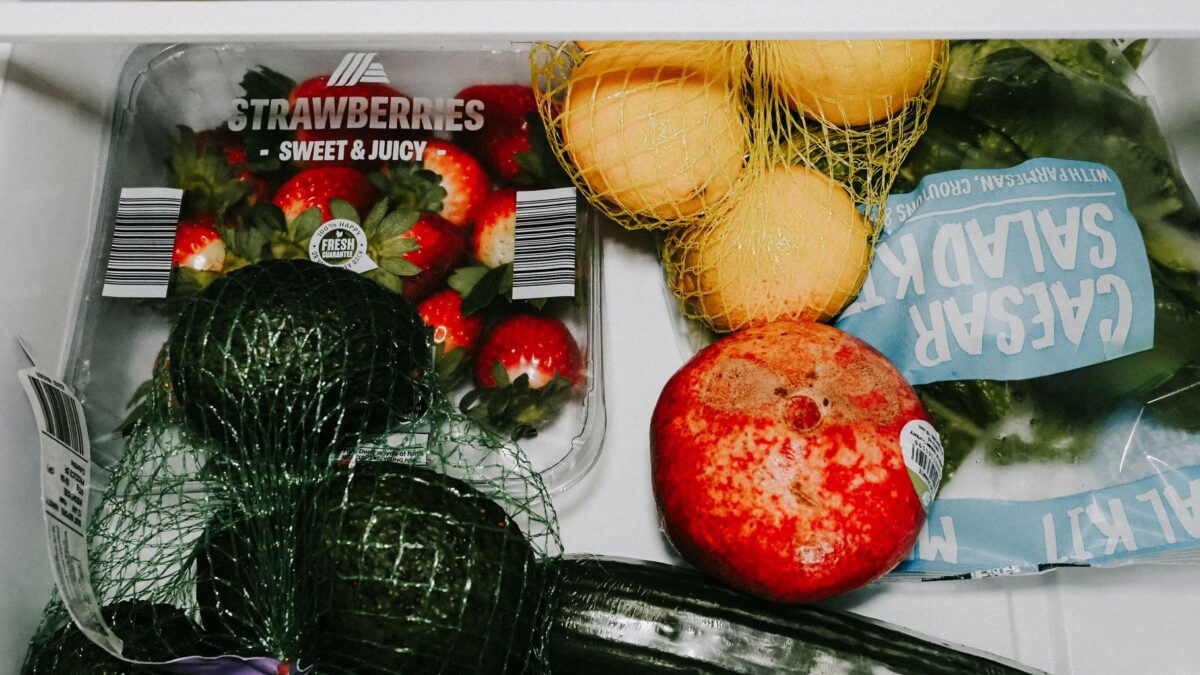
The fresh food section should stay between 37 and 40°F (3 to 4°C), and the freezer at 0°F (-18°C). Federal food safety guidance from the U.S. Food and Drug Administration sets 40°F (4°C) as the upper limit for the refrigerator and 0°F for the freezer. Food with a lot of water, such as lettuce, cucumbers, tomatoes, milk and eggs, starts to freeze a little below 32°F, so a compartment averaging 34°F can still freeze items sitting in its coldest spot.
How do I check the real temperature?
An appliance thermometer in a glass of water on the middle shelf gives the most reliable reading. Dials marked 1 to 5 show relative coldness, not degrees.
- Put the thermometer in a glass of water and set it on the middle shelf.
- Leave the doors closed for 24 hours, then read it quickly.
- Repeat the test with the glass on the top shelf and one near the back wall, since cold air enters from the back or top in most models.
- Write down the readings before changing anything, then test again 24 hours after each change.
What makes a refrigerator freeze food in the fresh food section?
Five causes account for most cases.
- The control is set too cold. A dial turned up after a warm spell, or a set point lowered to cool a big grocery load, often stays there.
- Food touches the vent or the back wall. Most frost-free refrigerators blow cold air from the freezer evaporator into the fresh food section through a vent, and anything next to it freezes first.
- Shelves are packed so tightly that air cannot circulate, which leaves some zones very cold while others stay warm.
- The air damper is stuck open. This motorized or thermostat-driven flap controls how much freezer air enters the fresh food section. Ice or debris can hold it open, and the compartment keeps getting cold air long after it reaches its set temperature.
- A temperature sensor (thermistor) or the control board is reading wrong. If the sensor reports a warmer temperature than the real one, the refrigerator keeps cooling.
How do I stop my refrigerator from freezing food?
Start with the cheapest fixes and work toward the parts.
- Raise the temperature setting by one step and wait 24 hours before judging the result. Changing it several steps at once makes the cause hard to find.
- Move eggs, dairy, produce and drinks away from the vent and leave about an inch (2.5 cm) between food and the back wall.
- Keep the vents clear and avoid stacking containers in front of them. Lettuce and other delicate produce do better in the crisper drawers, which are usually the warmest part of the compartment.
- Unplug the refrigerator and look at the damper opening for ice or debris. The damper location differs by model, so check the owner’s manual. Let ice melt on its own, and never chip it with a knife or screwdriver, because refrigerant lines run close to the evaporator.
- If the compartment still reads below 32°F with the setting at its warmest recommended step, the damper, the sensor or the control board is the likely cause. Contact the manufacturer’s support line or a qualified appliance technician.
A refrigerator that freezes the fresh food section while the freezer runs warm points to the damper or the evaporator fan, and that combination is worth a service call rather than repeated dial changes.
Is food that froze in the refrigerator still safe?
Food that froze and then thawed in a refrigerator is generally safe to eat, and the USDA Food Safety and Inspection Service says food thawed in the refrigerator can be refrozen. Quality is another matter. Lettuce turns limp, tomatoes and cucumbers go soft, and yogurt and milk can separate. Eggs with cracked shells should be thrown out. Glass bottles and cans of drinks can burst when the liquid expands, so remove them and clean up any glass before it thaws into shelving.
Does a colder refrigerator cost more to run?
A refrigerator set colder than needed runs its compressor longer, which adds to the electric bill. The kWh per year a typical fridge uses depends on size, age and settings, so correcting an overcold compartment is a small saving as well as a fix for spoiled produce. A refrigerator kept in a very cold room has its own behavior, covered in the guide to garage refrigerators in winter.
Quick answers
Why does the back of my refrigerator freeze everything?
Cold air from the freezer comes in at or near the back wall, so that area is the coldest in most frost-free models. Keep food a little away from it and put drinks and produce on the door or in drawers.
Will a fuller refrigerator freeze less?
A moderately full refrigerator holds its temperature better because food stores cold. Packing it until air cannot move makes cold spots worse, so keep gaps around the vents.
Should I set the refrigerator to its warmest setting?
No. Adjust one step at a time and confirm with a thermometer that the compartment stays at 40°F (4°C) or below. Too warm a setting shortens the life of milk, meat and leftovers.
When should I call a technician?
Call when the compartment still reads below 32°F after you raise the setting and clear the vents, or when the freezer is warm while the fresh food section freezes. Those symptoms point to a damper, sensor, fan or control board fault.