Can You Clean a Fridge With Bleach? Mold and Gasket Steps
Use baking soda and warm water on fridge mold and gaskets. GE warns against bleach there; Penn State allows a very weak mix on removable parts only.
Mostly no. For mold or mildew inside a refrigerator and on the door gasket, GE Appliances says to wipe with 1 quart of warm water mixed with 1 tablespoon of baking soda, rinse the gasket well and dry it. The same page says not to use products containing bleach, ammonia, detergent or petroleum distillates, because they may damage the appliance. Penn State Extension does mention a very dilute bleach mix, but only for sanitizing shelves and drawers after they are taken out of the fridge.
Can you clean the inside of a fridge with bleach?
The manufacturer guidance and the university guidance split on this, so the safest reading is to keep bleach away from the cabinet and the gasket. GE lists bleach among the products that may damage a refrigerator, freezer or standalone ice maker. Penn State’s only use for chlorine bleach is a sanitizer for removable parts, mixed at ¼ teaspoon of unscented chlorine bleach to 2 cups of warm water.
Penn State also advises against cleaning solvents inside the fridge. They can release chemical fumes that transfer into food and ice and make them unsafe to eat. If your owner’s manual says something different for your model, follow the manual.
How do you clean mold off the inside walls and door gasket?
Use the baking soda mixture. The steps below follow GE’s instructions for the interior and gasket.
- Mix 1 quart of warm water with 1 tablespoon of baking soda.
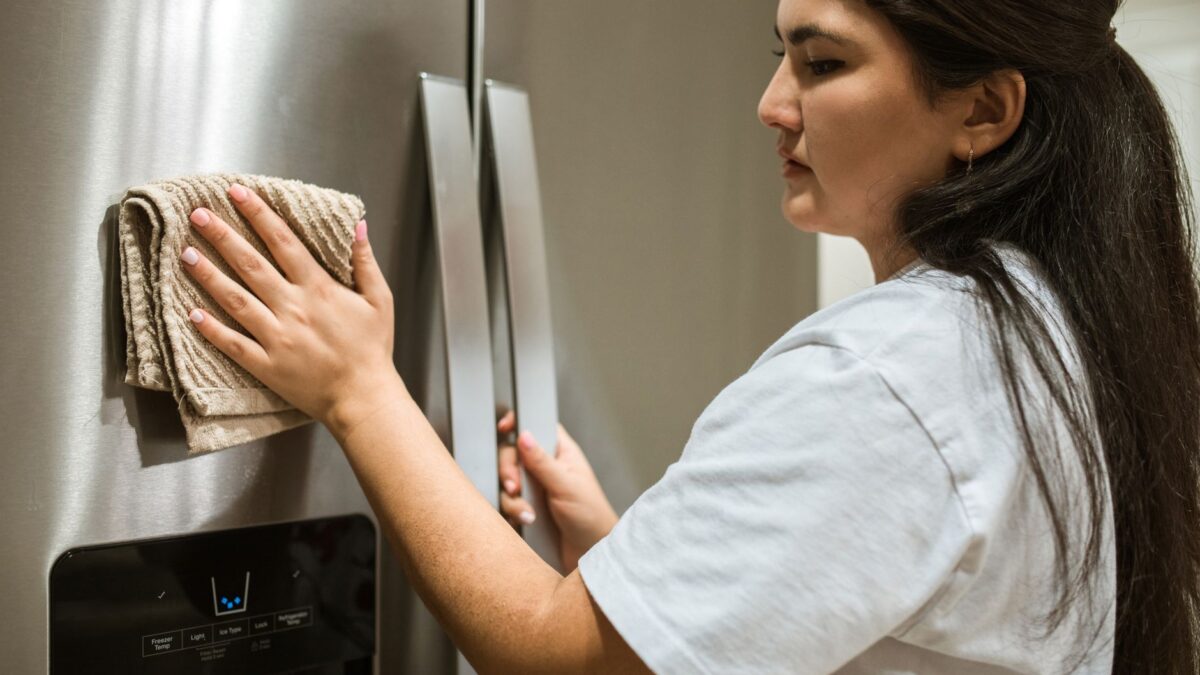
- Wipe the mildew or mold from the interior surfaces and the gasket with the mixture.
- Rinse the gasket thoroughly.
- Wipe it dry with a clean cloth.
GE says this both cleans the gasket and neutralizes odors. If you prefer soap, Penn State suggests warm soapy water for the interior walls and the gasket, followed by a rinse with clear water. Before you start, it helps to clear out food, and you may want to pull the shelves and drawers so you can reach the walls. If a glass shelf is part of the job, see this guide on cleaning glass refrigerator shelves without cracking them.
How do you clean and sanitize shelves and drawers?
Penn State gives a four-step routine for removable parts:
- Take out all the shelves and drawers.
- Wash them in water with liquid dishwashing soap.
- Rinse well, then sanitize. Sanitizing means reducing microorganisms to safe levels on a surface with heat or chemicals.
- Air dry the parts before putting them back.
For the sanitizer, the extension service describes a mix of ¼ teaspoon of unscented chlorine bleach in 2 cups of warm water, which can go in a spray bottle for use on surfaces after cleaning. This is the one place bleach appears in the sources, and it applies to parts removed from the fridge, not to the gasket or the cabinet walls.
GE adds that plastic parts from a refrigerator, freezer or standalone ice maker should not go in the dishwasher.
Why does fridge cleanliness matter?
Penn State says a clean, sanitized refrigerator is less likely to harbor dangerous bacteria that cause illness. It names Listeria monocytogenes as a bacterium that can multiply at refrigerator temperatures. The extension service says the fridge should hold a temperature of 40°F or below to keep food safe.
It also recommends wiping spills as they happen, so a sticky mess does not build up on shelves or in the bends of the cabinet. Spills call for warm soapy water, then a clear water rinse.
How do you keep a fridge smelling fresh?
Penn State suggests an open box of baking soda on a shelf. For odors that already exist, baking soda and water on the interior works, as GE’s gasket instructions also show. Throwing out perishable food that should no longer be eaten helps too. As a general rule, the extension service says cooked leftovers should stay in the refrigerator for no more than four days.
If an odor or a wet floor points to a different problem, a blocked defrost drain can be the cause. This guide covers how to clean a refrigerator defrost drain.
What about the outside and the coils?
Clean the exterior with water and dishwashing liquid. Penn State says to vacuum the coils and front grill every 3-4 months to keep them free of lint so the refrigerator works efficiently. A fridge that runs harder also costs more to run, which you can check against refrigerator energy use per year.
Quick answers
Is baking soda enough to remove fridge mold?
GE recommends it for mildew and mold on the interior and gasket, using 1 quart of warm water and 1 tablespoon of baking soda, then rinsing and drying. If you want a soap option, Penn State lists warm soapy water.
Can I put fridge parts in the dishwasher?
GE says not to clean plastic parts from a refrigerator, freezer or standalone ice maker in a dishwasher. Penn State’s routine is to wash shelves and drawers by hand in soapy water.
Which cleaners should I avoid inside a fridge?
GE names petroleum distillates, detergent, bleach and ammonia. Penn State says to avoid cleaning solvents because their fumes can reach food and ice.
How often should I clean the coils?
Penn State says every 3-4 months, by vacuuming the coils and front grill.
Checked against official sources in November 2026. Hours, prices and rules change: confirm on the official page before you go or apply.