Can You Use Windex on a Stainless Steel Fridge? What to Use Instead
Glass cleaner seems like the obvious fix for fingerprints, but many appliance makers say no. Here's why ammonia sprays are a poor match for stainless doors and what works better.
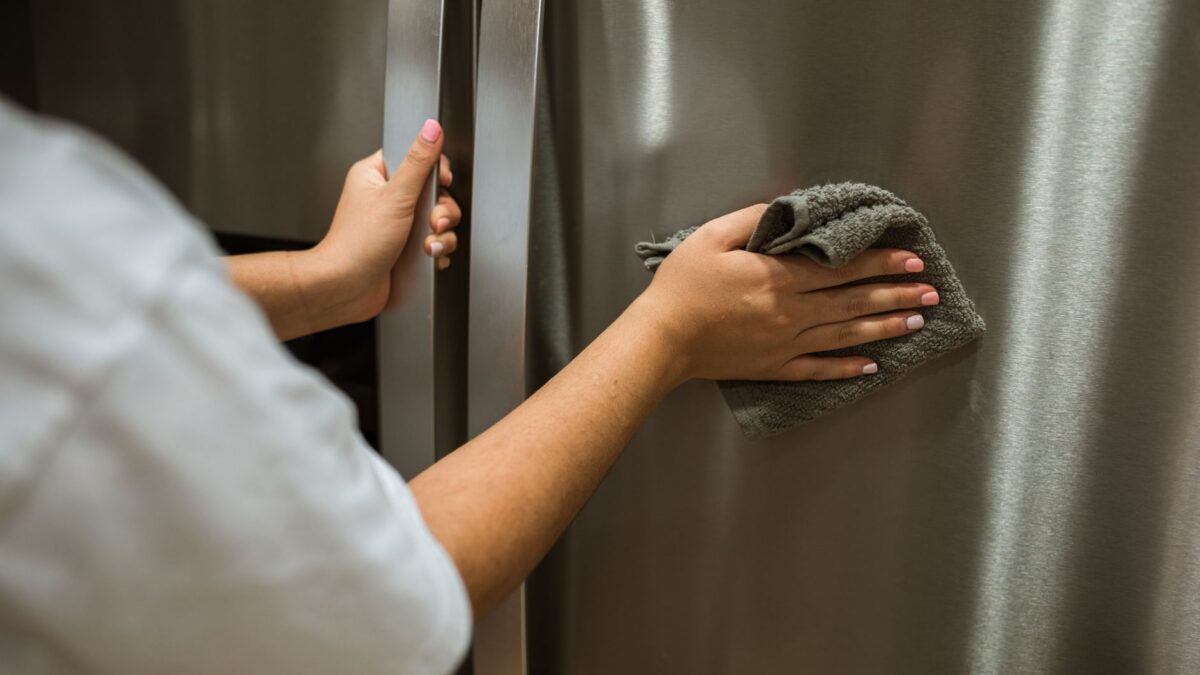
It’s best not to. Many refrigerator manuals specifically list window sprays and ammonia-based cleaners among the products to avoid on stainless steel, and coated finishes such as fingerprint-resistant or black stainless are even more sensitive. A quick wipe once probably won’t ruin bare stainless, but for routine cleaning use warm water with a little dish soap on a microfiber cloth, wiped with the grain and dried right away, or a cleaner your manual approves.
Why glass cleaner is a poor match
Conventional blue glass cleaners are formulated for glass, which is hard, non-porous and chemically inert. Many contain ammonia along with solvents and surfactants that flash off quickly to leave glass streak-free. Stainless steel is a different surface:
- The protective layer. Stainless resists rust because chromium forms a thin oxide film on the surface. Appliance makers generally recommend mild cleaners that don’t stress that film or leave residues that hold moisture.
- Coatings. Fingerprint-resistant stainless has a clear protective coat, and black stainless has a colored coat. Ammonia and solvents can dull, haze or strip some of these coatings, and the damage can’t be polished out.
- Streaking. On brushed metal, glass cleaners often leave a hazy, smeared look in the grain rather than a clean finish.
- Warranty. Using a product the manual lists as “do not use” may affect a cosmetic warranty claim.
Some glass cleaners are sold as ammonia-free. They may be gentler, but the manual is still the authority. If it lists “window sprays” generally, that includes them.
What your manual is likely to say
Look up the model number on the label inside the fresh-food compartment or on the door frame, then find the “care and cleaning” section in the manual or on the manufacturer’s support site. Common lists of products to avoid on stainless include:
- Chlorine bleach and chlorine-containing cleaners
- Ammonia and window or glass sprays
- Abrasive powders, scouring pads and steel wool
- Appliance wax
- On some models, vinegar-based and citrus-based cleaners
Some manuals for coated finishes go further and say not to use stainless steel cleaners either, only mild soap and water. Rules really do differ by finish, which is why reading the manual beats general advice.
Better options, by situation
| Situation | What to use | Notes |
|---|---|---|
| Everyday fingerprints | Damp microfiber cloth, then dry | Often enough on its own |
| Grease and food splatter | Warm water plus a few drops of dish soap | Rinse wipe, then dry with the grain |
| Streaks on bare stainless | Stainless steel spray or wipe the manual allows | Spray the cloth, not the door |
| Water spots | Soap and water, thorough drying | Hard water spots form when doors air-dry |
| Rust or brown stains | Oxalic acid cleanser on bare stainless only | See our rust guide |
| Coated or black stainless | Mild soap and water only, unless the manual says otherwise | No abrasives, no polishes unless approved |
For a full comparison of cleaner types by ingredient, see the best cleaner for a stainless steel fridge.
How to clean a stainless fridge door
What you need
- Two or three clean microfiber cloths
- Warm water and mild dish soap
- Optional: a stainless cleaner your manual approves
- Find the grain: the fine brushed lines, usually vertical on fridge doors.
- Wipe with a damp, soapy cloth along the grain, top to bottom.
- Follow with a cloth dampened in plain water to remove soap.
- Dry immediately with a clean cloth, again with the grain.
- If needed and allowed, buff with a small amount of stainless cleaner applied to a cloth.
Test anything new on a hidden spot first, such as the side of the cabinet near the floor.
If you already used Windex
Don’t panic. Wipe the door with plain water to remove residue, then wash with mild soapy water, rinse and dry with the grain. If a coated finish now looks hazy or blotchy, stop using cleaners on it and contact the manufacturer; some offer guidance or replacement panels. Bare stainless that looks streaky usually recovers after a soap-and-water wash and a thorough dry.
What about the glass shelves and dispenser?
Inside the fridge, glass shelves are a different story, but most makers still recommend mild soap and warm water there too, partly because cleaner residue near food is undesirable. Let shelves reach room temperature before washing in warm water; very cold glass can crack with a sudden temperature change. For the dispenser, see how to clean the water dispenser.
Chemical safety
Never mix cleaners. Ammonia mixed with bleach produces toxic chloramine vapors. Use cleaners in a ventilated room and follow labels. If anyone swallows a cleaner or is overcome by fumes, call Poison Control at 1-800-222-1222 (US).
Bottom line
Keep the glass cleaner for windows and mirrors. On a stainless fridge, use a damp microfiber cloth or mild soap and water, wiped with the grain and dried immediately, and only use specialty cleaners your manual approves for your exact finish.
FAQ
Will one wipe with Windex damage stainless steel?
On bare brushed stainless, an occasional wipe is unlikely to cause visible damage, but it may streak. On fingerprint-resistant or black stainless, the coating is more vulnerable, so it’s better to avoid it entirely.
Is ammonia-free glass cleaner OK?
It may be gentler, but if your manual lists window sprays as products to avoid, follow the manual.
What removes fingerprints best?
A slightly damp microfiber cloth followed by a dry one removes most fingerprints. On bare stainless, an approved stainless spray can help them show less.
Can I use Windex on the fridge’s glass door or display?
Check the manual. Control panels and some glass doors have coatings or electronics that call for a soft, damp cloth only.