How to Clean a Microwave With a Wet Paper Towel in About 5 Minutes
A damp paper towel makes a tiny steam cleaner and doubles as the wiping cloth. It suits light, fresh splatters, not baked-on grime.
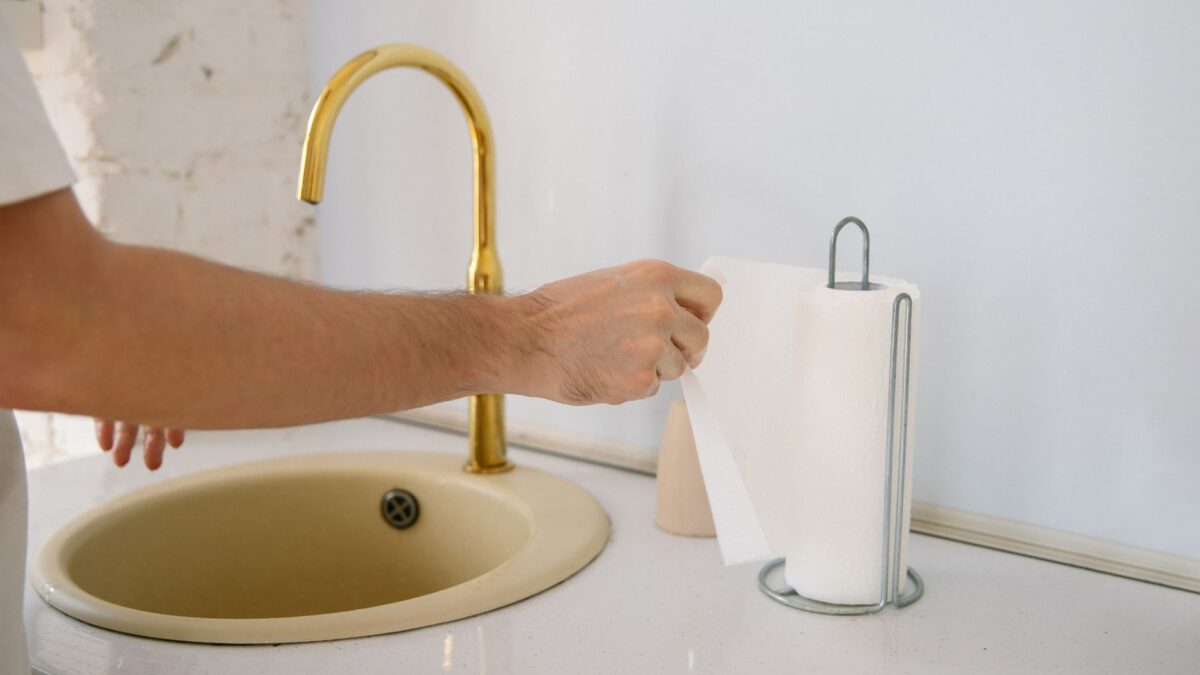
To clean a microwave with a wet paper towel, dampen one or two plain white paper towels, microwave them for about 1–2 minutes, leave the door closed for a couple of minutes, then use the warm towel to wipe the softened splatters. The whole job takes about five minutes and works best on fresh, light messes. Handle the towel carefully because it comes out steaming hot, and never let it run until it dries out.
Why it works
A wet towel turns into a small, contained source of steam. The steam condenses on the cool walls and ceiling and loosens dried-on sauce and soup. Then the same towel, once it has cooled enough to handle, becomes your wiping cloth. There’s no bowl to carry and nothing to spill.
It is a quick-maintenance method. For heavy, charred or smelly build-up, a bowl of water with lemon or vinegar produces more steam for longer; our guide to getting a burnt smell out of a microwave covers that deeper clean.
What you need
- 1–2 sheets of plain white, microwave-safe paper towel (no prints or dyes, no recycled paper with visible flecks)
- Water (optionally with a splash of white vinegar or lemon juice)
- Oven mitt or tongs
- A dry microfiber cloth for finishing
- Mild dish soap for any greasy spots
The USDA’s Food Safety and Inspection Service lists white microwave-safe paper towels among materials that should be safe in a microwave; check the towel package for a “microwave safe” note. Printed or recycled paper can contain inks or tiny metal fragments, so skip those.
Step-by-step
- Check the manual. Some makers advise against heating paper in specific modes (convection, grill or combination). Use plain microwave power only.
- Wet the towel. Soak one or two sheets and wring out until they’re wet but not dripping. A splash of vinegar or lemon in the water is optional and helps with mild odors.
- Place it in the center. Fold the towel loosely and set it on the turntable. Don’t press it against the walls or the waveguide cover (the small panel on an interior wall).
- Heat it. Run on high for about 1 minute. If your oven is lower wattage or the mess is heavier, add 30 seconds. Stay nearby; don’t walk away.
- Let it steam. Leave the door closed for 2–3 minutes so moisture can soften residue.
- Remove carefully. Use tongs or a mitt; the towel holds very hot water. Let it cool for a moment.
- Wipe top to bottom. Start with the ceiling, then the walls, then the floor and the inside of the door. Refold the towel to a clean side as it gets dirty.
- Finish dry. Buff with a dry microfiber cloth so no streaks or moisture remain.
- Wash the turntable separately in warm, soapy water if it has drips.
Safety rules for this method
- Never let the towel dry out. A dry paper towel heated for too long can scorch or catch fire. Keep heating times short and the towel properly wet.
- Stop if you see sparks. Sparking means metal is present (a twist tie, a fleck in the paper) or there’s damage inside. Turn the oven off. See why a microwave sparks inside.
- Use only plain microwave power. Convection or grill elements get far hotter than steam and can ignite paper.
- Don’t add cleaning chemicals to the towel. Heating sprays or bleach can release fumes. Never mix bleach with vinegar or ammonia. For chemical exposure, call Poison Control at 1-800-222-1222 (US).
- Unplug before scrubbing hard around the door seal or control panel, and keep water out of vents and the keypad.
Paper towel vs other microwave cleaning methods
| Method | Best for | Time | Limitations |
|---|---|---|---|
| Wet paper towel | Fresh splatters, weekly wipe | About 5 minutes | Little steam; weak on baked-on grime |
| Bowl of water with lemon or vinegar | Dried-on mess, odors | 15–20 minutes | Bowl gets very hot; risk of superheated water |
| Baking soda paste | Stubborn spots after steaming | A few minutes per spot | Needs rinsing; don’t scrub hard on coatings |
| Dish soap and damp sponge | Greasy film | 5–10 minutes | Must wipe off soap residue |
When to use another method
Switch to a steam bowl or a baking soda paste if:
- Splatters have been cooking on for weeks and turned brown or black.
- There’s a persistent burnt or fishy smell.
- The waveguide cover has a grease build-up. Clean it gently with a barely damp cloth; don’t soak it or remove it unless the manual explains how. A charred or damaged cover should be replaced before further use.
- You have an over-the-range unit with greasy filters underneath. The towel won’t reach those; filters are cleaned separately as your manual describes.
If you’re unsure what is safe to heat in your oven in general, our guide on what you can put in a microwave walks through containers, wraps and foil.
Keep it clean longer
- Cover food with a microwave-safe lid, a vented cover or a paper towel to catch splatters.
- Wipe spills while they’re still fresh and soft.
- Do a quick paper towel clean once a week if the microwave gets daily use.
- Leave the door open briefly after steamy cooking so moisture can escape.
Bottom line
A wet paper towel heated for a minute or so gives you a fast, low-mess clean for fresh splatters. Keep the towel wet, the time short and the power on plain microwave mode, and wipe while the residue is soft. Save the bowl of steam and baking soda for older, tougher messes.
FAQ
How long should I microwave a wet paper towel?
About 1 minute is a reasonable start; add 30 seconds for heavier messes or low-wattage ovens. Never heat it until it dries.
Can I put vinegar on the paper towel?
Yes, a little white vinegar mixed into the water is fine and can help with odors. Don’t add bleach or commercial cleaners.
Is it safe to microwave paper towels?
Plain white microwave-safe paper towels are generally considered safe for short heating. Avoid printed or recycled towels, and don’t leave them unattended.
Why didn’t the stains come off?
Old, baked-on residue needs longer steaming. Use a bowl of water with lemon or vinegar, then a baking soda paste on remaining spots.