How to Clean a Refrigerator Water Dispenser: Nozzle, Tray and Lines
Slow flow, off tastes or black specks usually come from a dirty nozzle, a neglected drip tray or an old filter. Here's a safe cleaning routine from outside in.
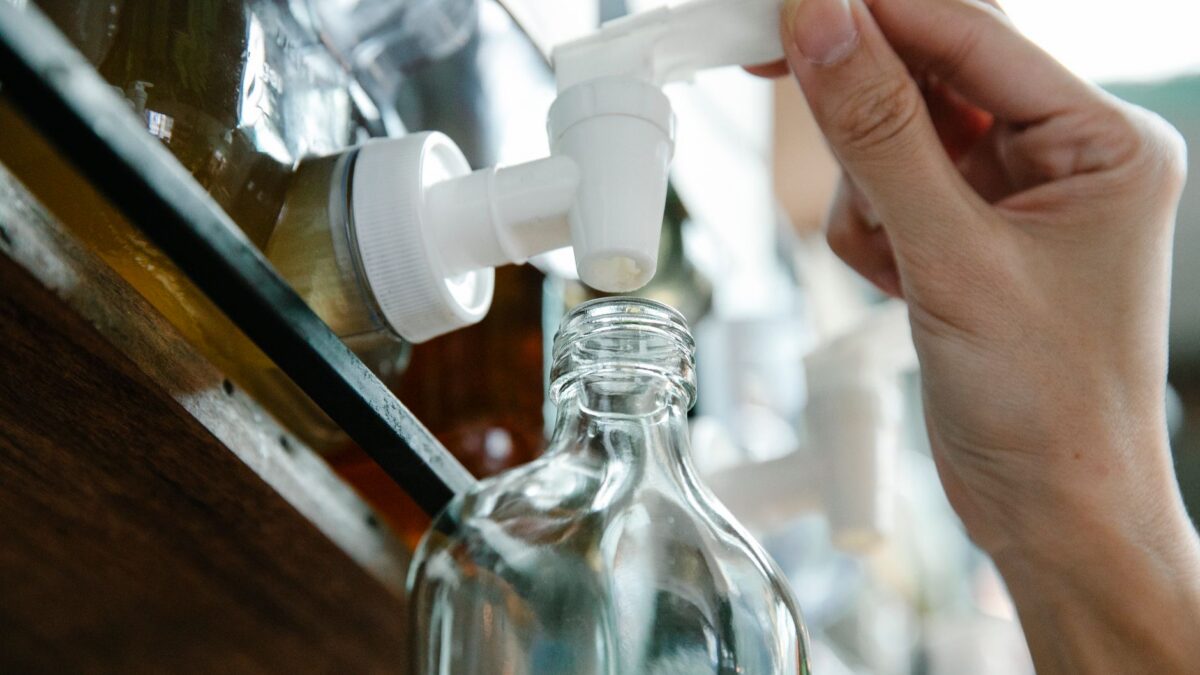
Most dispenser problems, such as slow flow, odd taste, slime on the spout or black specks, are fixed by cleaning the nozzle and drip tray and replacing an overdue water filter. That takes about 20 minutes and costs nothing beyond the filter. Flushing the internal water line with vinegar is a deeper step that only some manufacturers describe; check your manual first, and always unplug the fridge or turn off the dispenser before working near the outlet.
Why dispensers get dirty
The spout sits at the end of a tube that stays damp and is touched by glasses, hands and splashes. Mineral deposits build up where water drips and dries, and the drip tray collects standing water that can grow slime and mold. Inside the fridge, the filter traps sediment until it slows the flow. If the fridge sat unused or unplugged, stale water in the line can also taste flat or musty.
What you need
- Warm water and mild dish soap
- White distilled vinegar (for mineral deposits on the outside parts)
- Soft cloths, a small soft brush or a clean toothbrush, cotton swabs
- A pitcher or large container
- A replacement filter matched to your model number (if due)
Do not mix cleaning products. Never combine bleach with vinegar or ammonia; the fumes are dangerous. If anyone swallows or inhales a cleaning chemical, call Poison Control at 1-800-222-1222 (US).
Step-by-step cleaning
1. The drip tray
- Check your manual: many trays lift out, some are fixed.
- Remove it and wash in warm soapy water. Use the brush on the grille.
- For white scale, soak for 15–30 minutes in a 50/50 mix of vinegar and warm water, then rinse and dry.
- For fixed trays, wipe with soapy cloths and dry with a towel.
2. The nozzle and dispenser recess
- Turn off the dispenser or activate the control lock so the paddle doesn’t fire while you clean. Unplug the fridge if your model has no lock.
- Wipe the recess with a soapy cloth.
- Clean the spout opening with a cotton swab or toothbrush dipped in vinegar. On some models the nozzle cover pulls off for cleaning; don’t pry if it isn’t designed to come off.
- Rinse with a damp cloth and dry.
3. The water filter
Many manufacturers recommend replacing the filter about every six months, or sooner if the indicator light comes on or flow drops. A clogged filter slows the dispenser and can also slow the ice maker.
- Locate the filter: common spots are the upper right of the fresh-food compartment, the base grille or inside a door.
- Turn or press to release, following the arrows. Expect a few drops of water.
- Install the new filter until it locks.
- Flush it: dispense water into a pitcher for the amount of time or volume your manual specifies (often a few gallons). The first water may sputter or look cloudy from trapped air and carbon fines.
- Reset the filter indicator per your manual.
Use a filter made for your model. A certified filter is tested to a standard such as NSF/ANSI 42 or 53; the claims should be printed on the packaging.
4. Flushing the internal line (only if your manual allows)
Some owners flush the line with vinegar to clear scale. Manufacturers’ instructions vary, and the procedure usually means disconnecting tubing behind the fridge. If your manual describes it, follow that procedure exactly. If it doesn’t, the safer route is simply to replace the filter and run several gallons of fresh water through the system.
When a line flush is appropriate, the general sequence is: shut off the water and unplug the fridge, disconnect the supply at the back, feed a small amount of diluted vinegar into the line with a funnel or the manufacturer’s method, let it sit briefly, then reconnect and run plenty of fresh water through until no vinegar taste remains. If you’re not comfortable disconnecting the line, see how to disconnect the refrigerator water line or leave it to a technician.
Troubleshooting
| Symptom | Likely cause | Fix |
|---|---|---|
| Slow flow | Old filter, low supply pressure, kinked line | Replace filter; check shut-off fully open; straighten tubing |
| Bad taste or smell | Overdue filter, stale water, odors in fridge | New filter; flush several gallons; clean the fridge |
| Black specks | Carbon fines from a new filter | Keep flushing; usually clears up |
| No water | Frozen line in door, filter not seated, inlet valve | Reseat filter; check freezer temperature; see valve guide |
| Dripping after dispensing | Air in line, normal residual drip | Dispense a few minutes to purge air |
If water still won’t flow with a new filter and the supply open, the electric inlet valve may be failing. See how to replace a fridge water line valve. If odors are coming from the fridge itself, read how to remove odors from a refrigerator.
How often to clean
- Weekly: wipe the recess and empty the drip tray if it holds water.
- Monthly: wash the tray and clean the nozzle.
- Every six months or per the indicator: replace the filter.
- After an outage or vacation: dispense and discard a few glasses of water and the first ice.
When to call a pro
Call an appliance technician if the dispenser leaks inside the door, the line is frozen repeatedly, or the dispenser doesn’t respond after a filter change and supply check. Opening door panels or replacing internal parts can void a warranty.
Bottom line
Keep it simple: wash the tray, clean the spout, swap the filter on schedule and flush the new filter properly. Only flush the internal line with vinegar if your model’s manual describes how.
FAQ
Can I use bleach to clean the dispenser?
Not on the nozzle or in the line unless your manual says so. Bleach can leave a taste and damage some parts. Mild soap and vinegar on removable parts are enough for routine cleaning.
Why is the first water after a filter change cloudy?
Usually trapped air. It clears as you flush the filter and doesn’t mean the water is unsafe.
Do I have to use the brand’s own filter?
Not necessarily, but it must fit your model and be certified for the contaminants it claims to reduce. Ill-fitting filters can leak or bypass.
Is it normal for the dispenser to drip a little?
A drop or two right after dispensing is normal on many models. Continuous dripping is not.