How to Get a Burnt Smell Out of a Microwave (and When It Means a Fault)
Burnt popcorn smell usually fades with a steam clean, a baking soda wipe and fresh air. An electrical or hot-plastic smell is a different problem.
Most burnt smells in a microwave come from scorched food residue stuck to the walls, ceiling and turntable, so the fix is a steam clean with lemon or vinegar water, a thorough wipe-down, a clean vent filter and a few hours with the door open. It takes about 20 minutes of work plus airing time. If the smell is sharp, electrical or like hot plastic and keeps coming back when the oven runs empty of food, unplug it and stop using it: that points to a fault inside, which is not a DIY job.
Why the smell lingers
Burnt popcorn and overcooked food release smoky, oily compounds that settle as a thin film on every surface, including the door, the seal area and the vent grille. The film is often invisible. Each time you reheat something, the warm cavity releases a little of the smell again. Removing the film, not masking it, is what works.
What you need
- A microwave-safe glass bowl or measuring cup
- 1 cup of water plus either 1–2 tablespoons of white vinegar or the juice of one lemon
- Baking soda
- Mild dish soap and warm water
- Soft sponge or microfiber cloths (non-scratch)
- A toothpick or soft brush for vent slots
Step-by-step: steam clean and deodorize
- Remove loose debris. Take out the turntable and roller ring. Shake out any burnt crumbs.
- Make the steam bowl. Combine about a cup of water with the vinegar or lemon juice in a microwave-safe bowl. Add a wooden spoon or chopstick to the bowl; it gives bubbles somewhere to form and lowers the risk of water superheating and erupting when moved.
- Heat it. Run on high for about 3–5 minutes, until the window fogs and the water steams well. Times vary by wattage.
- Let it sit. Keep the door closed for 5–10 minutes so the steam softens the residue.
- Remove the bowl carefully. Use oven mitts; the bowl and water are very hot.
- Wipe the cavity. Wipe the ceiling first, then walls, floor and the inside of the door. Use dish soap on a damp sponge for greasy spots.
- Tackle stubborn spots with baking soda. Make a paste of baking soda and a little water, rub gently, then wipe clean with a damp cloth. Don’t use steel wool or scouring powders on the interior coating.
- Wash the turntable in warm soapy water (or the dishwasher if the manual allows it), dry and replace.
- Air it out. Leave the door open for a few hours, or overnight.
If a faint smell remains, set an open bowl of baking soda inside with the door closed overnight. Plain baking soda absorbs some odors; it is cheap and harmless. Remove it before using the oven.
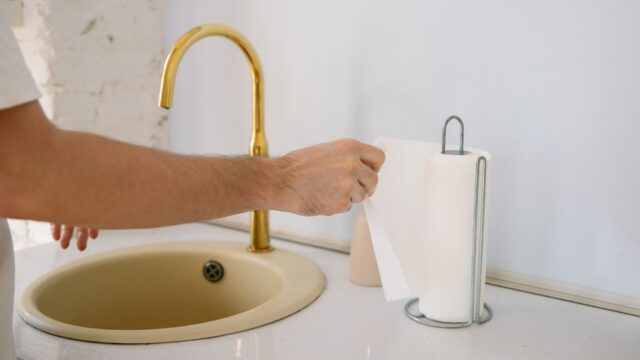
For lighter weekly upkeep, our guide to cleaning a microwave with a wet paper towel covers a quick two-minute method.
Don’t forget the vent filter (over-the-range models)
An over-the-range microwave doubles as a range hood, so its grease filters under the unit trap cooking smoke from the stovetop. Saturated filters keep smelling of old smoke.
- Metal mesh grease filters usually slide or snap out from underneath. Soak them in hot water with dish soap, scrub gently, rinse and let them dry. Many manuals say they can go in the dishwasher; check yours.
- Charcoal (odor) filters on recirculating installs cannot be washed. They are replaced, often every 6 months or so depending on use; your manual gives the interval and part number.
Not sure which type you have? Our comparison of over-the-range vs countertop microwaves explains vented and recirculating setups.
What not to do
- Don’t run the microwave empty to “burn off” the smell. Running with nothing inside can damage the magnetron.
- Don’t spray cleaner into the vent slots or the waveguide cover (the small panel on an interior wall). Liquid there can cause arcing.
- Don’t mix cleaners. Never combine bleach with vinegar, ammonia or other acids; it can release toxic gases. If someone is exposed to a cleaning chemical, call Poison Control at 1-800-222-1222 (US).
- Don’t use harsh abrasives on the interior paint or the door window.
When the smell means a fault
Food smells fade with cleaning. These do not, and they are reasons to unplug the oven and stop using it:
| Smell or sign | Likely meaning | What to do |
|---|---|---|
| Burnt food, smoky popcorn | Residue on surfaces or filters | Steam clean, wash filters, air out |
| Sharp electrical or “hot wiring” smell | Overheating component or wiring | Unplug; contact the manufacturer or a qualified technician |
| Melting plastic with no plastic inside | Internal part or insulation overheating | Unplug; do not use |
| Smell plus sparks, buzzing or smoke | Arcing or component failure | Unplug; see our guide to microwave sparking |
| Burnt or charred spot on the waveguide cover | Grease build-up arcing | Stop use until the cover is cleaned or replaced per the manual |
If there is ever smoke or flame inside, keep the door closed, turn the oven off and unplug it if you can do so safely. The closed door helps starve a small fire of air. Call 911 if the fire does not go out quickly.
When to call a pro
Any smell that seems to come from inside the cabinet rather than the cooking cavity needs a qualified appliance technician or the manufacturer’s service. Never open the outer case yourself. A microwave’s high-voltage capacitor can hold a lethal charge even after the oven is unplugged. Check the manual and your warranty first; the model number is usually on a label inside the door frame or on the back. The FDA also advises contacting the manufacturer if the door, hinges, latches or seals are damaged (see the FDA’s microwave oven guidance).
Bottom line
A lemon or vinegar steam, a soapy wipe, a baking soda paste on tough spots and clean filters remove nearly all food-based burnt smells. Air the oven out and give it a day. If the smell is electrical, comes back without food, or arrives with sparks or smoke, unplug the microwave and leave the repair to a professional.
FAQ
Is lemon or vinegar better for steam cleaning?
Both work similarly; the steam does most of the softening. Vinegar smells sharper at first but fades. Lemon leaves a milder scent. Use whichever you have.
How long does a burnt popcorn smell last?
Without cleaning it can linger for days or longer. After a steam clean, a full wipe-down and airing, most of it is usually gone within a day.
Is it safe to use a microwave that smells burnt?
If the smell is just from food and fades after cleaning, yes. If it smells electrical or like hot plastic, unplug it and have it checked.
Can coffee grounds or activated charcoal absorb the smell?
An open dish of baking soda or activated charcoal left inside overnight can absorb some lingering odor. Neither replaces actually removing the residue.