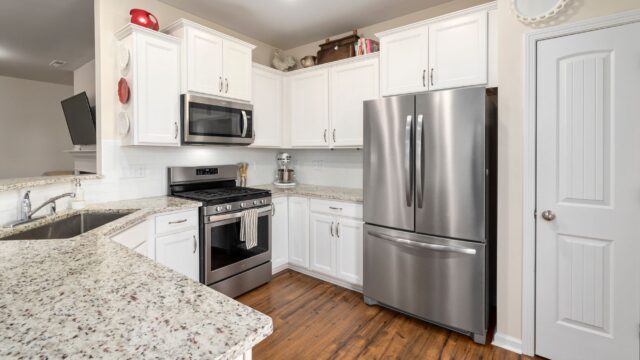
French Door vs. Side-by-Side Refrigerator: How They Compare on Specs
Both styles come in similar widths, but they differ in shelf width, freezer access, door clearance and energy use. Here's a neutral, spec-based comparison to help you choose.
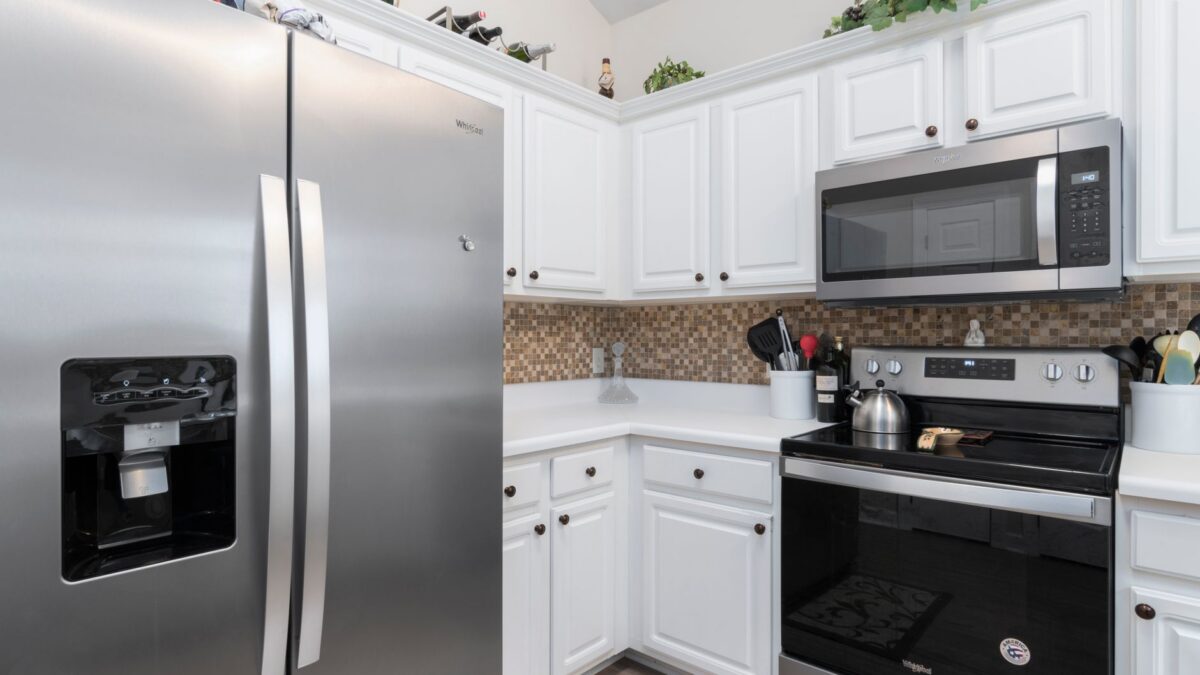
The short version: a French door refrigerator gives you a full-width fresh-food section at eye level with a pull-out freezer drawer below, and bottom-freezer designs generally use less energy than side-by-sides. A side-by-side splits the cabinet vertically into fridge and freezer, needs less door-swing space, and keeps frozen food at eye level, but its narrow shelves can’t fit wide platters. Choose by your kitchen’s clearance and what you store most, then compare specific models by the annual kWh on their EnergyGuide labels.
What does your refrigerator cost to run?
Take the kWh per year from the yellow EnergyGuide label (or the ENERGY STAR product finder) and your electricity price to see the yearly cost. Add the kWh of a newer model to see what replacing it would save. The default price is the U.S. home average from the EIA: 18.16 cents per kWh in August 2026.
How each design works
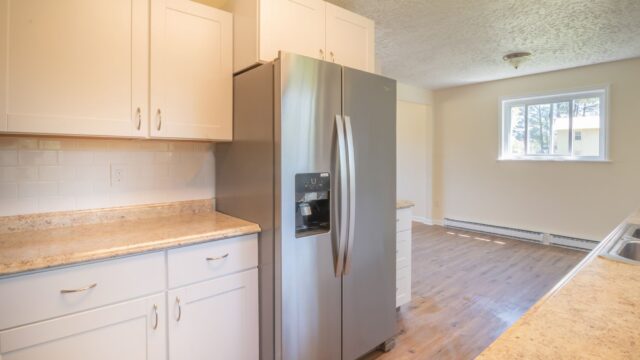
A French door fridge has two half-width doors on top opening onto one wide fresh-food compartment, with one or more freezer drawers underneath. Some add a middle drawer that can be set to different temperatures. A side-by-side has two full-height doors: the freezer on one side (usually the left, and usually the narrower) and the fridge on the other. Both styles are widely available with through-the-door water and ice dispensers.
Spec comparison
| Factor | French door | Side-by-side |
|---|---|---|
| Common widths | About 30, 33 and 36 inches | Commonly about 33 and 36 inches |
| Fresh-food shelves | Full width; fits platters, sheet pans, pizza boxes | Narrower; tall and deep, but limited width |
| Freezer access | Pull-out drawer at the bottom; you bend to reach | Eye-level shelves and door bins; easier to see items |
| Door swing clearance | Two shorter doors; less swing than one wide door | Two narrow doors; smallest swing, good for tight aisles or islands |
| Energy use | Bottom-freezer configurations generally use less than side-by-sides of similar size | Typically the highest energy use of the common configurations |
| Dispenser | Common on many models; ice maker often in the door or freezer | Very common; dispenser on the freezer door |
| Counter-depth options | Widely available | Available |
Capacities overlap. Standard-depth French door models are often in the mid-20s to around 30 cubic feet, and counter-depth versions are smaller. Always check the specific model’s spec sheet, which lists total, fresh-food and freezer capacity separately. Our guide to refrigerator sizes explains cubic feet, cutouts and counter-depth.
Energy use
University extension and government-sourced comparisons consistently rank configurations the same way: top-freezer models use the least energy, bottom-freezer (including French door) next, and side-by-side the most for comparable size. Through-the-door ice and water dispensers also add to energy use. That said, a well-designed side-by-side can beat a less efficient French door model, so compare actual numbers:
- Look at the annual kWh on the yellow EnergyGuide label.
- Check whether the model is ENERGY STAR certified; ENERGY STAR says certified refrigerators are about 9% more efficient than models that meet the federal minimum. Search models on the ENERGY STAR refrigerator pages.
Reliability factors
No configuration is inherently “the reliable one”, and brand-wide reliability claims are hard to verify. What you can compare is complexity. Features that add parts that can fail include:
- Ice makers and dispensers, including in-door ice makers on many French door models. These are frequent service items on any style.
- Multiple fans and evaporators (some models use separate cooling for fridge and freezer).
- Convertible drawers, door-in-door compartments, Wi-Fi controls and touch panels.
- Freezer drawer slides on French door models, which carry the weight of frozen food.
If simplicity matters most, a model without a dispenser removes one of the most common repair points. Compare warranty terms too, particularly on the compressor or sealed system. For troubleshooting later, see ice maker not working.
Kitchen fit: measure before you choose
- Measure the cutout width, height and depth at several points.
- Check the manufacturer’s required clearances (often a small gap at the sides and top and more at the back; it varies by model).
- Measure door swing: French door and side-by-side doors are both narrower than a single full-width door, but check that the doors clear an island, wall or adjacent cabinet, and that crisper drawers can pull out with the doors open at 90 degrees.
- Measure doorways and hallways for delivery. Many doors can be removed for delivery; the manual explains how.
- Note the water supply location if you want a dispenser or ice maker.
Price and features
Prices for both styles span a wide range and change often with sales, so compare like for like: same width, similar capacity, same finish and similar features. Extras such as door-in-door compartments, convertible drawers, craft-ice makers, Wi-Fi controls and fingerprint-resistant finishes push the price up in either style. Decide which features you’ll use every day and which are nice-to-haves, and remember that each added feature is also one more thing that can need service later.
Who each style suits
- French door: people who store lots of fresh food, party trays or wide items, and who use the fridge more than the freezer.
- Side-by-side: narrow kitchens or galley layouts with limited swing space, and households that use the freezer heavily and want it at eye level.
Bottom line
French door models trade bending to reach the freezer for wide, accessible fresh-food shelves and generally lower energy use. Side-by-sides fit tight spaces and keep frozen food easy to see, but their narrow shelves and typically higher energy use are the trade-offs. Measure your space, then compare specific models on capacity, EnergyGuide kWh and features you’ll actually use.
FAQ
Which uses more electricity, French door or side-by-side?
For comparable sizes, side-by-sides generally use more. Compare the annual kWh on each model’s EnergyGuide label to be sure.
Do French door freezers hold less?
It depends on the model. Drawers can be harder to organize than shelves, so usable space may feel smaller even when the listed capacity is similar.
Is a side-by-side better for small kitchens?
Often, because its narrow doors need less swing room. A counter-depth French door model can also work if the aisle is tight.
Are dispensers worth it?
They’re convenient, but they add energy use and are a common repair point. Skip one if you rarely use it.