Counter-Depth vs Standard-Depth Refrigerator: Capacity and Fit
A counter-depth refrigerator sits nearly flush with cabinets but holds less than a standard-depth model. Compare capacity, fit and cost to choose.
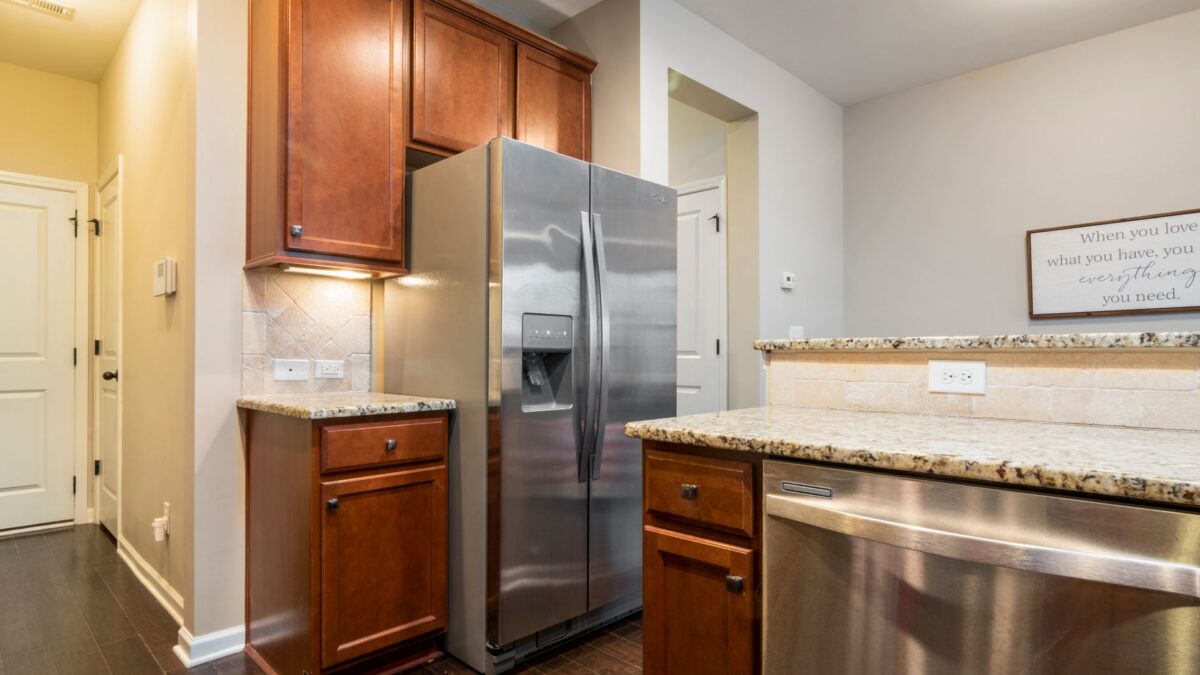
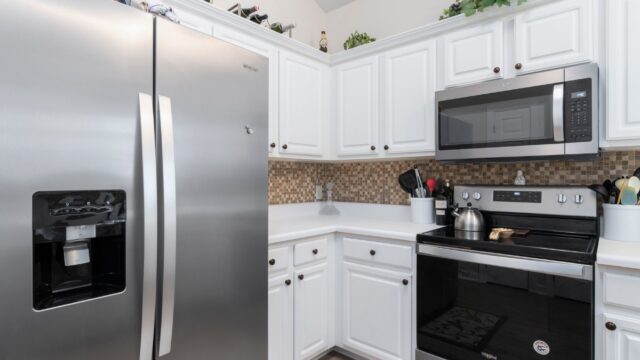
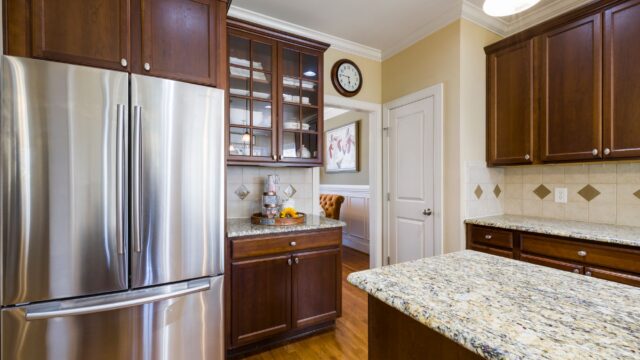
A counter-depth refrigerator is built to sit roughly even with standard 24-inch (61 cm) kitchen cabinets, while a standard-depth refrigerator sticks out past the counter edge by several inches. At the same width, a counter-depth model holds fewer cubic feet and usually costs more. Counter-depth suits a flush look in a tight kitchen, and standard-depth gives the most storage for the money.
How deep is each type of refrigerator?
A standard-depth refrigerator is typically about 30 to 36 inches (76 to 91 cm) deep, measured to the front of the doors or handles. A counter-depth model is typically about 24 to 30 inches (61 to 76 cm) deep, depending on the brand and whether the figure includes handles. Base cabinets are usually 24 inches (61 cm) deep, and countertops overhang them slightly, so a counter-depth fridge is designed to line up with the counter front rather than disappear into the cabinet run.
Terms such as counter-depth, cabinet-depth and shallow-depth are used loosely by manufacturers. Read the exact depth on the specification sheet and note whether it includes handles and doors, and whether it includes the space needed behind the unit.
How much capacity do you lose with counter-depth?
A counter-depth refrigerator usually holds several cubic feet less than a standard-depth model of the same width, because the cabinet is shallower and the shelves are shorter front to back. Manufacturers make up some of the difference by building counter-depth units taller or wider, and the exact gap varies from model to model. Compare the listed total capacity in cubic feet (and the separate fridge and freezer figures) rather than assuming a fixed difference. The guide to refrigerator sizes, cubic feet and counter-depth explains how those numbers are reported.
Shallower shelves change how the space works day to day. Large platters, pizza boxes and bulk packs often fit better in a deeper cabinet, and a shallow shelf holds items in a single row, which makes things easier to see and reach.
Which one fits better in a kitchen?
Counter-depth fits better where a refrigerator would otherwise block a walkway, a doorway or an island. It also looks built in when the doors line up with the cabinet faces. A standard-depth model fits any opening that is wide and tall enough, and it often leaves a noticeable stub past the counter edge.
Counter-depth does not always mean flush. Doors and handles can still project beyond the cabinets, and French doors may need extra swing room to open past a wall or an adjacent counter. If a kitchen has a deep recess, a standard-depth fridge can sit back inside it and look tidy.
How do you measure before buying?
- Measure the width of the opening at the top, middle and bottom, and use the smallest figure.
- Measure the height from the floor to the underside of any cabinet above, and add the hinge or top clearance listed in the manual.
- Measure the depth from the wall to the front of the neighboring cabinets, and note the outlet and water line positions.
- Check the clearance the manufacturer requires at the sides, top and back for airflow. Requirements differ by model, so follow the installation manual.
- Measure every doorway, hallway and stair turn on the delivery path, since a deeper cabinet or taller unit may not fit through them.
- Confirm that doors open fully, or at least far enough to pull out the drawers and shelves.
Does depth change the running cost?
Depth alone does not set the electricity use. Capacity, the freezer layout, the age of the design and features such as ice makers matter more. Compare the yearly kWh figure on the label of each model you are considering. The ENERGY STAR program lists certified refrigerators, and our page on refrigerator energy use per year shows what those figures mean on a bill. To turn a label figure into dollars, use the appliance electricity cost calculator.
Which should you choose?
- Choose counter-depth if the kitchen is narrow, if the fridge sits beside a doorway or island, or if matching the cabinet line matters to you and you accept a smaller interior and a higher price.
- Choose standard-depth if you shop in bulk, cook for a large household, or want the lowest price for a given amount of space.
- Consider a model with a different width if you need both the flush look and more storage, since counter-depth units are often available in wider sizes.
Quick answers
Is counter-depth the same as cabinet-depth?
The terms are often used as synonyms. Because there is no single strict definition, verify the measured depth on the specification sheet.
Do counter-depth refrigerators cost more?
They usually cost more than a standard-depth model of similar capacity, since the cabinet is built to a tighter size. Prices vary by brand and features, so compare current listings.
Can a counter-depth fridge replace a standard-depth one?
Yes, if the new unit fits the width and height of the opening. The old fridge may have left a gap behind it, so check the water line, outlet and any panels that need adjusting.
Does a counter-depth fridge need space behind it?
Most refrigerators need some space for airflow at the back and sides. The required amount is in the installation manual, so confirm it before you buy.